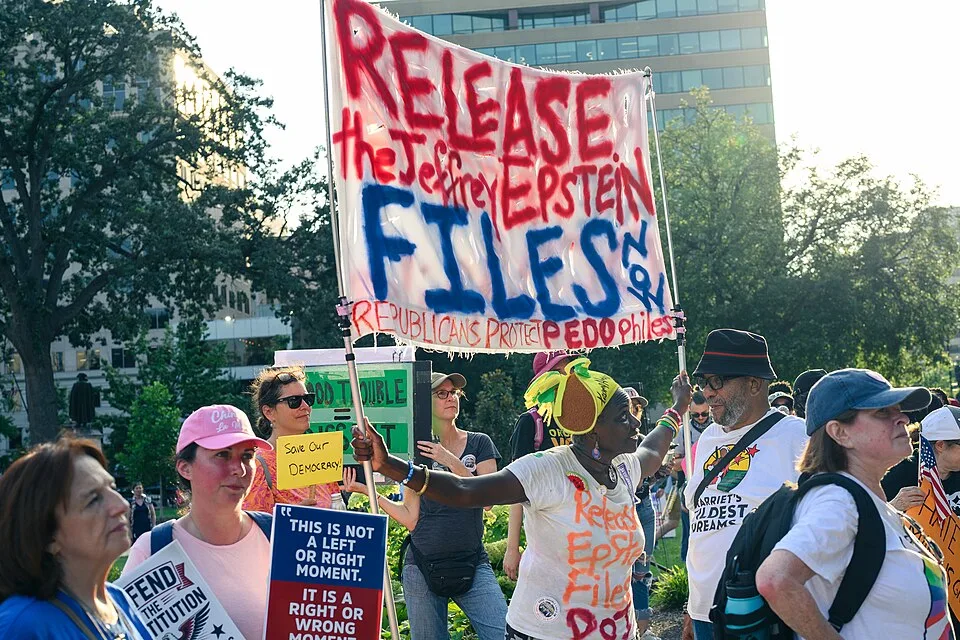
A federal judge has ordered the Justice Department to release handwritten FBI notes from four separate interviews with a woman who says Donald Trump forced her to perform oral sex on him after Jeffrey Epstein introduced them when she was a teenager. U.S. District Judge Emmet Sullivan issued that order. The DOJ, which currently works for Donald Trump, is now legally required to hand those notes over.
What the Judge Actually Ordered
U.S. District Judge Emmet Sullivan directed the Department of Justice to turn over the FBI's handwritten notes from four interviews conducted with the woman, according to Law Commentary's reporting on the ruling. This came through a FOIA action, meaning someone had to go to court just to force the government to produce documents that should be part of the public record.
The woman's account is specific and serious. She says Trump, after being introduced to her by Jeffrey Epstein, attempted to force her to perform oral sex on her when she was a teenager. Four separate FBI interviews were conducted. Four sets of notes exist. Judge Sullivan has now said the public has a right to see them.
The Epstein Connection the Administration Would Like You to Forget
Trump has spent considerable energy since returning to office trying to control the narrative around Jeffrey Epstein. The administration's handling of the Epstein files has been erratic at best and deliberately obstructive at worst, releasing some documents with great fanfare while key materials remained buried. Critics pointed out that the releases seemed carefully curated to implicate Democrats and protect Trump's circle.
This ruling cuts directly against that strategy. The FBI didn't interview this woman once. They interviewed her four times. That is not how law enforcement treats an account they find incredible or not worth pursuing. That is how they treat testimony they are building a record around.
The DOJ Is Now in an Uncomfortable Position
Here is the part worth sitting with for a moment. The Department of Justice currently operates under the direct authority of Donald Trump. The FBI director serves at his pleasure. And a federal judge has just told that department to produce records of FBI interviews documenting a sexual assault allegation against the man those agencies report to.
The DOJ can comply, or it can appeal and fight the ruling. Either path is bad for Trump. Compliance means the notes become public. An appeal means months of headlines about why his own Justice Department is fighting in court to keep secret what federal agents wrote down when a woman described what he allegedly did to her.
Judge Sullivan Is Not a Random Appointment
Emmet Sullivan is not some obscure magistrate. He is a senior U.S. District Judge in Washington D.C. who has handled some of the most consequential cases of the past two decades. He was the judge in the Michael Flynn case, where he pushed back hard against the DOJ's attempt to drop charges after political intervention from Trump's first term. He has a documented history of refusing to let the executive branch treat the courts as a rubber stamp.
Sending this case to Sullivan and expecting a quiet result was always a long shot. He ordered the DOJ to produce the records. That order stands until someone convinces an appeals court otherwise.
What Happens Next
The DOJ has a few options. It can comply with the order and turn over the notes. It can appeal to the D.C. Circuit and try to block release. It can claim some exemption, national security or ongoing investigation privilege, and fight on narrower grounds. Any of those choices will extend the story and draw more attention to what the notes contain.
The woman who gave those four interviews is a real person who made a specific allegation to federal agents about a sitting president. Those interviews happened. The notes exist. A federal judge has ruled the public should see them. What happens in the next weeks will tell you a great deal about how much the current DOJ is willing to degrade itself to protect the man at the top.
The Dingo Take
These notes exist because someone sat across from FBI agents four times and described what Donald Trump allegedly did to her as a teenager after Jeffrey Epstein made the introduction. That is the plain fact at the center of this case, and no amount of DOJ foot-dragging or political noise changes it.
The administration has been running a confidence game on the Epstein files for months, performing transparency while keeping the most sensitive material locked down. A federal judge just called that bluff in the most direct way possible. Sullivan did not ask nicely. He issued an order. Now the department that reports to Trump has to decide whether to comply or spend the next news cycle explaining in open court why it won't.
There is no version of this that looks good for Trump. The notes either confirm the account in damaging detail, or the DOJ fights their release and confirms to everyone watching that it is functioning as a personal protection service for the president. Pick your poison. The woman picked up the phone and talked to federal agents four times. Judge Sullivan read the law and issued his ruling. The rest is on the DOJ.

Comments