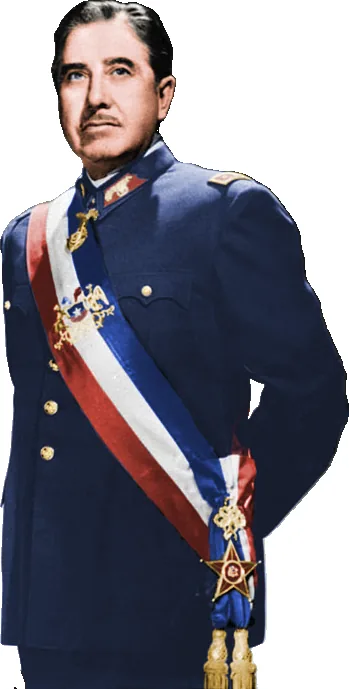
A deeply unpopular president with a loyal supreme court, a firehose of fake news, an oligarchy bankrolling him, and a staff too terrified to tell him he's losing. Writer Ariel Dorfman opens his new Guardian essay with that description and then reveals it's not about Donald Trump. It's about Augusto Pinochet in October 1988, the night he lost a plebiscite and considered a coup rather than leave.
The Setup Sounds Awfully Familiar
Dorfman, who lived through the Pinochet years and witnessed the 1988 vote, lays out the parallels with deliberate cruelty. According to his Guardian essay, Pinochet leaned on a compliant court, ruled through executive decrees, and flooded the zone with accusations that his opponents were unpatriotic communists. He had huge financial backing from an entrenched oligarchy that profited handsomely from his rightwing neoliberal policies.
He also limited the freedom of those who vote, and he held absolute command of the armed forces. And still, Dorfman writes, an electorate tired of his reign was determined to be heard despite widespread intimidation.
Then comes the detail that should make every American sit up. Even as the polls pointed to a rout, the strongman was surrounded by sycophants and fawning courtiers too afraid to tell him the facts. He simply refused to accept that the vote would go against his divinely inspired will.
The Night the Count Went Dark
Dorfman was in Santiago on 5 October 1988 as the results came in showing the regime being repudiated. He writes that the vote count was suspended and an informational blockade was imposed at 10pm. Think about that. The man who lost simply tried to turn off the lights and hope nobody noticed.
Standing in front of the presidential palace around 1am on 6 October, Dorfman watched Air Force Gen Fernando Matthei, a member of the junta, publicly recognize that the "no" vote had clearly won. According to Dorfman, that admission thwarted an auto-coup Pinochet was contemplating at that very moment. The final tally was 55.9 percent telling the dictator to retire.
A single general with a conscience and a microphone stood between Chile and a self-inflicted coup. That is not a comforting margin of safety.
What the 3 November Midterms Are Really About
Dorfman is blunt about why he's writing this now. The United States faces a dire uncertainty as the 3 November midterms approach: can a majority of Americans, by winning both chambers of Congress, constrain what he calls the ravings and corruption of a wannabe autocrat who is as unhinged and contemptuous of the law as Pinochet was.
His answer is cautiously hopeful. No matter the fear, the funds, and the lies at a powerful ruler's disposal, he argues, a strongman can be beaten if courageous people are resolute and smart enough. Chile did transition to democracy, electing a center-left president in 1990 and an uninterrupted series of presidents of different ideological strains since.
But Dorfman doesn't stop at the pep talk. He warns that just as Pinochet intended to disavow the results ousting him, the current occupant of the White House could try something similar, maneuvers that would far outdistance his violent and illicit attempts to annul his 2020 loss.
Vigilance, Soldiers, and Ordinary People
So what actually stops it? Dorfman says only heightened civilian and institutional vigilance, the daily epic of everyday people resisting, and patriotic armed forces unwilling to obey illegal dictatorial orders can guarantee that such an assault on democracy fails.
Read that last part again. The hope rests partly on military officers refusing unlawful orders from the commander in chief. In Chile it took one general saying out loud what everyone already knew. The fact that an essayist has to sketch this scenario for an American audience tells you how far the Overton window has been dragged.
There's no cavalry coming. There's you, your neighbors, a handful of institutions still working, and some people in uniform who need to remember who they swore an oath to.
Getting Rid of Him Wasn't the Same as Getting Rid of Him
Here's where Dorfman's essay gets properly grim. Ridding Chile of its strongman saved it for democracy, but it did not undo the damage. Pinochet kept mutilating the country for the year and a half left in his mandate, then for another eight years as a threatening army commander-in-chief.
Worse, Dorfman writes, he permanently changed Chilean society. The welfare state built by decades of struggle was dismantled and replaced by a savage capitalism that didn't care who was left defenceless. The spreading of fear and mistrust sickened the country's soul.
That's the warning for anyone who thinks a good election night fixes everything. Winning the vote is the beginning of the repair job, not the end of it.
Chile Elected an Admirer Anyway
The sharpest sting in the essay is where Chile ended up. Dorfman notes that José Antonio Kast, an admirer of Pinochet who would like to pardon the dictatorship's agents imprisoned for gross human rights violations, is now Chile's president, after winning in December 2025.
Dorfman credits the win partly to an economically distressed populace falling for a rabidly anti-immigrant platform and vows to deal with a narco crime wave. But a whopping 56 percent of voters were willing to turn a blind eye to Kast's denial of past atrocities. Dorfman calls that a cause for long-term concern and, in his case, mourning.
He writes that he arrived in Chile as a boy of 12 in 1954 and never doubted, through the long night of the dictatorship, that the country would resurrect. Then he adds two words that land like a slap: "Something went wrong."
The Dingo Take
Winning is not the same as fixing it.
The Chilean story is usually told as a feel-good fable: tyrant loses, democracy wins, credits roll. Dorfman refuses that ending, and he's right to. Pinochet lost the plebiscite and still sat atop the army for years, and decades later the country elected a fan of his. The poison outlasted the man. Anyone who thinks America can flush this out of the system in a single November is kidding themselves.
The midterms matter enormously, and you should vote like your democracy depends on it, because it does. But Dorfman's real lesson is that the vote is the cheap part. The expensive part is the vigilance, the refusal to normalize, and the long, unglamorous work of rebuilding trust after a movement spent years teaching people to distrust everything. Show up on 3 November. Then keep showing up. Chile found out the hard way what happens when you stop.


Comments