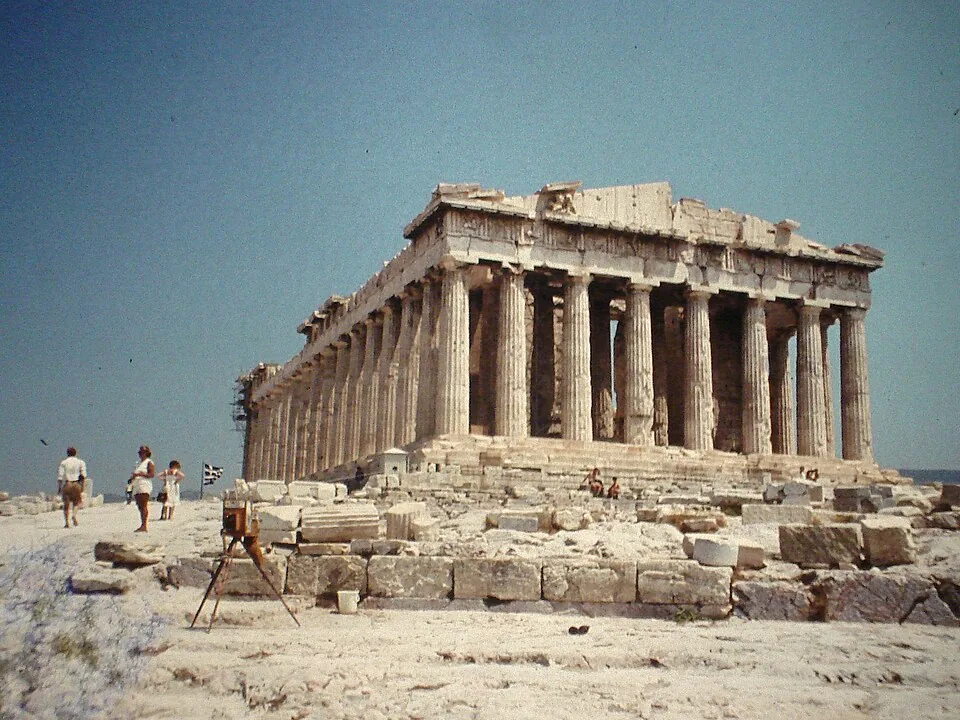
Marco Rubio went to Athens, stood in front of the Acropolis, and told Europe it needs to wake up from its "long slumber" or face "servitude, and decline." This is the same administration whose president threatened to yank the United States out of NATO six months ago. Subtle it was not.
The Secretary of State's speech on Wednesday, covered by BBC News, was part of a three-country tour of NATO allies. It was also, by every available signal, a 2028 audition tape shot on location at a 2,500-year-old monument to a civilization that, as it happens, lost.
A Speech Delivered Beneath a Famous Ruin
Let's set the scene. Rubio, often floated as a possible presidential candidate in 2028, chose the backdrop of the Acropolis to declare the world at an "inflection point." He swept from ancient Greece to the rise of American industry, which is a lot of ground to cover in one speech and roughly 2,400 years to cover in one breath.
His message to Europe was that nations should return to ancient Greek values and "rebuild our institutions and our alliances to face these threats together." He said he hoped Europe could "rekindle the fire that was here millennia ago."
There is something almost too perfect about delivering that line in front of a ruin. The audience got the symbolism whether they wanted it or not.
Servitude, Atrophy, and Other Cheerful Words
The tone was apocalyptic, and not in a subtle way. Rubio said the course the West takes will decide whether it "maintains its place at the head of the world, or resigns itself to a future of atrophy, and servitude, and decline." He added that "the next decade will write the story of the next century."
He name-checked "radical mullahs" in Iran and suicide bombers as dangers, but the real villain of the speech was something vaguer and closer to home: the West's own loss of nerve. Decline, in this telling, is a choice we made by getting embarrassed about ourselves.
That is a very convenient diagnosis for a movement whose answer to every problem is more of the thing it already believes.
Nationalism Is Not a Dirty Word, Apparently
Here's where the speech got specific, and where it got revealing. Rubio said the West abandoned national pride because "we felt embarrassed that our achievements set us apart from the rest of the world." Then came the charge sheet: "The word 'nationalism' became a dirty word. So we tore down our monuments. We condemned our own history, and in too many places, we taught our children to be ashamed of the countries they would inherit."
He went on: "In the process, we opened our borders and outsourced our industry and allowed our militaries to wither and to decay."
Notice the structure. Monuments, history, schoolchildren, borders, factories, and the military all get dumped into one grievance bucket and stirred. That is not an argument. That is a culture-war greatest hits album with a Greek temple as the album cover.
Pitching Cooperation While the Boss Threatens to Leave
Rubio did say "nations need not abandon their distinct identities in order to recognise their common interests," which is the kind of sentence that sounds reasonable until you remember who signs his paychecks.
Trump has pushed an "America first" agenda through both of his terms. He has taken a more confrontational stance toward traditional allies and long-standing trade relationships. And just six months ago, he again threatened to pull the US out of NATO, an alliance he has criticized constantly while demanding members pay more.
So the pitch to European leaders amounts to this: let's rebuild our alliances together, and by the way, the guy in charge keeps hinting he might walk out the door. That is not a warm invitation. That is a hostage negotiation conducted in a toga.
The Tour Stops at Iceland and Portugal, Too
The Athens appearance was one leg of a three-country swing through NATO allies that also includes Iceland and Portugal. Presumably those stops involve fewer dramatic columns.
A visit to allies is, on paper, exactly what a Secretary of State should be doing. Reassuring partners is the job. The trouble is that reassurance requires the person doing the reassuring to be speaking for a government that means it, and that is the part nobody in Europe can take on faith right now.
The Dingo Take
In 1938, Neville Chamberlain flew home from Munich waving a piece of paper and promising peace in our time. Nobody had forgotten what the paper was worth by the time the tanks rolled. Rubio's Acropolis speech is the same genre: a lovely document about shared values, handed to allies who have already read the fine print on the man in charge.
Here's the problem with lecturing Europe about its "long slumber" while your president keeps threatening to leave the alliance. Europe is not asleep. Europe is watching. It sees an administration that picks fights with trading partners, muses about quitting NATO, and then sends its top diplomat to a ruin to demand everyone rekindle the fire. You cannot torch the house and then ask the neighbors to help you rebuild it with your name on the plaque.
And yes, the 2028 angle is obvious. Rubio gave a sweeping, quotable, civilization-in-the-balance address in front of the most photogenic backdrop in the Western world. Every line was built to clip. The ancient Greeks, for the record, invented democracy and also lost their independence. If Rubio wants a lesson from Athens, he could start there.


Comments