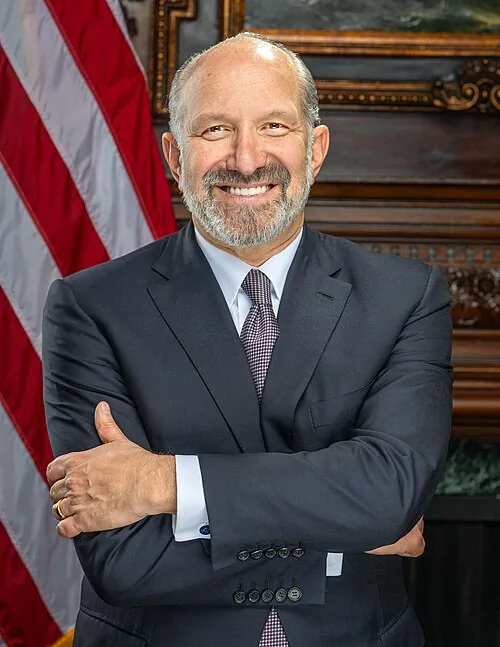
Howard Lutnick, the man whose entire job is keeping America's most sensitive technology away from adversaries, was sent a highly classified memo warning about the CEO of the company selling that technology and his relationship with a suspected Chinese spy. Then the department he runs cleared advanced Nvidia chip sales to China-affiliated entities. Sure. Coincidence. Happens all the time.
The Memo Nobody Was Supposed to Mention
Here's what we know, and it comes from Axios, which cites multiple sources familiar with the matter. Lutnick was sent a highly classified memo warning about Nvidia CEO Jensen Huang's relationship with Alice Huang, who is suspected of being a Chinese spy. That is the whole premise. It is not subtle.
The memo did not come from some rogue intern with a printer. Secretary of State Marco Rubio oversaw the drafting of it. So the top diplomat in the country put his department's weight behind a document warning the Commerce Secretary about the head of the most valuable chip company on Earth.
Pause on that. A classified warning, drafted under the direction of the Secretary of State, about a relationship between a tech CEO and a suspected foreign intelligence asset. This is the kind of thing that normally ends careers or starts hearings. Maybe both.
Why Lutnick Is the Person Who Needed to Read It
Commerce is not a ceremonial agency. It oversees the export controls that decide which American technology can be sold abroad and to whom. Keeping sensitive U.S. tech out of the hands of adversaries is not a side hustle for this department. It is the point of this department.
And advanced Nvidia chips are exactly the sort of technology the whole export control apparatus exists to police. They power the AI systems that Washington keeps insisting will decide who wins the next century. The same Washington keeps telling us China is the rival that matters.
So the person with the authority to approve or block these sales received a classified warning about the person selling them. What happened next is where the story gets ugly.
The Chip Sales Went Ahead Anyway
The memo raises serious questions about how Commerce weighed potential security risks as it cleared advanced Nvidia chip sales to China-affiliated entities. Notice the phrasing. Not sales to China, a clean, simple, arguable thing. China-affiliated entities. That is a wide net, and the memo suggests somebody should have been asking who exactly was sitting in it.
We do not yet know what Lutnick did with the warning. We do not know whether he read it closely, ignored it, argued about it, or filed it under Things That Might Complicate A Very Profitable Quarter. Those answers matter enormously, and nobody has handed them over.
What we do know is the sequence. Warning arrives. Sales get cleared. Anyone who has ever watched a heist movie knows the music that plays at this point.
The Administration's Chip Problem Is Not New
This lands in the middle of a broader fight over how much advanced silicon the Trump administration should let flow toward Beijing. The president and his allies have spent years talking tough on China while the commercial reality keeps tugging the other way. Tough talk is free. Export licenses are not.
There is a real, unresolved tension here, and it deserves to be stated plainly. Nvidia wants the Chinese market because it is enormous and lucrative. National security hawks want that market closed because the chips can make a military smarter. Reasonable people can argue about where the line sits.
But you cannot even have that argument honestly if the officials drawing the line were warned about a security concern and kept it to themselves. The debate over policy turns into a debate over whether the people making policy can be trusted. That is a much worse debate to be having.
What We Still Don't Know
A lot, frankly. The reporting establishes that the memo exists, that Rubio oversaw it, and that it went to Lutnick. It does not tell us the evidence behind the claim that Alice Huang is a spy, and it does not prove that Jensen Huang did anything wrong. A warning about a relationship is not a finding of guilt, and we should say so loudly before anyone in the comments does it for us.
But the burden here runs the other way. When a classified memo warns the Commerce Secretary about a CEO's ties to a suspected spy, the public deserves to know what Commerce did about it. Congress has the power to ask. Whether it has the spine is a separate question.
Expect Nvidia, Commerce, and the White House to say very little and say it slowly. Silence is a strategy. It has worked before.
The Dingo Take
A classified memo, drafted under the direction of the Secretary of State, warning the Commerce Secretary about the CEO of Nvidia and a suspected Chinese spy. Then, chip sales cleared to China-affiliated entities. That is the entire story, and it does not need any help from us to look terrible.
Here's the thing. Maybe Lutnick read it, weighed it, and had a defensible reason to move forward. Maybe the intelligence was thin. Maybe the memo was a turf war between State and Commerce dressed up as national security. All of that is possible, and none of it excuses the secrecy. If the reasoning is sound, show it. If it isn't, say so and let the chips fall where they may.
What should make everyone furious, regardless of party, is the pattern. This administration talks like China is an existential threat and then treats export controls like a negotiating chip at a casino. Somebody in Congress needs to demand the memo, demand the timeline, and demand to know who in Commerce decided a warning from the Secretary of State was optional. Until that happens, assume the worst. The track record has earned it.


Comments