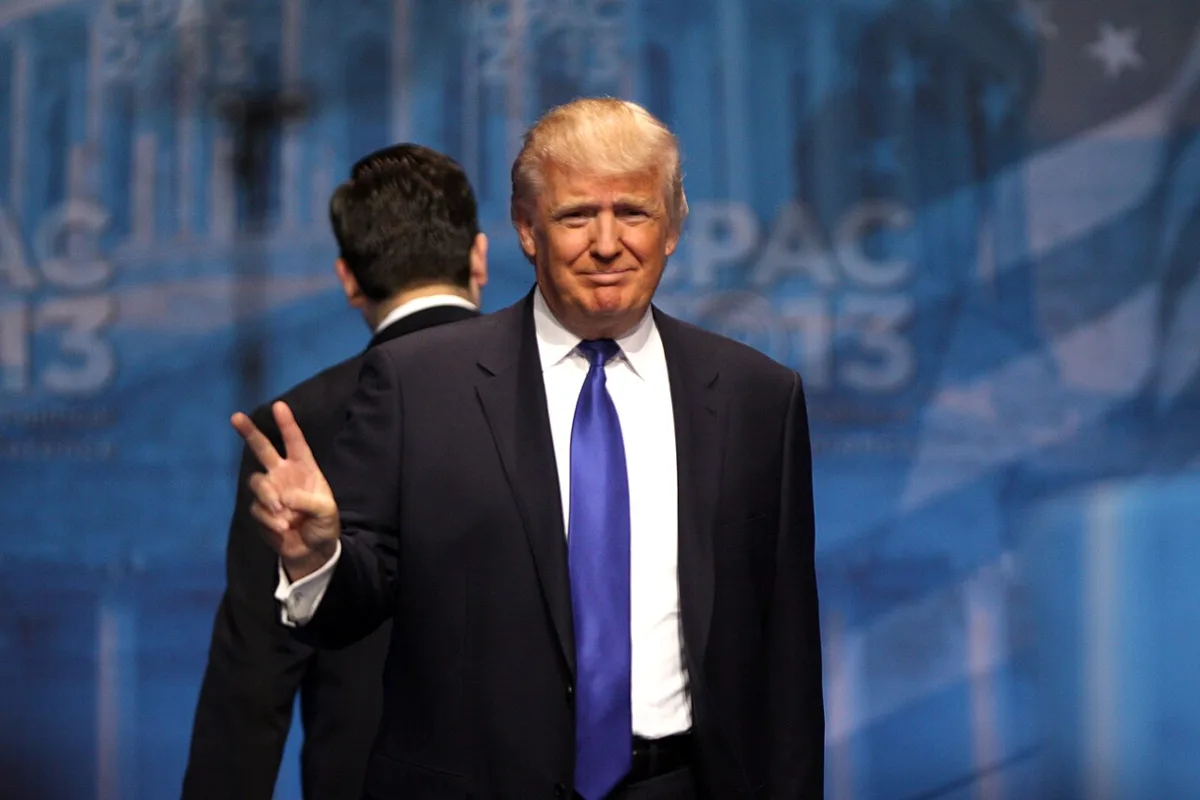
A woman in West Virginia drained her retirement savings to pay $1,967 a month for health insurance after Republicans let ACA subsidies die. Now she has a $500 check from President Trump, which covers about a quarter of one month of what she paid, and it showed up with a letter bragging about his health policy a few weeks before the midterms.
The Math on Five Hundred Bucks
Ellen Allen runs a small nonprofit called West Virginians for Affordable Health Care. She has a serious eye condition and needs expensive drops to keep her vision. When the enhanced ACA subsidies expired and the Republican-controlled Congress declined to extend them, she paid $1,967 every month from January through August of 2026, funded out of retirement savings. NPR first spoke to her in summer 2025, when she was already bracing for the hit.
Then she turned 65 and got on Medicare, the way people do when they can finally escape the individual market. The Treasury check and the Trump letter landed at her house near Charleston on Monday anyway. She calls it a "political stunt," and she would know. Her entire job is talking to West Virginians about what healthcare costs them.
Who Gets a Check and Who Doesn't
This is not a universal payment. The $500 checks went only to people in the 30 states that use Healthcare.gov, and only to people who make more than $64,000 a year as individuals. That is the group too wealthy for subsidies and, not coincidentally, the group most likely to get hammered when Congress let the extra help lapse.
So the pitch is: we let your premiums explode, now here is a fraction of one month of the damage, signed by the guy who could have fixed it. Allen put it plainly. "If they wanted to do something meaningful, they would work on affordable healthcare instead of just sending out checks every now and then."
Ninety Dollars for the Seniors
Last week Trump also announced $90 checks for 20 million people on Medicare. Not all of them, though. Only certain people enrolled in Medicare Part B get one, and anyone in a Medicare Advantage plan run by an insurance company is left out.
Allen, who is about to be one of the lucky recipients, was unimpressed. "The $90 is, I mean, that's just nothing," she said. Even Joseph Antos, a senior fellow emeritus at the conservative American Enterprise Institute, framed it as pocket money. For $90, he noted, you can buy two hamburgers and a shake at McDonald's and maybe half a tank of gas. That is a conservative think tank scholar describing the value of the president's health policy in Big Macs.
The Letter Is the Whole Game
Here is where it gets legally spicy. The check comes with a letter that touts the Trump administration's health policy efforts and criticizes the Biden administration. Kathleen Clark, a professor of legal and governmental ethics at Washington University law school in St. Louis, read it and did not hold back. "This reads like electioneering," she said. "This reads as though it's intended to influence votes. That is prohibited by law."
The law in question is the Hatch Act, which bars using federal power and money to influence partisan elections. Clark also flagged that the spending may not be authorized by Congress at all. The $500 checks come from fees insurers paid to participate in the marketplace, and the $90 checks come from a general improvement fund. Neither pot of money had ever been used for direct payments to enrollees before. She called it "a pretty desperate effort to, in essence, bribe the recipients of this letter to vote in gratitude to Trump."
The White House Answers a Different Question
NPR asked the White House whether this was electioneering, whether it violated the Hatch Act, and whether it was a political stunt. The White House did not respond to any of that. Spokeswoman Allison Schuster instead emailed that the criticism is "out-of-touch" and that "Americans were overcharged for the operation of the Obamacare exchange, and President Trump returned their hard-earned money."
Notice what happened there. Three direct questions about legality, zero answers. And the ethics expert's read on why that works out fine for them was grim: the Supreme Court has enabled Trump's illegal actions many times before, so of course he feels empowered to go ahead. The checks are in the mail whether they're legal or not. That is the actual enforcement mechanism now.
Voters Are Not Buying the Hamburgers
The timing is not subtle. Voters say they are struggling with health costs and want candidates to address them, according to a poll released Tuesday, and the checks are hitting mailboxes a few weeks out from Election Day. Allen predicted people will see through it. "People aren't going to be fooled by this," she said. "People are hurting. People are feeling the cost of healthcare all year long."
She is next facing $2,800 a month if she had stayed on ACA coverage, which is the number people in her old situation were bracing for next year. That is the real scale of the problem. A one-time $500 payment does not reach it, and neither does a $90 one.
The Dingo Take
"The $90 is, I mean, that's just nothing." Ellen Allen said that, and she is the one person in this story who was directly handed the bribe and still did the math correctly. Ninety dollars. The administration is betting the midterms on two hamburgers and a shake.
Look at the sequence. Republicans controlled Congress, let the subsidies die, and watched premiums detonate for people like Allen, who burned through retirement savings to keep her eyesight. Then, weeks before voters get a say, the White House scrapes together money from insurer fees and a general improvement fund, funds that had never once been used to cut checks to enrollees, and mails out a campaign flyer with a Treasury stamp on it. A legal ethics professor read the letter and said it reads like electioneering. The White House was asked point blank and answered with a talking point about Obamacare.
The cynical part is that the scheme might even work on some people. Cash in the mailbox is cash in the mailbox. But the folks who got the check are the same folks who watched their premiums triple, and they remember exactly who was in charge when it happened. You can mail them a letter. You cannot mail them a memory wipe.



Comments