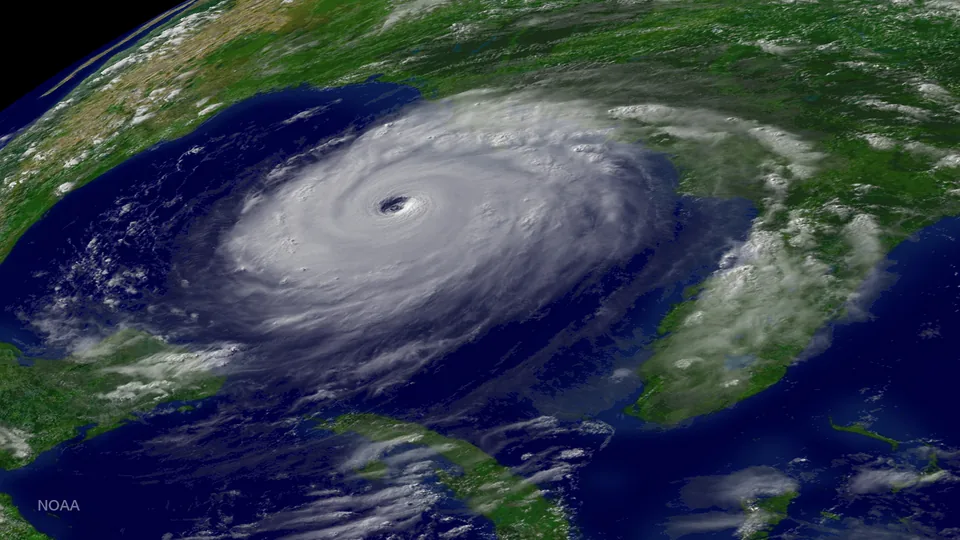
The Atlantic hurricane season is four months old, and it just produced its first hurricane. That makes Isaias the latest-forming first hurricane in 121 years, missing a record set on Oct. 8, 1905 by essentially nothing, and it is aimed squarely at the stretch of coastline that has already given America Camille, Katrina, and Michael.
The National Hurricane Center says the storm will be "strong" when it arrives, with a "life-threatening storm surge." So much for the quiet season.
The Quietest Season Gets Its Mean Streak
According to NPR, citing the Associated Press, Isaias strengthened into a hurricane late Wednesday as it surged toward the U.S. Gulf Coast. By the National Hurricane Center's advisory, it was sitting about 460 miles south-southwest of the Mississippi River with maximum sustained winds around 75 mph, moving east-northeast at 9 mph.
Landfall is expected late Friday or early Saturday somewhere between the Mississippi coast and the Florida Panhandle. Forecasters say it is expected to strengthen further before it gets there. In other words, 75 mph is the starting point, not the ceiling.
And yes, the name is pronounced ees-ah-EE-ahs, per the hurricane center. Learn it. You may be hearing it a lot this weekend.
A 121-Year-Old Record Survives by a Hair
Here's the oddity. A typical Atlantic season produces 14 named storms, seven hurricanes, and three major hurricanes, based on 1991 to 2020 climate data. The first hurricane normally shows up in early to mid-August. This one showed up in the second week of October.
The National Weather Service says the record for the latest first hurricane dates to 1905, when the year's first Atlantic hurricane formed on Oct. 8. Isaias became a hurricane late on Oct. 7, which means it just missed tying a record that has stood since before the Model T.
The season technically runs June 1 through Nov. 30. For most of it, the Atlantic basically sat there doing nothing, which is a very strange thing to say about an ocean that regularly tries to kill people.
Blame the Super El Niño, Because the Pacific Is Having a Party
The explanation is a strong El Niño that arrived over the summer. It typically brings cooler Atlantic water temperatures and greater swings in wind patterns, conditions that choke off tropical systems before they can grow. Forecasters had already predicted a quieter-than-usual season. It turned out even quieter than they predicted.
The Pacific got all the action. Storm activity there has been above average, and Tropical Storm Simon formed off Mexico on Wednesday, the same day Isaias became a hurricane. One ocean goes silent, the other goes feral. Nature has a sick sense of balance.
Here's the catch. A quiet season is not a safe season, and forecasters are blunt that the risk of destructive storms remains high. It takes one. Katrina and Camille did not need a busy year to ruin lives.
Emergency Declarations and a Canceled Shrimp Festival
A hurricane warning covers the northern Gulf Coast from Ocean Springs, Mississippi, across Alabama to the Bay/Gulf County line in Florida. Tropical storm warnings stretch on either side, and a storm surge warning runs from the mouth of the Mississippi River to Yankeetown, Florida.
Alabama Gov. Kay Ivey declared a state of emergency for 40 counties. Florida Gov. Ron DeSantis did the same for 25 counties across the Panhandle and Big Bend, activating the state's hurricane emergency plan and sending a Miami-based urban search and rescue task force. In Pensacola, utilities are pre-positioning repair crews, the city is handing out sand for sandbags, and Mayor D.C. Reeves is telling people to check on older neighbors. "Obviously no need to panic at this point," Reeves said. "This is really about preparation."
The human details are already piling up. Gulf Shores canceled the National Shrimp Festival, which drew an estimated 325,000 people last year. One resident, Maranie Adams, is moving a hot tub motor to higher ground and crating her chickens so they don't blow away. "It's going to be noisy," she said. That is the most Gulf Coast sentence ever spoken.
Rain, Oil, and a Very Familiar Stretch of Coast
The hurricane center forecasts 3 to 7 inches of rain along the coast from southeastern Louisiana to the Florida Panhandle, with as much as 10 inches in spots. Heavy rain could reach as far as the Tennessee Valley and the Carolinas, and flash flooding is a real concern well inland.
Then there's oil. The Gulf accounts for almost 15% of U.S. crude pumped annually. As of Wednesday, about 25% of regional production was halted, pulling roughly 511,000 barrels a day off the market, according to the Marine Minerals Administration. Eight of the Gulf's 371 manned platforms were evacuated.
With oil prices already high, S&P Global Energy's Jim Burkhard called the market risk "moderate, but rising." The bigger worry is a powerful storm hitting near refineries. Remember this coastline's résumé: Camille killed more than 250 people in 1969, Katrina razed Mississippi neighborhoods and killed nearly 1,400 in 2005, and Michael flattened Panama City in 2018.
The Dingo Take
You are being asked to believe that a hurricane season this quiet means we can all relax. Don't. The silence was never mercy. It was a strong El Niño suppressing the Atlantic while the Pacific churned, and the one storm that finally broke through is now bearing down on the same coastline that has buried hundreds of people in three different decades.
The forecast is the part to take seriously. A life-threatening storm surge, up to 10 inches of rain, and a storm expected to strengthen before landfall. Governors have declared emergencies, oil platforms are emptying, and a shrimp festival with a quarter-million attendees has been scrapped. Those are not the actions of people who think a calm season is a safe one.
So if you live anywhere near that warning zone, treat it like the real thing. Check on your older neighbors, as Mayor Reeves said. Fill the sandbags. Leave if they tell you to leave. A record that nearly fell after 121 years is a fun trivia fact for people who aren't in the path. For everyone who is, it is a Friday-night problem with Katrina-sized history behind it.





Comments