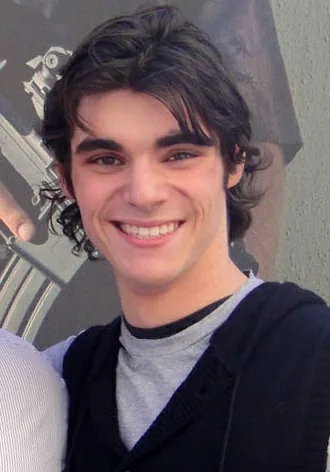
RJ Mitte, the actor who played Walter White Jr. on Breaking Bad and spent two decades dragging Hollywood toward honest portrayals of disability, died Monday in Brownsville, Texas. He was 34. No cause of death has been given.
His representatives called his passing "tragic." A local judge who pronounced him dead said the town would miss him very, very much. That is a lot of people grieving a man who was, for a generation of viewers, the kid who wanted breakfast and got a meth empire instead.
What We Know About His Death
Mitte died Monday in Brownsville, Texas, according to his representatives, who confirmed the news to the BBC, NBC News, and CBS News. Brownsville Justice of the Peace Judge Cyndi Hinojosa said she declared him dead at 1:32 p.m. local time. She said she could not disclose the cause of death.
That is where the confirmed facts stop. No cause has been released, and nobody serious should be speculating about one. His representatives asked for privacy for his family and loved ones, which is a request that costs nothing to honor and that the internet will probably ignore anyway.
Hinojosa told NBC News that Mitte "will be very, very much missed" in Brownsville, where he had moved. "He was so gracious to our town," she said. Coming from a county official who just had to sign the paperwork, that lands harder than any studio press release.
The Kid Who Got the Role of a Lifetime
Mitte was born in Jackson, Mississippi, and doctors diagnosed his cerebral palsy when he was 3 years old, he told VICE in a 2016 interview. He grew up in Louisiana. When he was around 12 or 13, his family moved to Los Angeles in 2005 to support his younger sister's acting career. Not his. Hers.
He has said he started acting "to meet kids my own age." His first audition in Los Angeles was for a California public service announcement against meth. Read that again. The kid who would become the face of the most famous meth drama in television history started out in the anti-meth ad.
Breaking Bad debuted in January 2008 when he was 15. He played Walter White Jr., the teenage son of Bryan Cranston's chemistry-teacher-turned-drug-kingpin and Anna Gunn's Skyler. The character also had cerebral palsy, and the show let that be part of who he was rather than a plot device or a punchline.
A Role That Was Based on a Real Friend
Walt Jr. was modeled on a late friend of creator Vince Gilligan who had a more severe case of cerebral palsy and used forearm crutches. Mitte did not need crutches, and the show adjusted. The result was a character who felt specific rather than symbolic.
That matters more than it sounds. For most of TV history, disabled characters were played by non-disabled actors who got awards for the performance. Mitte, who actually lived with cerebral palsy, got a regular job on one of the best dramas ever made.
He was also, by his own admission, a quiet engine of the show's survival. In a 2021 interview with Big Issue, Mitte said critical and media attention helped keep Breaking Bad on the air in its first few years. "It wasn't the viewers, because we didn't have the numbers to stay as a network show," he said. The audience came later.
The Awards, and the Work Behind Them
Breaking Bad ran for five seasons on AMC, from 2008 to 2013. It earned 58 Primetime Emmy nominations and won 16, including Outstanding Drama Series in 2013 and 2014. It is routinely listed among the best American TV series of the 21st century.
Mitte shared in that success. He won a Screen Actors Guild Award for best drama ensemble in 2014 for the show's final season. That same year he received the SAG-AFTRA Howard Russell Award, named for the first actor with a disability to win an Oscar.
He kept working afterward. His credits include Hannah Montana, Switched at Birth, the 2017 sci-fi film The Recall, the 2020 horror film The Oak Room, and his latest project, Talking to Strangers, which came out earlier this year. In the 2021 film Triumph, he played a high schooler with cerebral palsy who fights to become a wrestler. The film won the Ruderman Family Foundation Seal of Authentic Representation, an award for portraying people with disabilities honestly.
The Advocacy Was the Real Job
Mitte's representatives described him as a "passionate disability rights advocate," and for once the obituary language undersells it. He served as an ambassador for United Cerebral Palsy and Shriners Children's. He was president of The Mitte Foundation, which supports philanthropic efforts and community initiatives, and used his platform "to challenge stereotypes and promote greater representation for people with disabilities," his representative said.
He also pushed for expanded roles for disabled people in Hollywood, an industry that tends to praise inclusion at galas and then cast the same able-bodied actors the following Monday. Last year he partnered with Can Do Canines, which provides service dogs in Wisconsin and Minnesota.
He was clear-eyed about his own luck. "I'm very lucky with my disability that I have worked very hard to have the mobility I have today, but I see in many people's lives, they don't get the same opportunities," he said at the time. That is a man using his fame as a lever rather than a trophy.
His Last Word on the Show That Made Him
Earlier this month, Mitte appeared on the Joe Vulpis Podcast and talked about where it all started. He called Breaking Bad, in his opinion, "still an anti-meth thing because it doesn't end well for anyone."
It is a funny, accurate, slightly rueful summary from someone who knew the show better than almost anyone. It is also, now, among the last things he said publicly about the work that defined him. He was 34 years old.
The Dingo Take
He was 34. Sit with that for a second.
Mitte spent half his life in a business that famously chews up child actors and spits out the ones who don't fit a template. He had a disability the industry mostly preferred to cast around, and he built a career anyway, then spent that career forcing the door open for people behind him. Plenty of famous people post about advocacy. He did the unglamorous version: ambassadorships, a foundation, service dog partnerships, showing up.
We don't know why he died, and we won't guess. What we know is that a 15-year-old kid took a role that could have been a footnote and made it matter, and the world got a little less careless about who gets to be seen on screen because of it. Hollywood owes his legacy more than a sad tweet. It owes disabled actors real parts. Go and give them some.


Comments