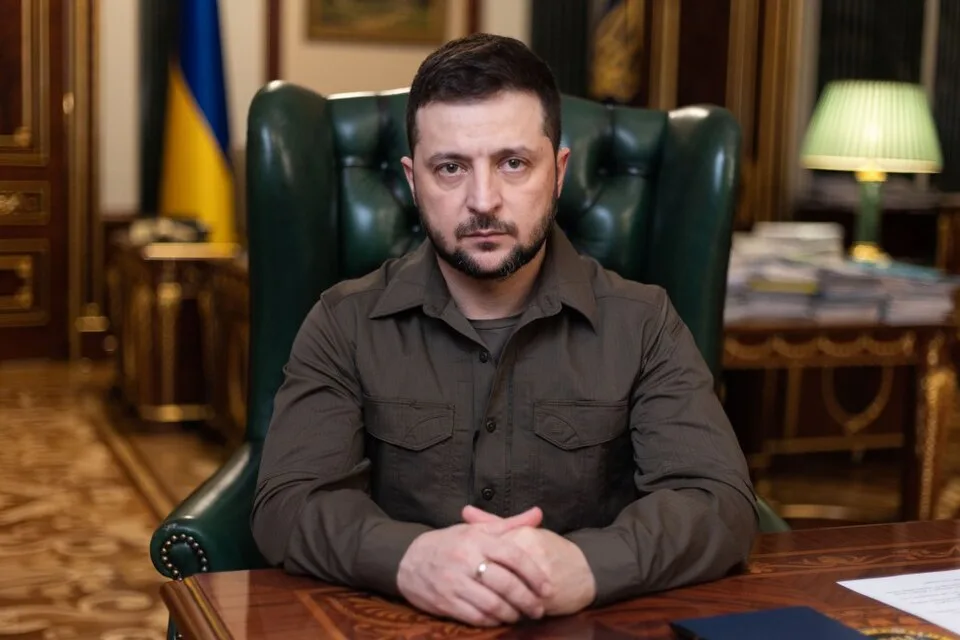
Ukraine's president went on national television Sunday and begged the United States not to formally side with Russia, while also insisting that Donald Trump is still an ally. Both of those statements are apparently necessary now, which tells you everything about where we are.
A Waiver Signed on a Friday
Here are the facts, per NBC News. On Friday, Trump waived sweeping new sanctions against Russia that Congress had passed with bipartisan support. He had signed that same bill himself last month. In the executive order, he said the waiver "is in the national interests of the United States."
The sanctions were designed to squeeze Russia's revenue by punishing global buyers of Russian oil and gas. That was the whole point. Congress built a tool to choke the money supply of a country that has been bombing Ukrainian cities for four and a half years, and the president put it back in the drawer less than a month after signing it.
The bill is named for the late Sen. Lindsey Graham, R-S.C. Zelenskyy called the waiver a "pity" and described Graham as "a great supporter of peace and of Ukraine" who "invested his life and time because he really believed in Ukraine." Say what you want about Graham's long and winding career. The man's name is on the bill, and the president just neutered it.
The Diesel Deal Nobody Asked For
The waiver landed days after Trump struck a deal with Putin to release hundreds of thousands of tons of Russian diesel fuel onto the global market. The pitch was that it would ease soaring fuel prices. Sounds practical. Sounds like the kind of thing a president does when gas costs are killing his poll numbers a few weeks before an election.
Zelenskyy told "Meet the Press" moderator Kristen Welker that the deal won't have "a real influence" on oil prices in the U.S. His reasoning is simple. Prices are rising because the Strait of Hormuz is blocked, not because of anything happening in Ukraine. Fixing that with Russian diesel is like treating a broken leg with a really nice hat.
Worse, he said the deal "will strengthen Putin in his will to occupy us." That's the real cost. Putin gets cash, legitimacy, and a signed agreement with the American president, and he gives up nothing. Ukraine gets to watch.
Blinded to Ballistic Missiles
This is the part that should keep people up at night. Zelenskyy said U.S. intelligence sharing was briefly "blocked," which left Ukraine blind to incoming ballistic missiles. Think about what that means in practice. Missiles are inbound, and the country that normally tells you where they're coming from has switched off the feed.
There's also Starlink. Limits have been placed on the technology, which Ukraine relies on to intercept jet-powered drones. Zelenskyy said Ukrainian officials believe the restriction, imposed by Elon Musk's SpaceX, came in response to a "message from American government."
So you have a sanctions waiver, a fuel deal with Putin, a pause in intelligence, and a throttled communications network, all inside a few weeks. Any one of those could be explained away as an accident or a bureaucratic hiccup. All of them together look like a pattern, and Kyiv is reading it that way.
More Difficult Than Putin
Meanwhile, the personal relationship between the two presidents has gone from strained to openly nasty, with each offering public criticism of the other. This week Trump said Zelenskyy was "more difficult to deal with than Putin."
That's the leader of the free world saying the man defending his country against an invasion is a bigger pain than the man who launched the invasion. Let that sink in for a second.
Zelenskyy's answer was something close to restraint, by his standards. He said he is "very honest" with Trump. "Maybe it's not very polite," he said, but it is "better to have partners who are very open and clear than to have those who are killers, even with a smile on their face." He did not name the killer with the smile. He did not need to.
The Ally Who Won't Stop Hoping
Here's the strange emotional core of the interview. Zelenskyy, who accused the U.S. of betraying Kyiv last week, said his feelings have not changed. But he also said, "We want to trust him." He said he hopes Trump will "change his decisions, because I think that it's all mistakes, and it will not help us, and it will not help United States."
That is a man negotiating with the only partner large enough to keep his country alive. He can't afford to burn the bridge, even while the other side is visibly pouring gasoline on it. Every sentence he says to an American audience has to do two jobs at once: tell the truth and not get Ukraine cut off.
And the stakes of the formal break are spelled out in his own words. "If these two countries will be together ... we will not prevail, and we will not be able to stand." He called the prospect of the U.S. siding with Russia a "historic mistake." He is not exaggerating for effect. He is describing the arithmetic.
The Dingo Take
What exactly does a president have to do before we stop calling it a negotiating style and start calling it what it is? He waived sanctions his own Congress passed with bipartisan votes. He cut a fuel deal with Putin and sold it as relief for American drivers, even though the real problem is a blocked Strait of Hormuz that Russian diesel doesn't touch. Intelligence flows to Ukraine got switched off while missiles were coming in. Then he called the victim harder to deal with than the aggressor.
Zelenskyy is being far more gracious than he has any reason to be. He's sitting on national television saying he wants to trust a man whose administration just handed his enemy a win and a payday. That isn't naivety. That's a leader who knows his country's survival depends on a patron who keeps proving unreliable, and he has no alternative except hoping the patron blinks.
The bill that got waived carries the name of a Republican senator who spent years arguing that Putin only understands strength. The president overrode it in the name of fuel prices a few weeks before an election. You can draw your own conclusions about what, and who, he thinks matters more. Ukraine is already drawing its own.

Comments