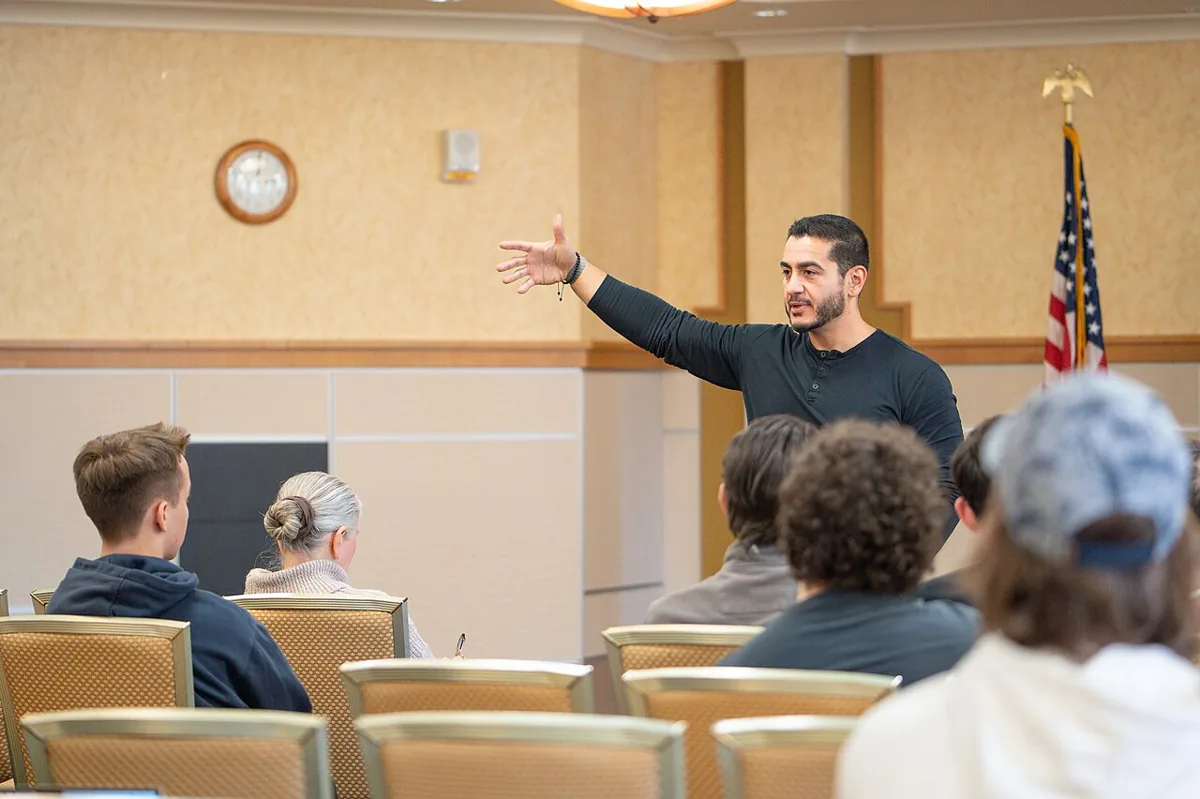
Michigan's Democratic Senate candidate just drove into the Upper Peninsula, a region that has not sent a Democrat to Congress in over a decade, to ask for votes. That is either a bold strategy or a very scenic way to lose. Abdul El-Sayed is betting it's the first one.
The Place Where Blue Goes to Be Politely Ignored
Here's the setup. Michigan's Upper Peninsula is a huge, sparsely populated stretch of forest, lakeshore, and small towns cut off from the rest of the state by the Straits of Mackinac. It is, by every measure NPR's reporting lays out, a Republican stronghold. No Democrat has won a congressional race there in more than a decade.
That's not a fluke. That's a pattern with the permanence of a mountain range. And yet here is El-Sayed, the Democratic candidate for U.S. Senate, showing up anyway, which in modern campaign terms counts as an act of either courage or pure stubbornness.
Why Bother With a Place That Has Stopped Answering the Phone?
Fair question. The UP doesn't carry the electoral weight of Detroit's suburbs or the Grand Rapids corridor. The population is small. The votes are few. A candidate with a limited schedule and a finite number of hours in a day could spend them somewhere with a better return.
But statewide races are won on margins, and margins are made of places like this. Losing the UP by 30 points is a different problem than losing it by 22. Every vote clawed back in a region everyone has written off is a vote the rest of the state doesn't have to make up for. Math doesn't care about vibes.
The Art of Showing Up When Nobody Expects You To
There's a political lesson buried in the simple act of arriving. For years, Democrats have treated rural and small-town America like a country they visit on a documentary crew's schedule, a place to be explained rather than a place to be heard. Meanwhile the other side shows up, shakes hands, eats the pasty, and takes the loyalty for granted.
El-Sayed is doing the unglamorous thing. He's driving the long roads and sitting in rooms where the yard signs lean the other way. You can disagree with him on policy and still admit that physically going to the place is more than a lot of candidates bother to do.
What a Win Here Would Actually Look Like
Nobody serious thinks El-Sayed is going to flip the Upper Peninsula blue. That's not the goal. The goal is to shave the deficit, to prove a Democrat can walk into a GOP stronghold without being run out on a rail, and to make a case to voters who've been told for a decade that their votes belong to one party.
Success in a place like this is measured in inches. A few percentage points here, a county that goes from a blowout to a respectable loss there. It's slow, boring work. It's also the only kind of work that has ever moved a map.
The Bigger Midterm Picture
This is October of a midterm year, and every campaign is making choices about where to spend its last few weeks. Spending them in the Upper Peninsula says something about how El-Sayed sees the race: as one he wins by reaching everywhere, not just by turning out the base in the places that already love him.
Whether that strategy pays off is a question the ballots will answer. For now, it's worth noting that somebody is at least trying to talk to the voters the rest of the party stopped bothering with years ago.
The Dingo Take
Why would a Democrat spend precious October days in a region that hasn't elected one to Congress in over a decade? Because the alternative is writing off a whole chunk of your own state and calling it strategy. That's not strategy. That's surrender with a spreadsheet.
Look, the Upper Peninsula is not going to turn into a blue wall by Election Day. Everyone involved knows that, including the candidate. But politics has spent years rewarding the party that shows up and punishing the party that doesn't, and Democrats have been on the wrong side of that equation in rural America for far too long. You cannot complain that voters never hear your message if you never bother to deliver it in person.
So drive the long roads, El-Sayed. Eat the pasty. Sit in the rooms where nobody agrees with you and listen anyway. It may not win the UP. But a party that remembers these places exist is a party that might remember why it's asking for their votes in the first place.





Comments