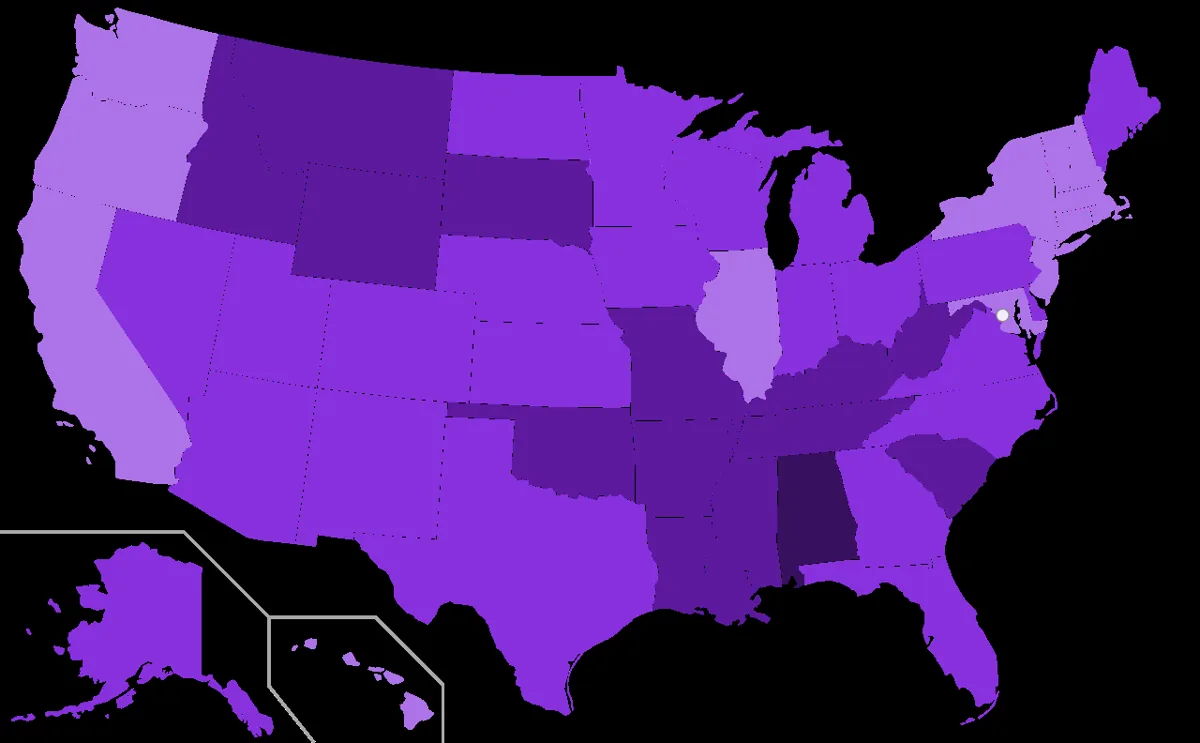
Nearly 15% of self-described Trump voters now regret voting the way they did, and Trump's approval has sunk to 34%. With less than two weeks until Election Day, voters would rather elect a Democrat to Congress than a Republican by double digits.
The Numbers Are Ugly, and Then They Get Uglier
Start with the headline figure from the latest Strength In Numbers/Verasight poll, shared with NPR. Trump's job approval is 34%. Disapproval is 62%. Half of all respondents, 50%, strongly disapprove. That is not a rough patch. That is a crater with a gift shop.
The survey of 2,028 respondents ran Oct. 13-19 and carries a margin of sampling error of 2.2 percentage points. So go ahead and shave a couple points off the bad news if it helps you sleep. It does not change the shape of the thing.
On the generic congressional ballot, Democrats lead 52% to 41% among registered voters and 54% to 42% among likely voters. Eleven and twelve points. In a midterm. In a country that was supposedly handed a permanent mandate two years ago.
Underwater on Everything, Including the Stuff He Campaigned On
G. Elliott Morris, who writes the Strength In Numbers newsletter and runs Wave Polling and Research, laid it out plainly. Trump's ratings hit new lows on seven of the 10 issues the poll has tracked since May 2025, from jobs and trade to immigration and border security. He is now underwater on every single issue the poll asks about.
Every one. Not most. Not the ones where he's been dragged through the mud by the media. All of them.
And the thing that was supposed to be the crown jewel, immigration? In May 2025, voters trusted Republicans over Democrats on immigration and deportations by an average of 15 points. Now they trust Democrats by one point. That is a 16-point swing on the issue the whole movement was built around. Republicans only hold a slim edge on crime and public safety and on border security, and those leads are slim enough to lose in a stiff breeze.
Prices, Prices, Prices
Here is what voters actually care about. Prices and inflation were named as a top-three problem by 63% of respondents, and 39% ranked it number one. Jobs and the economy, health care, elections and democracy, and immigration round out the list.
Notice what's at the top. Not a culture war flashpoint. Not a manufactured panic. Groceries, rent, the cost of living. The boring stuff that the president promised to fix on day one, and that tariffs were allegedly going to make better.
When voters were asked which party they trust to handle their own personal top issue, Democrats lead 47-35. That's a nearly 10-point jump since May 2025 and the widest gap the poll has ever measured. Republicans have lost ground on every measure the poll tracks over the last year and a half. Every measure.
The Buyer's Remorse Is Real and It's Bipartisan
This is the part that should keep a campaign strategist up at night. Nearly one in 10 people who said they voted in the 2024 presidential race regret their choice. That includes almost 15% of self-described Trump voters and 15% who backed a third-party candidate.
Think about what that means. These are not Democrats suddenly discovering they dislike Trump. These are people who pulled the lever for him and are now quietly wishing they hadn't. Fifteen percent of your own base looking at the receipt and asking for a refund.
And it explains why both parties are pouring money into House and Senate races stretching deep into conservative territory where Trump did well in 2024. When you're burning cash defending seats you were supposed to own, you already know how the night is going.
The Midterms Are a Referendum, and the Voters Know It
Many polls, including the September NPR/PBS News/Marist survey, find that these midterm choices are best understood in relation to Trump rather than as a pure Democrat-versus-Republican contest. This poll backs that up hard.
Only 25% said it matters more to elect a Congress that will help Trump pass his agenda. A full 58% said it's about electing a Congress that will act as a check and balance on him. Two of every five voters said their vote would mostly be a statement against Trump and his agenda, compared with one in five who said it would be a statement of support.
On tariffs and trade, health care, foreign policy, elections and voting, government spending and social programs, immigration and deportations, and artificial intelligence, majorities want a Congress that rolls back Trump's positions or checks them. That's not a handful of issues. That's the whole menu.
The Dingo Take
Republicans have a Trump problem, and it is the only problem that matters.
The poll says it in plain numbers. A president at 34%, a party losing trust on every issue it was supposed to own, and voters telling pollsters they'd prefer a Congress that acts as a brake over one that acts as a rubber stamp by a margin of more than two to one. When 58% of the country wants the legislative branch to behave like a legislative branch again, that's less a partisan wave than a request to restore the setting that came with the building.
Now, a caution, because we don't do victory laps before the votes are counted. Polls are not results. A 2.2-point margin of error is not a force field, and Democrats have a long, proud history of turning a double-digit lead into a concession speech through sheer talent. Voters can say they want a check on Trump and still stay home. So the job is simple and annoying: show up. Everyone. Even the people who are tired. Especially the 15% of Trump voters holding that refund receipt.




Comments