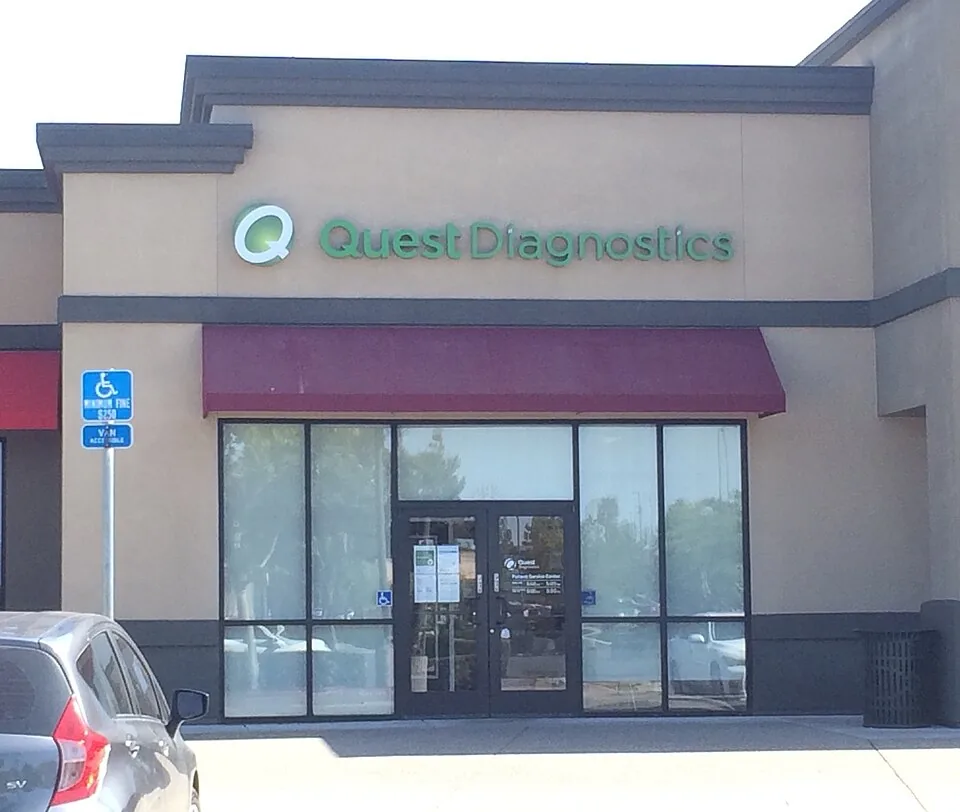
Quest Diagnostics, the company that handles lab work for roughly half of American physicians and hospitals, just told the public that someone broke into one of its lab management systems and got at patient health records. How many patients? Quest doesn't know yet. Please enjoy the rest of your October.
The Part Where They Tell You the Bad News on a Thursday
Quest posted a breach notice on its website Thursday, according to Cybernews, confirming that attackers got into its Quanum Lab Services Manager system earlier this month. The company says it became aware of the unauthorized access on October 21st and paused access to the system right away.
The same day, Quest filed with the Securities and Exchange Commission, saying it believes an unauthorized party accessed certain patient records. Note the careful phrasing. Not "may have." Believes it did.
So the company knows someone was in there. It knows records were touched. What it doesn't know is whose, or how many, or what exactly was taken. That's a hell of a status update.
What Quanum LSM Actually Does and Why You Should Care
Quanum is Quest's in-house healthcare IT brand. The Lab Services Manager piece of it is used by certain clients to place test orders and to receive and look up results. It's the plumbing that connects local clinical labs directly to physician offices, medical clinics, and hospital systems.
In plain English, it's a pipe running between your doctor and your bloodwork. Anything that flows through that pipe is the kind of information you would not hand a stranger at a bus stop.
Quest says both patient health information and patient-identifiable information were involved. That's the full menu: who you are, and what's going on inside your body. The company is still working out the specifics.
Scale Is the Whole Problem Here
Quest performs more than 200 million clinical lab tests a year. It runs over 7,700 access points, including roughly 2,000 patient service centers, and it serves one in three American adults annually. It touches half of US physicians and hospitals.
Now, to be fair, this breach hit one system, not the entire Quest empire. Quest says its core business operations are still running, and that its Electronic Medical Records and Laboratory Information System interfaces were not affected. Providers can keep ordering tests.
But "one system out of many" is a comforting phrase when the company in question is Quest. A small slice of a giant is still a lot of people. And until Quest finishes counting, nobody gets to know whether they're in that slice.
The Fax Machine Rides Again
Here's my favorite detail. As a temporary workaround, Quest is telling clients to use paper requisitions and fax them in. The instructions are on its website.
It's 2026. A multibillion-dollar medical testing giant got hacked and its fallback plan is the fax machine. Somewhere a hospital administrator just dusted off a piece of office equipment that last saw action during the Clinton administration.
Clients using the affected system can also use the Quanum eLabs site for orders and results with the same login credentials. So there's a digital option too. But the fax machine making a cameo tells you everything about how much a single compromised system can scramble the daily work of medicine.
What We Still Don't Know
Quest says it has notified federal law enforcement and brought in outside cybersecurity experts. It says the threat has been contained. It also says preliminary findings show the incident isn't related to a PHP programming language issue.
What's missing is the stuff that matters most. Cybernews notes it's unclear whether patient data was actually exfiltrated, meaning copied out of the system, or whether ransomware was involved. Quest hasn't said. The company says it is working diligently to identify affected patients and providers and will make notifications as required by law.
That last clause deserves a squint. "As required by applicable law" is the kind of phrase that means "on the schedule the law forces us to keep." Patients will find out when Quest has to tell them, not a minute sooner.
Why Medical Data Is Gold to the Wrong People
Ross Filipek, CISO at Corsica Technologies, told Cybernews that records like these could give criminals material for identity fraud or convincing messages about someone's care. A scam that references your real test results can feel far more credible than a generic phishing email, he warned.
That's the nasty part. You can cancel a credit card. You can change a password. You cannot swap out your medical history. Once it's out, it's out for good.
Filipek's advice to healthcare organizations is to examine how much patient information each account can reach and to catch unusual access before a legitimate workflow becomes a route to records. Good advice. Also the kind of advice you'd hope was already standard practice at a company this size.
The Dingo Take
Quest Diagnostics knows hackers got into a system holding patient health records and cannot yet tell you how many patients, which records, or whether anything was actually carried out the door. Splendid. Truly the confidence-inspiring disclosure we all hoped for.
Here's the thing. Healthcare keeps getting hit because healthcare data is the most valuable and most permanent kind there is, and the industry keeps acting surprised. Every breach comes with the same script: we take this seriously, we engaged experts, we will notify as required by law. Meanwhile the people whose lab results are sitting in a compromised system get to wait, with no say in any of it. You didn't choose Quest. Your doctor did, or your hospital did, and now your bloodwork is part of someone else's incident response.
If you've had labs run through Quest recently, watch your mail and your inbox for a notice, and be suspicious of any message that knows too much about your health. Scammers love a detail that sounds real. Until Quest finishes its count, assume the worst, keep the fax machine warm, and demand a straight answer on how many people just had their medical privacy handed to a stranger.




Comments