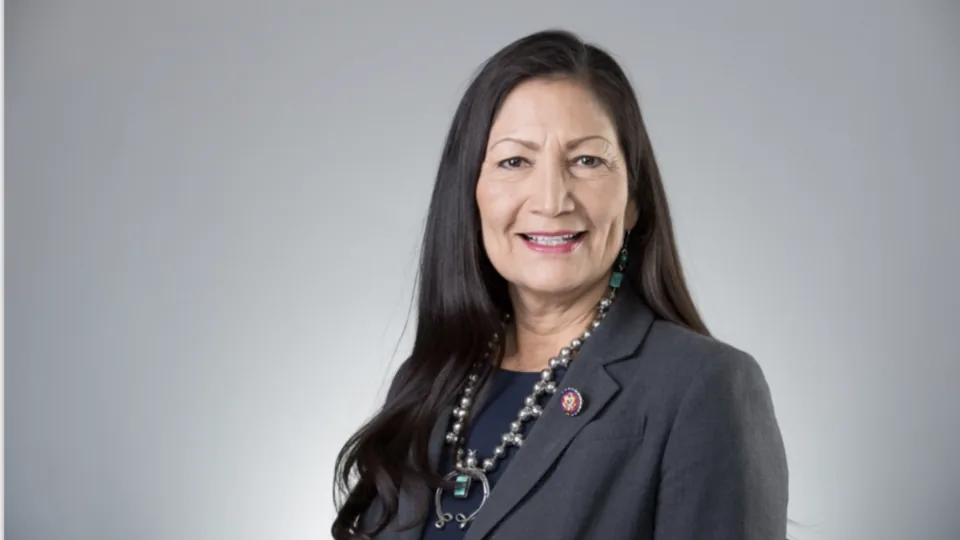
Deb Haaland is on the verge of becoming the first Native American woman elected governor of any US state, and she admits she sometimes forgets about it because the campaign is so relentlessly busy. Voters head to the polls on November 3, and recent polling shows her with a comfortable lead over Republican Gregg Hull, the longtime mayor of Rio Rancho.
A Lead That Looks Comfortable
The facts first. Haaland is running for governor of New Mexico, and according to The Guardian, recent polling has her comfortably ahead of Hull, a businessman who has run Rio Rancho for years. The election is next week. The campaign signs on the road to Isleta Pueblo, about 20 minutes south of downtown Albuquerque, are thick as gravel.
This is also not a fluke of one candidate catching a wave. Democrats control the New Mexico legislature, hold all the top offices, and have passed policies like universal childcare that people in other states look at the way you look at a neighbor's new kitchen. Haaland is the next step in a state that has been moving in one direction for a while.
From Salsa Seller to Cabinet Secretary
Haaland's résumé reads like a civics textbook that got interesting. She is a member of Laguna Pueblo. She went to Congress in 2018 in the same freshman class as Alexandria Ocasio-Cortez, Ilhan Omar and Rashida Tlaib. She sponsored the Not Invisible Act, which went after the epidemic of missing and murdered Native Americans.
Then Joe Biden made her Secretary of the Interior, the first Native American to lead a cabinet agency. She built a missing and murdered unit inside the Bureau of Indian Affairs and pushed to protect culturally significant lands, including Chaco Canyon and Bears Ears. That's the kind of work that doesn't trend on social media and matters enormously to the people it touches.
The Single Mom Who Used the Safety Net
Here's the part that makes her pitch land. Haaland talks openly about raising a child as a single mother on Medicaid, WIC and SNAP before going to law school in her 30s. She ran a small salsa business early on. When she became Interior Secretary, she was still paying off student loans.
That is not a Washington politician's idea of a relatable backstory workshopped in a consultant's conference room. It's her actual life. She described trying to apply for a special home loan available to Native Americans while raising her young kid, and she did it on a panel with Elizabeth Warren. Her platform is to expand the social safety net and improve healthcare access in rural communities, and she is not pitching that from theory.
The Endorsement Parade
In recent weeks, Barack Obama endorsed her. Michigan Governor Gretchen Whitmer and former Transportation Secretary Pete Buttigieg both traveled to New Mexico to stump for her. When that many national Democrats show up to campaign for a candidate who's already ahead, they're not worried about the result. They want to be in the photo.
And they're right to want it. Native Americans make up more than 12 percent of New Mexico's population, and plenty of them see themselves in this race in a way they haven't before. Haaland has promised to protect the state's water, investigate the legacy of Native American boarding schools, and prioritize missing and murdered Indigenous persons cases.
What the Voters on the Ground Are Saying
Janice Lucero, a member of Isleta Pueblo and co-founder of the Isleta Pueblo Voters Alliance, said Haaland has real pull with younger voters because she listens to their concerns in communities across the state. Jade Begay, who is Tesuque Pueblo and Diné and served as Native American engagement director for Kamala Harris's 2024 campaign, said Native women and young Native people are especially fired up.
Begay also put the stakes bluntly. She said Haaland is someone who "will be on the frontlines for New Mexico and defend us from the Trump administration." That framing tells you where a lot of the energy is coming from. People aren't just voting for something. They're voting to have somebody standing between them and Washington.
A Record Year for Native Candidates
Haaland isn't the only history-maker on the ballot. According to Advance Native Political Leadership, a record-setting 358 Indigenous candidates have run or are running for office this year in local, state and federal races. The country could also see its first Indigenous woman elected to the Senate if either Mary Peltola of Alaska or Minnesota Lieutenant Governor Peggy Flanagan wins.
State Senator Angel Charley, who is Laguna, Zuni and Diné, said seeing Haaland and Kansas Congresswoman Sharice Davids on the national stage was what made her own run feel possible. Charley won a district that had never been represented by a Native woman. Ahtza Dawn Chavez, executive director of NM Native Vote, put it simply: "I am a strong believer in the strength of the matriarchs." The pipeline isn't an abstraction. It's visible in the legislature down the road.
The Dingo Take
Think of the day in 1992 when Carol Moseley Braun walked into the Senate as the first Black woman ever elected to it. Nobody had to explain why it mattered. The country had gone more than two centuries without it, and then it hadn't. That is what's on the table in New Mexico next Tuesday, and the fact that it comes with a polling lead instead of a nail-biter doesn't make it smaller.
Here's what's worth sitting with. Haaland's best argument isn't the history. It's the salsa business, the WIC card, the student loans she was still paying off while running a cabinet department. In a political era where plenty of candidates play at being regular people, she's one who did the time. When the person asking to run your state once stood in line for the same benefits you're worried about losing, the policy conversation gets a lot more honest.
And yes, it's a good week to be reminded that voters in a lot of places are tired of being governed by people who've never had to read the fine print on a benefits form. Haaland says she forgets about the milestone because she's too busy knocking on doors. Good. Keep forgetting. The rest of us will remember it for you.


Comments