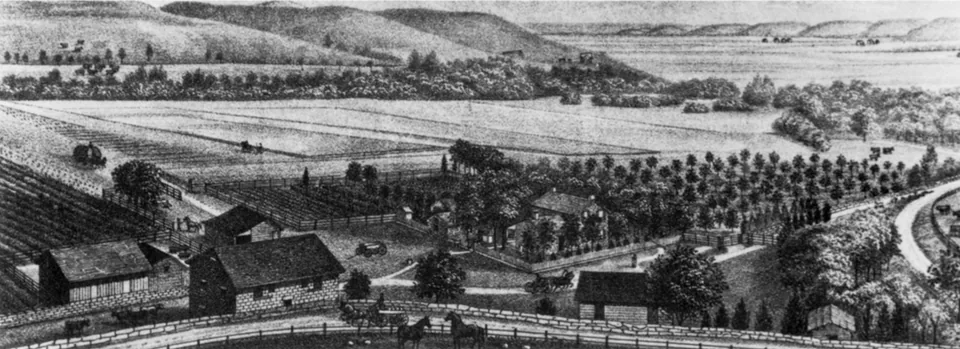
The Preisser family of Sylvia, Kansas, spent $737,375 more to run their farm in 2026 than they did in 2025, while their revenue fell by $325,000. Larry Preisser, who started the farm and sold land that had been in the family for 140 years to cover the bills, is now planning to vote for a Democrat for the first time in his life. In Kansas. In the 2026 Senate race. Let that sink in.
This is what a competitive Senate race looks like in a state that hasn't sent a Democrat to the Senate since the 1930s.
The Math Is Brutal and the Receipt Is Real
Jeff Preisser handed CBS News a piece of paper itemizing exactly how much worse his year got. Fertilizer cost $514,625 more. Diesel cost $187,000 more, a jump he ties to the Iran war. Parts cost $10,000 more, which the family links to steel tariffs.
Now the other side of the ledger. Drought cut their yields by 20%. Commodity prices are low. Trade wars have shrunk agricultural exports. All of that added up to $325,000 less in revenue from 2025 to 2026.
So costs went up by three quarters of a million dollars while income went down by a third of a million. You do not need an agricultural economics degree to see where that line is heading. It is heading off a cliff, and the family is standing on the edge with a 6,500-acre farm of corn, cotton, soybeans and wheat.
There Is Nothing Left to Borrow Against
Jeff Preisser is 50 and has farmed his whole life. Over the years he bought land and built equity, which is the cushion farmers lean on when a year goes bad. This year he had to refinance all of it.
"There is no more equity in anything. I mean, it's maxed out," he said. "So if it doesn't work this year, we're done. I'm done."
He isn't sure the farm survives through next year. He's not alone in that fear. Kansas lost 700 farms from 2024 to 2025, and farm bankruptcies across the Midwest rose 70% over the same period. These are not abstract numbers. They are somebody's grandfather's land going to auction.
Dad Is Voting Democrat for the First Time
Larry Preisser started this farm. He plans to cast his Senate vote for Adam Hamilton, a pastor and former Republican who is trying to become the first Democrat to represent Kansas in the Senate in roughly ninety years.
His reason is simple. He says he was promised that once Republicans held power under Trump, Roger Marshall would fight to pass the Farm Bill, the massive package that covers crop insurance, prices and rural development. Congress hasn't passed a new one since 2018. Last month, the old one officially expired.
"Two years [later], we got no farm bill, nothing," he said. That is a farmer describing a promise made, a party put in charge, and a result that amounts to a shrug. He and a neighbor liked that Hamilton came across as a moderate who wants to work with Republicans, not fight them.
The Family Can't Even Agree on Voting at All
Jeff, the son, isn't sure he'll vote. If he does, it won't be for the Republican. "We need someone who's not Roger Marshall," he said. His sister, Mandi Sieren, said she doesn't trust anybody enough at this point, Democrat or Republican, and doesn't even want to vote.
That is its own kind of damning. Not enthusiasm for the other team. Just a family that built something over 140 years and now looks at both parties and sees nobody coming to help.
A Farm Journal survey from April backs up the mood. Farmers and ranchers do trust Republicans more than Democrats on issues key to the industry. But 73% said their elected officials understand their realities "not very well" or "not at all," and on every economic issue tested, at least one in five trusted neither party.
Not Everyone Is Walking Away From Marshall
Fair is fair. An hour down the road, soybean farmer Mick Roush says he won't be able to hold on much longer if conditions don't change, and he's still sticking with Marshall. He thinks Hamilton is "too liberal."
Many farmers are staying put because Marshall "is from farm country." They feel the pain of the Iran war but see it as temporary, and some say it's justified to keep Iran from building a nuclear weapon. Others are voting Republican to keep the Senate red, afraid farmers would fare worse under a Democratic Congress.
So the pressure is splitting farm country, not collapsing it. Tribal loyalty is a hell of a drug, and it is holding up a lot of balance sheets that otherwise would not stand.
The $8 Billion Band-Aid
At a midterm rally outside Wichita last week, Trump announced an $8 billion program to provide temporary fuel relief for farmers. It's part of a series of policies aimed at easing diesel prices.
The Preissers were unimpressed. They called it a "Band-Aid" on a fundamentally broken system. Farmers can't set their own prices, input costs keep climbing, growing conditions are less predictable, and the global market is unstable.
"Here's some money to make you feel better. But we're not really going to fix the issue of crop prices and fertilizer prices," Jeff said. He added that the help won't arrive until probably January or February, and "there's going to be a lot of farmers probably broke by then." Sieren was blunter: "We almost don't want it. We'd rather have the program be fixed like it's supposed to be."
The Dingo Take
"We need someone who's not Roger Marshall." That's not a Democratic talking point. That's the son of the man who built the farm, a lifelong Kansas farmer, and he can't be bothered to dress it up. Marshall's pitch is that he's from farm country, and for plenty of voters that still lands. But the people living the receipts are telling you being from farm country and fighting for farm country are two different jobs.
Here's the whole story in one paragraph. The administration's tariffs and trade wars shrank export markets. The Iran war pushed diesel and fertilizer through the roof. Immigration raids left ranchers short-staffed at harvest. Congress let the Farm Bill expire. And then the president flew to Wichita to announce $8 billion in fuel relief, which farmers say won't land until after a lot of them have already gone under. You can call that a lot of things. "A plan" is not one of them.
None of this means Kansas flips. Roush is real. The "keep the Senate red" crowd is real. But when a man who has farmed for decades tells a national news outlet he's "done" if this year doesn't work out, and his 140-years-on-the-land father is voting Democratic for the first time, somebody in Washington should be sweating. Because farmers are the last people in America who can afford to be told to wait until January.
Comments