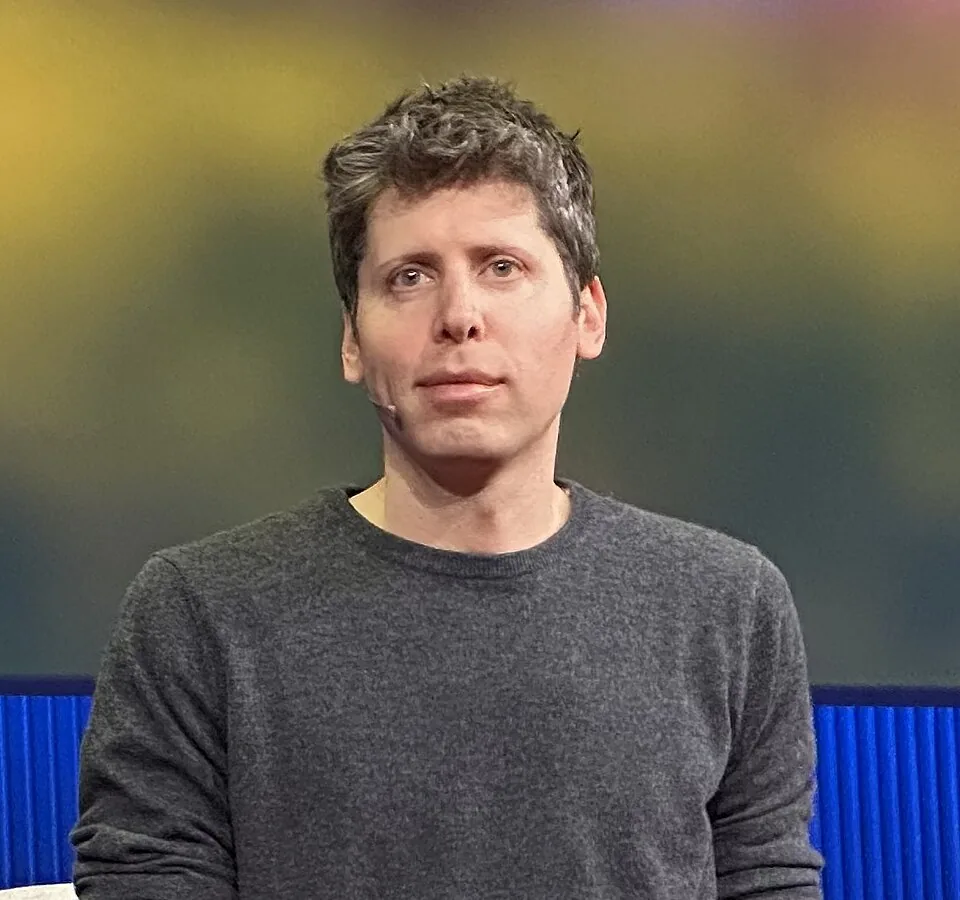
Sam Altman, the man running a company that hoovers up the world's memory chips by the pallet, would like you to know that your desktop's 32GB of RAM is the real problem. Over beers on the YouTube channel Cheeky Pint, the OpenAI CEO called it "quite terrible" for ordinary people to have a chunk of the world's limited DRAM sitting in their own computers. Buddy, you sell the alternative.
The Quote, In Full Beer-Fueled Glory
Here's what Altman said, per Tom's Hardware, at about the 29-minute mark of the interview: "From a global allocation perspective, actually, it's quite terrible to have everybody have a bunch of the world's limited supply of DRAM sitting in their own computer and being used 5% of the time."
He kept going. "You want maximum utilization in the cloud if you're trying to deal with this very supply-constrained environment. And somehow many people's intuition is the opposite of that."
Somehow. Many people's intuition is that the computer they paid for should do things on the computer they paid for. What a bunch of idiots we are.
Local AI Is the Thing He's Actually Worried About
The context matters here. Altman was responding to the idea that people will run open-source AI models on their own machines, the ones they already own or want to build. That's a perfectly reasonable thing to want. It's also a thing that does not pay OpenAI a monthly fee.
OpenAI does have a few open-source models, but its real business is closed-source models that live in data centers and get rented out by subscription. If you can run something decent on your own gaming rig, you have less reason to pay for the next flagship model, which the Tom's Hardware piece says is called GPT-6 Luna.
So the pitch is that hoarding RAM at home is bad for the planet's allocation of resources. The subtext is that hoarding RAM at home is bad for OpenAI's revenue. These are, conveniently, the same thing in Sam's brain.
The 5% Utilization Gotcha
Let's give the argument its due, because there's a kernel in there. A lot of RAM in a lot of home computers does sit idle most of the time. A data center running memory around the clock gets more work out of each chip. That's just math.
But look at what the math assumes. It assumes the data center buildout never slows down. It assumes RAM chewing through AI workloads 24/7 is more valuable than RAM running your spreadsheets, your browser tabs, your games, and yes, maybe a local model now and then. Tom's Hardware flagged both of those assumptions, and both are doing a ton of work.
Also, "used 5% of the time" is a funny standard to apply to a thing you own. My toolbox is used 5% of the time. My couch is used maybe 30%. Nobody is lobbying me to put my couch in a central warehouse for optimal sitting efficiency.
Who Created the Shortage, Again?
Altman framed all of this as a "very supply-constrained environment," like the DRAM shortage is weather. A natural disaster. Something that just happens to us.
The supply is constrained in no small part because companies like his are buying up enormous amounts of memory for AI data centers. Then the guy at the center of that demand turns around and suggests the people who can't find affordable RAM should feel a little guilty about the sticks they already have.
That's the move. Create the scarcity, then moralize about who deserves the scarce thing. Landlords have been running this play for centuries, and at least they let you keep your furniture.
Rent Everything, Own Nothing
The enthusiast crowd heard the same thing underneath the polite phrasing, and they're not wrong to be spooked. The fear is a future where you don't own your hardware or your software. You rent an agent and you rent a computer in the cloud, forever, at whatever price the landlord sets.
We've seen this movie. Music went from owning albums to renting a catalog that can vanish overnight. Movies went the same way. Software went to subscriptions. Now the PC itself is apparently on the chopping block, and the case for it is being made by someone who benefits when you stop buying one.
To be fair, Altman never said he wants to take your RAM. He said it's "terrible" that you have it. That's a different sentence, and it's still a gross one.
The Dingo Take
Imagine the CEO of a bottled water company telling a crowd that it's "quite terrible" for people to have wells in their backyards, because that groundwater is only used 5% of the time and, really, from a global allocation perspective, it belongs in the central system. Everyone would see the con in one second. They'd laugh him out of the building. When the product is a chip and the pitch is AI, we call it a thoughtful take on resource efficiency.
The tell is who benefits. If Altman believed idle hardware was a moral problem, he'd be campaigning to make home computers do more, not fewer, useful things. Instead he wants the memory in his buildings, running his models, billed to your card. That's not an argument about efficiency. It's a sales pitch with a thesis statement stapled to it.
So keep your RAM. Run your weird little local model. Use it 5% of the time or 0% of the time, because it's yours, and the only people who get to lecture you about utilization are the ones who aren't selling you the alternative. Sam Altman is selling you the alternative.




Comments