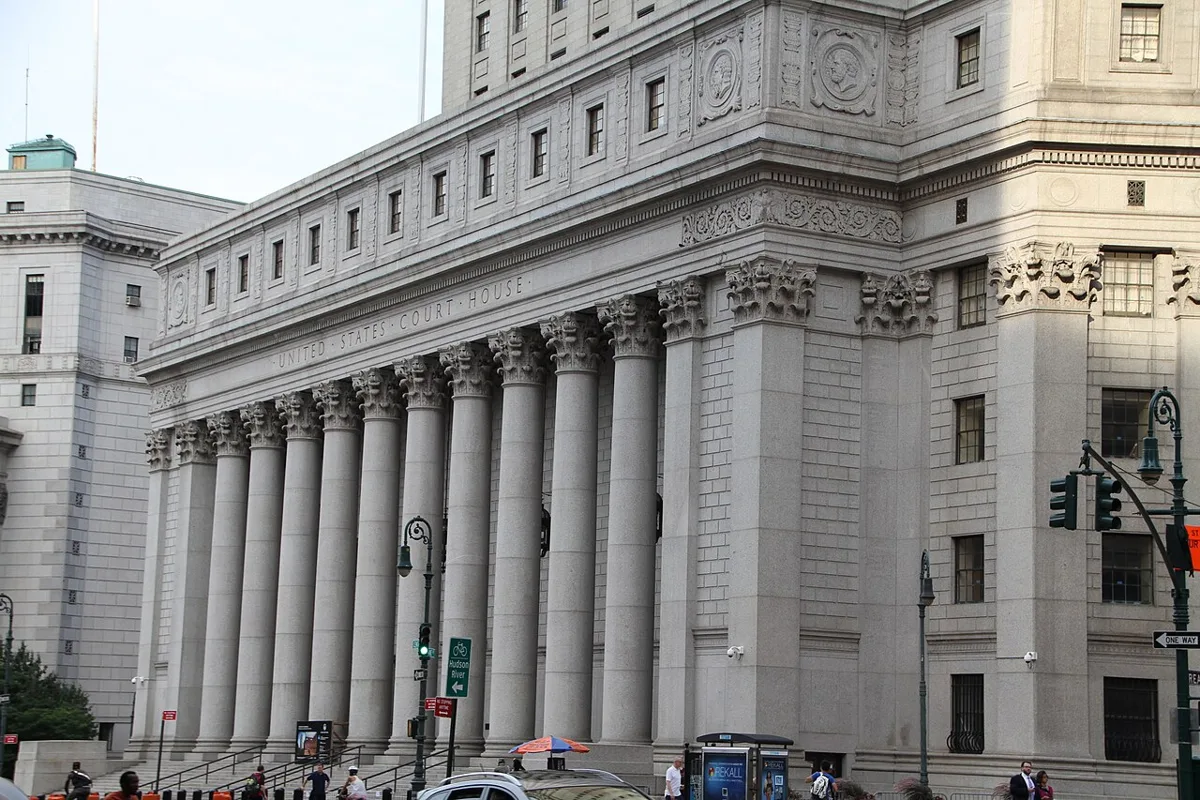
The Justice Department planned to send more than 1,000 people to polling places on Election Day, and the question a federal judge had to settle on the eve of the midterms was whether those people were cops. The answer, after a hearing, was that DOJ lawyers promised they weren't, and Judge Reggie Walton made that promise a court order.
The Order, In Plain English
U.S. District Judge Reggie Walton, a George W. Bush appointee, ruled Monday night on the NAACP's request to block the DOJ's poll monitoring program entirely. He said no to the full block, but he did not give the department a free pass either. The monitors can go. They just can't be sworn law enforcement officers, can't carry guns, can't wear uniforms or federal insignia, and can't make arrests.
That last list is the whole story. A judge had to write down, in an official order, that the people the Justice Department is sending to watch American voters cast ballots must not be armed and must not have the power to arrest them. Let that sink in for a second. This is a thing a federal court felt the need to spell out.
Walton denied the NAACP's motion without prejudice, which means the group can come back and try again. He found the current record didn't show they were likely to win on their claim.
Who Was Supposed To Show Up
The NAACP's concern was not hypothetical. The group sought to bar the DOJ from deploying personnel from agencies including the Bureau of Alcohol, Tobacco, Firearms and Explosives, the Drug Enforcement Administration and the Bureau of Prisons. Those are not the folks you usually picture when someone says "election monitor." Those are the folks you picture when someone says "we have a warrant."
The allegations that preceded the ruling were that the department planned to send more than 1,000 personnel, including law enforcement agents and investigators, to polling locations. Fox News, which reported the ruling, noted that DOJ attorneys told the court sworn agents and officers would be excluded from the program.
So the department's position, delivered to a judge, is that the thousand-person force headed to polling places is made up of administrative and clerical employees. Paper pushers. Filing clerks. Presumably a lot of people who are very good at stapling.
The 'Reasonable Voter' Standard Does A Lot Of Work
Walton's reasoning is where it gets interesting. He wrote that the court was "unpersuaded by the plaintiffs' assertion that a person who is simply 'project[ing a] command[ing] presence, scan[ning] crowds, and more' – without any outward indications of law enforcement authority – would generate objectively reasonable fear in a voter."
Read that carefully. The logic is that without a badge, a uniform or a gun, a person standing around looking commanding wouldn't scare the average voter. That may well be true of a clerk from the Bureau of Prisons in a windbreaker. It is also a standard that depends entirely on the DOJ actually following the conditions the judge just imposed.
Walton also looked at the department's public statements about voter fraud and election integrity and concluded that, combined with the deployment, they would not place the average voter "in reasonable fear of harassment and interference with their right to vote." A department that spends weeks talking about fraud and then deploys a thousand people to polling places is a department whose statements a voter might reasonably notice. The judge disagreed. That is his call to make, and the NAACP can keep making its case.
The Rules That Tell You What Everyone Was Worried About
The conditions Walton imposed read like a checklist of everything that could go wrong. Monitors must not interfere with voters or election officials. They must follow state and local rules. They must avoid speaking with voters inside polling places, and may speak with voters outside only after those voters have cast a ballot. They must introduce themselves to election officials and carry federal credentials in case anyone asks them to verify their employment.
None of this is exotic. It is the basic etiquette of not menacing people while they exercise a constitutional right. The fact that it needed a court order tells you something about the temperature heading into these midterms.
There is also a deadline with teeth. Walton ordered the DOJ to file a status report by 7 a.m. ET on Tuesday explaining how it confirmed that none of the monitors would be law enforcement officials with arrest powers. That is a federal judge telling the Justice Department to show its work before the polls open.
A Win For Everybody, Sort Of
Both sides can claim something here. The DOJ gets its monitoring program. The NAACP gets a court order that strips out the most alarming version of it. Fox News, for its part, framed the ruling as the DOJ's program being allowed to move forward, which is accurate and also the less interesting half of the story.
The more interesting half is the part where the department's own lawyers conceded, on the record, the limits that now bind it. Walton essentially took their word and made it enforceable. If a monitor turns out to be carrying a firearm or flashing a badge on Tuesday, the department will have a very uncomfortable conversation with a judge who already told it exactly what to do.
The Dingo Take
Does it strike you as normal that a federal judge had to order the Department of Justice to make sure the people it sends to watch you vote can't arrest you? Because it should not. This is the sort of sentence you expect to read about a country with a different flag and a much worse election commission.
Here's the generous reading. The DOJ says these are clerical workers, the judge believed them, and Tuesday will come and go with a thousand bored federal employees standing outside school gymnasiums wondering why they didn't call in sick. That could happen. It would be fine. It would also not erase the fact that the whole fight exists because the department wanted a visible, uniformed-adjacent federal presence at polling places while loudly talking about fraud, and only backed off the badges and guns once someone sued.
The order is a fence, and fences only matter if someone checks them. Walton demanded a status report by 7 a.m. on Election Day. Good. Watch what it says, watch who shows up, and watch whether the promises made to a judge survive contact with an actual polling place. Voters did not ask for a thousand federal observers. They asked to cast a ballot without a lecture on the Fourth Amendment from a man in a lanyard.



Comments