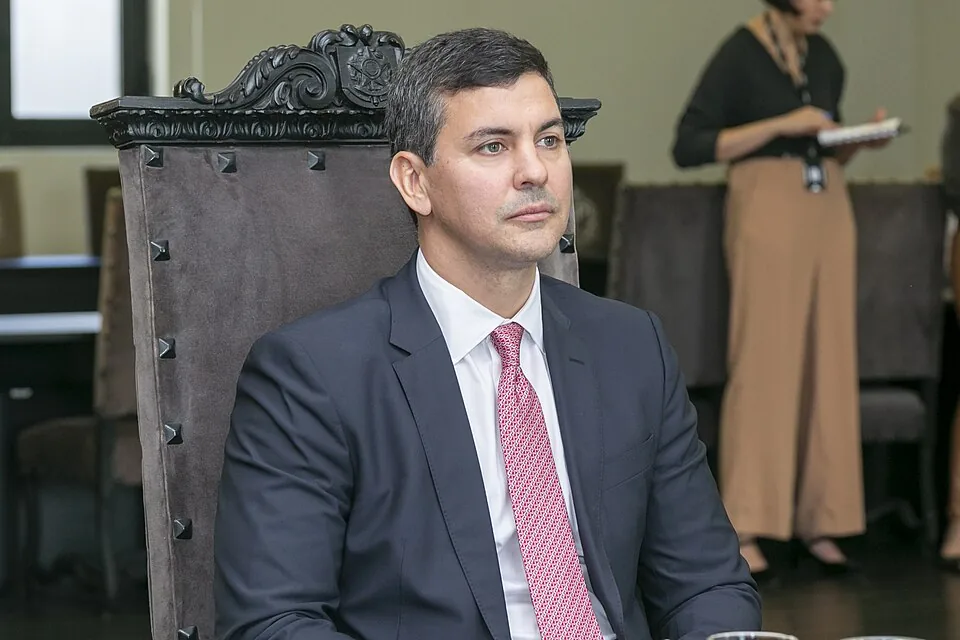
Paraguayan President Santiago Peña announced his resignation Thursday, and within minutes the lower house voted 78-0 to impeach him anyway. The trigger was the collapse of Ueno Bank, a digital lender tied to his government that froze the savings of millions of people. Weeks ago he was being welcomed in Washington as a key ally of the Trump administration.
A Resignation With a Chaser
Let's start with the sequence, because it's a good one. Peña posted a video to X saying he was stepping down in the interest of "the stability of our country, social peace and the need to preserve our democratic institutions." Minutes later, the lower house voted 78 to 0 to impeach him. Not 78 to 12. Zero. Nobody in the chamber wanted to be the person who voted to keep him.
According to NPR's report, which drew on the Associated Press, congressional leaders were expected to accept the resignation later in the day, which would let Vice President Pedro Alliana take the oath without waiting for a Senate trial. Opposition senators are demanding the trial anyway. Their argument is that a resignation keeps Peña eligible to become a senator for life, with legal protections that could shield him from prosecution.
So the man may quit his way into immunity. Paraguay's lawmakers are now fighting over whether a guy can dodge the consequences by leaving a minute early. That's a fight worth having.
The Bank That Ate the Country
Ueno Bank went from obscure finance company to household name in under five years. It claimed more than 60% of Paraguay's adults as customers. It got its banking license in 2023 and then seemed to be everywhere: cash-back deals on groceries, more than 70 locations, sponsorship of the national soccer team, its name plastered across the country's main stadium.
That is a lot of marketing for a lender that, once the books were corrected, had capital at less than half the legal minimum. Capital is the cushion a bank keeps to absorb losses. Ueno's cushion was a throw pillow.
The central bank seized the lender Tuesday. The app, the cards and the transfers went dark. Branches locked their doors with depositors lined up outside. Then a rush to open accounts at other banks crashed those banks' mobile apps, which is how you turn one bank failure into a nationwide panic in a single afternoon.
The Regulator Was the Bank's Old Boss
Here's the part that should make your eye twitch. Peña appointed Carlos Carvallo to run the central bank, the agency charged with supervising Ueno. Carvallo was president of Financiera Ueno, the predecessor to Ueno Bank. The referee used to play for the team.
Peña himself held a stake until last year in a company linked to Ueno. Government money poured into the bank on his watch. As of last month, Ueno held roughly $800 million in public deposits, about a quarter of its total, including money from the state pension and health fund and the operators of Paraguay's giant hydroelectric dams.
Then there's the timing of the warnings. In June, central bank inspectors found a pattern of risky lending to insiders, according to ABC Color, a leading Paraguayan newspaper. Ueno had lent large sums to companies tied to its owners, beyond what the law allows and without enough collateral to cover the debts if they went bad. As recently as last month, Peña defended Ueno and the central bank's oversight and dismissed the concerns as a smear campaign spooking the public.
Even the Mentor Jumped Ship
When your own party turns on you, you've done something special. Colorado Party leader and former President Horacio Cartes, Peña's mentor, backed impeachment. He said the party would not side with "the plundering of public and private funds and pensioners' money."
Sit with that for a second. The US Treasury sanctioned Cartes in 2023 over bribery allegations, sanctions the Trump administration lifted last year. And this man is now lecturing the country about plunder. When the guy with the bribery sanctions in his past says you went too far, you went too far.
Protesters in Asunción were less subtle. "Santiago Peña and the Colorado Party have stolen all our savings," said Luis Pineda, who marched to Congress Wednesday. "We are fed up with 70 years of plunder."
Contrition, Sort Of
Peña expressed contrition, in the way a man backs away from a car he just drove through a storefront. "I want to apologize to the people if I have failed them at any point," he said. "It was never my intention to betray the trust they placed in me."
Notice the "if." Millions of depositors, retirees and workers are scrambling to recoup frozen savings and unpaid wages, and the apology is conditional. He stopped short of accepting responsibility for the turmoil.
Meanwhile the guaraní fell nearly 4% against the US dollar Thursday, bringing its losses this week to nearly 7%. Officials have appealed for calm, and Congress rushed through a law Wednesday creating a state guarantee for depositors. People who have been locked out of their own money are being asked to relax by the same political class that let the bank grow unchecked.
From Washington's Guest to Asunción's Defendant
The fall is the kind that makes your neck hurt. A former IMF economist, backed by the country's most powerful politicians, welcomed in Washington just weeks ago as a key ally of the Trump administration. Paraguay had even earned coveted investment-grade credit ratings on the strength of steady economic management and rapid growth.
Then the whole thing turned out to rest on a bank run by insiders, regulated by an insider, and stuffed with public pension money. The growth was real. So was the rot underneath it.
The Dingo Take
A bank this close to the president was always going to end like this.
The pattern is as old as banking. Put the owner's friends in charge of the lender, put the lender's old boss in charge of the regulator, and park the pension fund in the vault. Then ignore the inspectors and call the warnings a smear campaign. Peña didn't discover a hidden flaw in the system. He built the system that way, and now the people who can't withdraw their rent money are paying for it.
The fight to watch is the Senate trial. If Peña resigns his way into a senator-for-life seat with legal protections, the 78-0 vote becomes a very expensive piece of theater. The opposition senators demanding a trial are right. Quitting should not work as a get-out-of-accountability card, and the retirees standing outside locked branches deserve to see someone answer for it in a courtroom, not in a conditional apology posted to X.




Comments