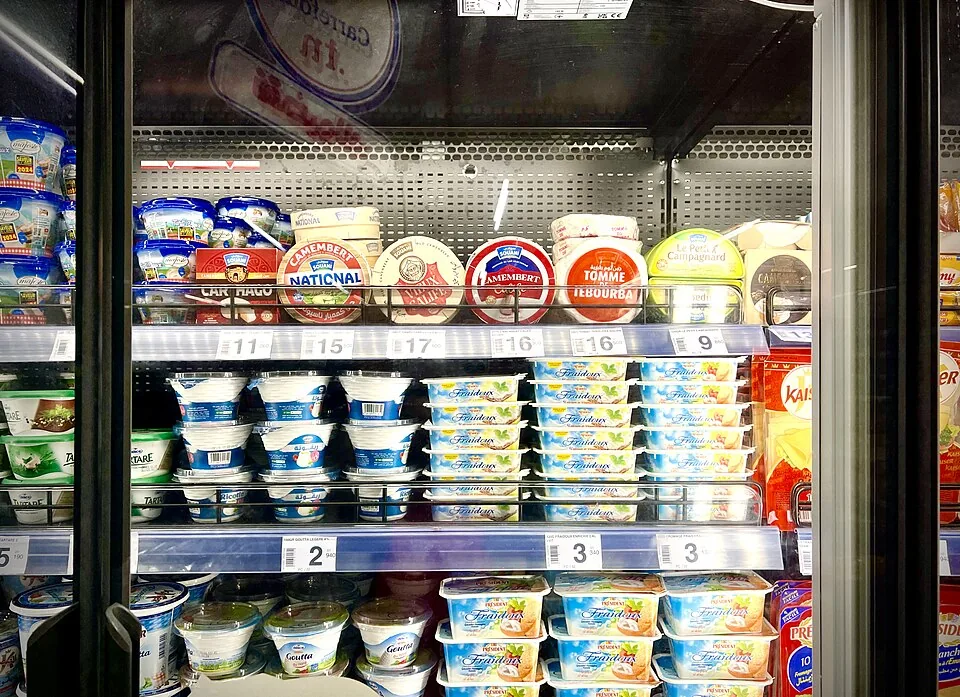
Someone hacked the refrigerators at supermarkets across Europe and cranked them to 122 degrees Fahrenheit, which is not a freezer setting so much as a very expensive oven for chicken. A new wave hit stores in Sweden, the Netherlands, Belgium, Ireland, Luxembourg, and Estonia on Monday, following a French attack last month that started actual fires. Nobody has claimed credit, and the Pentagon is now investigating suspected attacks on refrigeration systems at six U.S. military commissaries.
Your Frozen Peas Are Now a National Security Issue
Let's get the facts on the table, per reporting from NBC News and Axios. Overnight Monday, suspected cyberattacks sent fridge and freezer temperatures soaring at dozens of supermarkets across the continent, spoiling food and threatening costly losses. The affected countries: Sweden, the Netherlands, Belgium, Ireland, Luxembourg, and Estonia.
This is the second act. Last month in France, police said hackers seized control of cooling units at hundreds of supermarkets, pushing temperatures as high as 122 degrees Fahrenheit. That attack caused fires and food losses. So the first round burned things, and the sequel apparently got a bigger budget and a wider release.
Authorities haven't named a culprit. There have been no claims of responsibility. Whoever did this just wanted a lot of rotting meat and a lot of attention.
The Store-by-Store Damage Report
In the Netherlands, Ahold Delhaize confirmed an "IT incident" hitting refrigeration systems in a number of its stores and said its teams were working to assess the situation. In Belgium, Stephan Moelans, CEO of refrigeration company Sabcobel, which runs Delhaize's systems, told Belga news agency it was a cyberattack and that the units' evaporators had been switched to defrost mode. That is a very polite way of saying someone told your ice cream to become soup.
Also in Belgium, Colruyt Group said five Spar shops had their fridge systems attacked. Carrefour said a "cyberattack targeting refrigeration installations only had an extremely limited impact," affecting 15 of its more than 700 stores. Fifteen stores. Extremely limited. Tell that to the 15 managers hauling spoiled yogurt to a dumpster.
In Ireland, wholesaler Musgrave said a cyber incident hit refrigeration in 13 of its SuperValu stores, forcing it to pull some chilled and frozen products from sale. The company said its monitoring systems flagged the problem and it acted immediately. In Sweden, the ICA Kvantum in Sjöbo posted on Facebook that its fridges and freezers had been hacked and set to 122 degrees, and that staff were throwing out the affected items. Coop told the Swedish daily Aftonbladet that six of its stores were hit.
The Weak Link Is a Vendor You've Never Heard Of
Here's the part that should make every grocery executive sweat through their quarter-zip. ICA said its own systems were not affected. The problem was "an incident at a small number of stores that use an external supplier and have their connectivity outside ICA's central network."
Read that again. The big chain's network was fine. The attack came in through a third-party refrigeration vendor, the kind of company nobody puts on a slide at the shareholder meeting. In Estonia, a company that makes the affected technology said one of its clients had been hit as well.
This is the oldest story in cybersecurity. You can spend a fortune locking the front door while the freezer controller sits on the internet with the password equivalent of a sticky note. Hackers don't need to storm the castle when the castle outsourced its thermostat.
The Pentagon Has Entered the Chat
If you're an American reading this and feeling smug about the ocean between us, put the smugness back in the cooler. Axios notes that U.S. supermarkets use similar technology, and the Pentagon is already investigating suspected cyberattacks involving refrigeration systems at six military commissaries.
So the same trick may already be pointed at the people who feed American troops and their families. Nobody has said who is behind any of it, and no one should pretend to know yet. But the pattern is hard to miss. Same method, same target, multiple countries, multiple weeks.
The European Commission said Monday that the attack highlights how digital threats can increasingly affect citizens' everyday lives. That is a diplomatic sentence for 'the milk is hot and we are scared.'
Russia Is the Elephant Nobody Will Name
No one has pointed a finger, and we won't either. But NBC News notes the attacks come as the continent confronts broader security fears stemming from Russia's war in Ukraine, and you don't have to be a spook to see why that context is in the story.
Disrupting grocery stores is a nasty kind of leverage. It doesn't topple a government. It makes ordinary people's lives a little worse, a little scarier, and a little more expensive, all while a few thousand pounds of spoiled food sits in a parking lot. Whoever it is, they've figured out that you don't need a missile to make a continent feel unsafe. You need a login page.
The Dingo Take
One hundred twenty-two degrees. That is the temperature somebody picked for a cooler full of food, and it tells you everything about the people behind this. It's not a hack aimed at money. There's no ransom note, no claim of responsibility, no demand. It is a demonstration, and the message is that your groceries can be cooked from a laptop.
We spent two decades hooking every appliance on earth to the internet because it was convenient, and we never asked who was minding the back door. The fridge in your local supermarket now talks to a vendor, and the vendor talks to the internet, and the internet talks to anyone with patience and a grudge. Companies said it would save money. It did, right up until the money turned into a dumpster full of melted chicken.
The boring answer is the right one: segment the networks, audit the vendors, and treat a refrigerator controller like the critical infrastructure it has quietly become. It won't make headlines. But Europe just learned that the cheapest way to hurt a country is to ruin its dinner, and the Pentagon's commissary investigation suggests we're next on the menu.




Comments