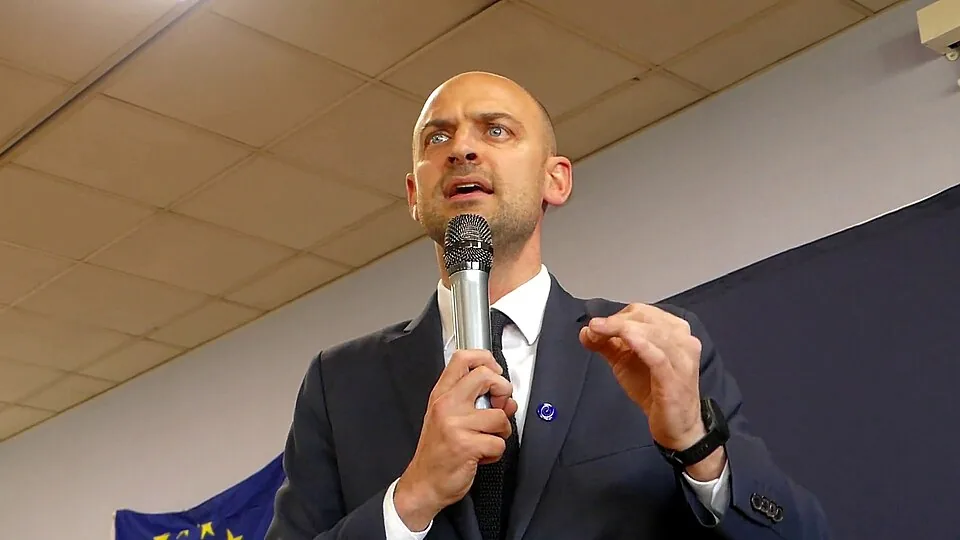
France's foreign minister announced Sunday that Europe will be at the Ukraine peace talks in Abu Dhabi, which is a bold move given that the Kremlin said it wasn't invited and Washington apparently didn't object loudly enough to matter. Meanwhile, Trump says the coming deal "might involve all of Europe," which is a funny thing to say about a negotiation where Europe was not supposed to have a seat.
The Guest List Is a Mess
Here's how NPR laid out the setup. The talks are scheduled for Tuesday and Wednesday in Abu Dhabi. They were sold as a three-way session between Washington, Moscow and Kyiv. Kremlin spokesman Dmitry Peskov said that format was already agreed, and that was that.
Then French Foreign Minister Jean-Noël Barrot went on the radio and said, "France will be there and will ensure that Europe's voice is heard." He did not say who is going. He did not say whether they'll negotiate or just stand in the corner holding a drink.
That's the part worth sitting with. A continent whose security is the entire subject of the talks is announcing its attendance days ahead of time, like a guy showing up to his own intervention.
Peskov Wants Europe to Pick a Spokesperson
Peskov's objection, delivered to a Russian news channel on Friday, was that European governments can't decide who speaks for them. He also conceded that security talks will eventually need Europe at the table.
So the Kremlin's position is that Europe is not welcome yet, but definitely will be needed later, once the important stuff is already settled. That is a very convenient order of operations for a country that wants Ukraine to hand over big chunks of territory and renounce NATO membership.
And the complaint that Europe lacks a single voice is not entirely wrong. It is also not Moscow's call, and it's rich coming from the guy whose boss has sat across from every American proposal and found a reason to say no.
Trump Says the Quiet Part Is Bigger Than Ukraine
On Thursday, Trump met Kremlin envoy Kirill Dmitriev and said a coming agreement was "going to involve more than Ukraine." He added that it "might involve all of Europe."
Read that again. The American president is meeting a Russian envoy and floating a deal that covers all of Europe, while Europe's participation in the actual talks is being argued over on French radio.
Zelenskyy told CNN on Friday that nobody has given him details of whatever Trump is describing. "For me, it's not simple, and it can be dangerous," he said, and then he invoked Yalta, the 1945 conference where the Allied leaders carved up Europe without several of the affected countries in the room. When the guy whose country is being discussed reaches for Yalta, you are not in a good place.
Fourth Round, Same Gaps
This will be the fourth round of Trump-brokered talks between Russia and Ukraine, and the first since Geneva in February. The earlier rounds made little progress, and the odds got worse once the Trump administration got busy with its war with Iran.
Moscow only agreed to come back after Steve Witkoff visited Putin in St. Petersburg in October. Putin released an American prisoner, an apparent thank-you for Trump lifting sanctions on Russian diesel exports. Ukraine fought that fuel deal hard, arguing it refills Moscow's war chest.
So the sequence is: America eases up on Russian fuel, Russia hands back one prisoner, and everyone agrees to meet again. Witkoff says the agenda covers postwar security arrangements, de-escalation and humanitarian issues, in the wake of a limited ceasefire Melania Trump helped broker to let aid into a town inside Russian-occupied Ukraine. Sure.
A Fancier Russian Lineup, Same Old Playbook
Russia's delegation will again be led by Vladimir Medinsky, the hardline Putin aide who has been at nearly every round since the first failed talks in March 2022. This time he's bringing Deputy Foreign Ministers Sergei Ryabkov and Mikhail Galuzin, a deputy head of the General Staff's operations directorate named Yury Zhigarlovsky, and military intelligence chief Igor Kostyukov.
That's a more senior team, and you could read it as Moscow getting serious about the hard political and military questions. The Institute for the Study of War suggests otherwise, noting that some of these same officials have previously tried to slow talks down or push Moscow's demands harder.
The gaps haven't moved. Russia wants big pieces of Ukrainian territory and a NATO renunciation. Zelenskyy wants security guarantees spelled out, including who acts and how if Russia attacks again. Those are not two positions you split down the middle.
The Midterm Clock Is Ticking
There's a calendar problem hanging over all of this. Democrats won the midterms, which Zelenskyy says could improve Ukraine's odds of getting more U.S. aid. Russia may want to lock in the Trump administration's version of a deal before a Democratic-controlled Congress shows up in January.
Also on the horizon is a possible Trump, Xi and Putin trilateral at the APEC summit in Shenzhen later this month. Details are murky, but all sides have confirmed talks are underway.
Former U.S. ambassador to Ukraine John Herbst, in an Atlantic Council op-ed, argued that Putin has rejected every proposal Kyiv accepted and prefers peace talks to actual peace. "Perhaps the only outcome of the talks," he wrote, "will be to agree to another round."
The Dingo Take
In 1938, Neville Chamberlain flew to Munich and helped hand Czechoslovakia's borderlands to Hitler while the Czechs waited outside. The phrase for that is "nothing about us without us," and everyone has been quoting it ever since because the alternative was a catastrophe. Now a U.S. president is hinting at a deal that "might involve all of Europe" while the Europeans have to announce on the radio that they're coming anyway.
Zelenskyy saying the word Yalta out loud is not diplomatic theater. It's a man telling you he can read the room, and the room has Trump, Witkoff and a Kremlin envoy in it. Meanwhile the one concrete thing Washington has delivered so far is sanctions relief on Russian diesel, which Ukraine begged them not to do, in exchange for one prisoner.
Maybe Abu Dhabi produces something real. Maybe Medinsky's fancy new entourage means Moscow is finally ready to deal. But the most likely outcome is the one Herbst predicted: an agreement to meet again, while Russian missiles keep hitting Kyiv kindergartens. Europe is showing up uninvited because it has to. Somebody in this process needs to be looking out for the people who live there.


Comments