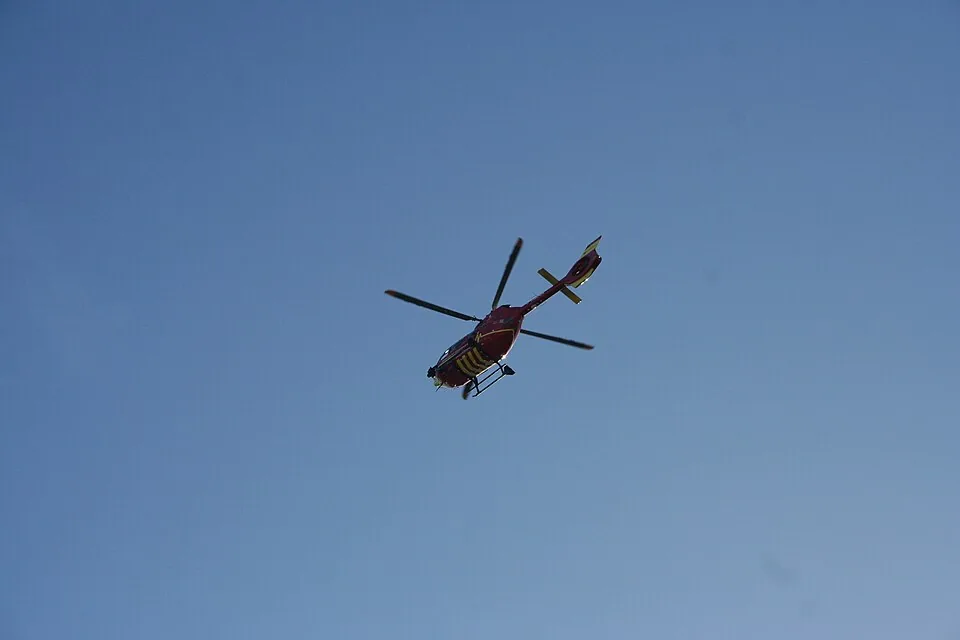
In 2025, LifeFlight of Maine flew 3,031 missions. That is one every three hours, around the clock, all year, and demand is already up another 10% this year. The helicopters aren't busy because Mainers got more adventurous. They're busy because the health care system underneath them keeps vanishing.
A Flight Every Three Hours
NPR's Elaine Appleton Grant spent time with a LifeFlight crew at the Bangor headquarters, where flight nurse Denise Saucier, paramedic Brian Merklin, and pilot Will Bradbury were prepping for a transport. The pilot ran through emergency landing tips, including how to evacuate if there's smoke or fire without walking uphill into the rotors. That's the pre-flight briefing. It's a Tuesday.
Since 2015, demand for medical flights in Maine has doubled. Nationwide, air medical services are filling the gaps left behind as rural hospitals close, convert to outpatient-only emergency facilities, or quietly stop offering money-losing services like labor and delivery.
Nicholas George, who runs a national tracking database for air medical programs, put it plainly: the need is increasing year over year, everywhere. Not in a few unlucky counties. Everywhere.
Healthcare of Last Resort
Every week or two, Saucier flies to one of Maine's thousands of islands. Sometimes the crew lands in forests or mountains and then switches to snowmobiles to reach a patient. It's the kind of thing you'd expect in a survival movie, not a functioning health care system in the richest country on earth.
But the dramatic scene calls are less than 10% of LifeFlight's work. Most flights are interfacility transports. A small local hospital stabilizes a patient, then the helicopter carries them to a bigger hospital that can actually treat them. The air ambulance is basically the connective tissue between hospitals that can't do much and hospitals that can.
Saucier says the view out the window still gets her. You go a long distance without seeing a house or a road. That's the thing about rural Maine. When something goes wrong, there's a lot of nothing between you and help.
The Ground Game Is Collapsing Too
You might assume the ground ambulances are handling the rest. They aren't. Many ground stations are struggling to keep their doors open and can't meet the need, which pushes even more work onto the helicopters.
The system is so fragmented that people fall straight through it. Last year, a woman in a small northern Maine town died while the county dispatch center called 10 ambulance services. None responded. Ten calls. Zero ambulances. A person died in the gap.
Almost a quarter of ground-based EMS workers leave the field every year. The pay is low across emergency medical services, the hours are brutal, and the job description is, as LifeFlight CEO Joe Kellner put it, seeing people on their worst day, over and over again.
The Medicaid Cuts Haven't Even Hit Yet
Here's the part that should keep you up at night. The Congressional Budget Office estimates the Medicaid cuts at $911 billion over ten years, and as they take effect, hundreds more rural hospitals or maternity departments are at immediate risk of closing.
Maine is already living a preview. By the end of this year, the state will have lost 12 of its labor and delivery departments, leaving a statewide shortage of birthing centers. LifeFlight even operates a specialty ambulance built to transport critically ill newborns, which tells you what the backstop is being asked to catch.
Every closure moves care farther away. And when care gets farther away, the only way to bridge it is a helicopter with a crew of three and a pilot checking which direction not to run if the thing catches fire.
Burning Out the People Who Catch You
Flight clinicians deal with dangerous conditions, long and unpredictable shifts, ever-increasing training and certification requirements, and serious mental health burdens. For years, LifeFlight kept only 60% to 70% of its workers.
This year, for the first time in nine years, LifeFlight is nearly fully staffed. That's a genuine win for a nonprofit that is one of the nation's handful of independent air medical companies. It's also a survival story about one organization, not a fix for a system where the demand curve only points up.
There's no comprehensive staffing data for air medical services nationally. Think about that. We're leaning harder and harder on this backstop and we can't even say how many people are holding it up.
The Dingo Take
"This is a really hard job," Kellner says. Yes. It is. It's hard because the people doing it are being asked to be the entire rural health care system, with a helicopter, a clipboard, and a retention rate they've only just dragged out of the basement. Hard is what you call a job when the policy upstairs is built to make it harder.
We keep treating the air ambulance as a heartwarming feature story. Brave nurses, scenic lakes, a dream job. Fine. It is all of that. But a helicopter is the most expensive and fragile way to deliver care, and we are turning it into infrastructure because we're simultaneously gutting everything cheaper and closer. That's not resilience. That's a rescue operation for a wound we are still actively cutting.
The Medicaid cuts haven't fully landed, and hundreds more hospitals and maternity wards are already teetering. So when that dispatcher calls 10 ambulances and gets silence, don't file it under tragic anomaly. File it under preview. The helicopters will keep flying, right up until there's nowhere left for them to land.





Comments