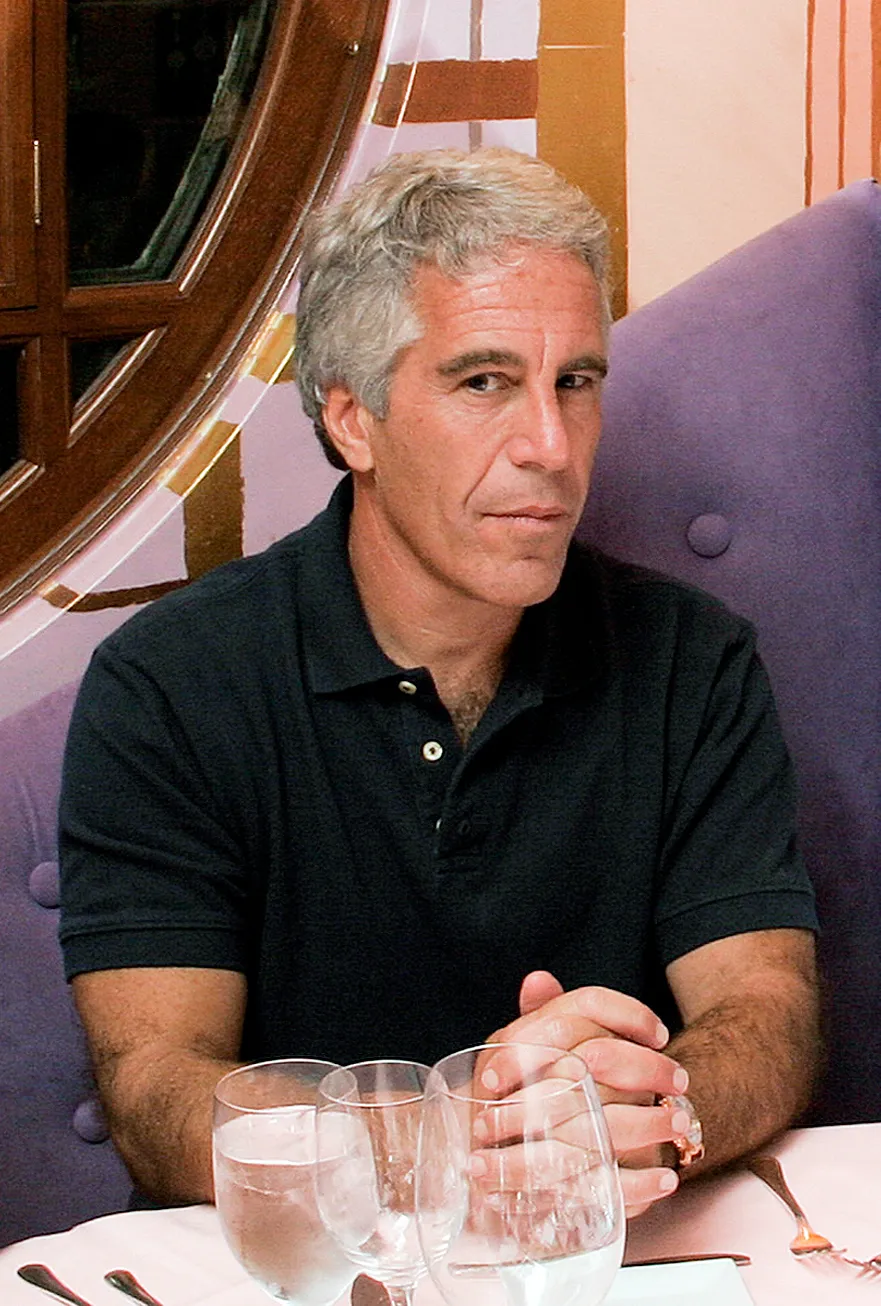
A forensic expert who has served as a cause-of-death witness for state attorneys-general, including in the George Floyd case, says Jeffrey Epstein did not hang himself. Professor Michael Freeman told BBC Newsnight that the autopsy file points to strangulation, most likely from behind, with the same ligature then used to hoist the body onto the bunk. He has no idea who did it, which is the part nobody is going to be able to stop talking about.
Explain Like I'm 5 · 36-second video

Narrated and captioned. Made by The Dingo Daily from this article.
What Freeman Says the File Shows
Freeman presented his findings in London on Monday evening and published his research alongside the New York City medical examiner's files. His reading of those files is blunt. He points to a deep haemorrhage in Epstein's left shoulder and injuries that look consistent with being struck in the face. Then he gets to the neck.
He says there appear to be fingernail marks above the ligature mark. In his words, that would be "consistent with strangulation, particularly from behind. And the attempt by the victim to try to remove the ligature from the neck." His conclusion: "the injuries and the way the body was found don't match up. There's only one remaining explanation then, and that is that the death was as a result of a homicide."
That is a hell of a sentence to say on television about the most scrutinized jail death in modern American history.
The Ligature Theory, Step by Step
Here's the sequence Freeman lays out. Someone strangles Epstein with a ligature. Then that same ligature is probably used to suspend the body from the bunk bed, so the scene reads as a hanging. If he's right, the staging was the whole point.
Freeman also raised something simpler and more unsettling. In an investigation of a hanging death in custody, he would expect a photograph taken before the body was taken down. He said he would have expected that, and the implication of his remark is that no such photograph appears in the material he reviewed.
The Justice Department's own inspector general account says the guard who found Epstein immediately called for a second colleague, lowered the body to the floor, and began trying to resuscitate him. Which is what a guard should do. It is also what makes a pre-removal photograph hard to come by.
The Medical Examiner Is Not Budging
Dr. Barbara Sampson, who was chief medical examiner when the autopsy was done, ruled Epstein's death a suicide. She told the DoJ Office of the Inspector General that his injuries were more consistent with suicide by hanging than homicide by strangulation. She also said there was no evidence of the defensive wounds you would expect to see in a strangulation victim.
She has not wavered. "I stand firmly behind our determination of the cause and manner of death for Mr. Epstein," she has said previously. The BBC has approached her for comment on Freeman's analysis.
So we have two credentialed experts looking at the same file and reaching opposite conclusions. One of them performed the autopsy. The other did not see the body.
The Caveats That Actually Matter
Let's be straight about the limits here, because they are real. Freeman never examined Epstein's body. He worked from files and photographs, and those were provided to him by Epstein's brother, Mark Epstein, who has always insisted his brother was murdered. Freeman says his analysis is independent and that Mark Epstein did not pay him. His research has not been peer reviewed.
None of that makes him wrong. It does mean you should hold the claim the way you'd hold any extraordinary claim that has not yet survived scrutiny from other forensic pathologists. Freeman seems to understand this. Pressed on whether he was drifting into conspiracy theory, he said: "I have the luxury of being able to say, don't take my word for it, let everybody look at it." And: "show me where I got it wrong."
That is how an academic talks, not how a grifter talks. A grifter never invites you to check the math.
Who Did It? He Has No Idea
Asked who might have killed Epstein if his reading is right, Freeman said he had "no idea." He added that it is "not something I have an opinion about" and not part of any investigation he has done. Good for him. It would be easy to cash in on a bigger story, and he did not.
It also means his finding, if it holds, creates a hole rather than filling one. A homicide in a federal facility, of a man awaiting trial on sex trafficking charges, with no suspect and no theory. Epstein was found dead at the Metropolitan Correctional Center on 10 August 2019, a month after he was briefly placed on suicide watch, per the DoJ report.
Why This Won't Die
Epstein was convicted in 2008 of soliciting prostitution from a minor and skated on a plea deal. Eleven years later he was charged with running a network of underage girls for sex. Then he was dead before trial, with the cameras and the guards and the protocols that were supposed to keep him alive having all somehow failed at once.
That history is why every new claim about his death lands on fertile ground, and why conspiracy entrepreneurs spread junk faster than careful people can debunk it. It is also why a serious forensic opinion deserves a serious response, not a shrug and not a viral frenzy.
The Dingo Take
Do you really want to live in a country where the answer to "how did Jeffrey Epstein die?" is still "trust us" seven years later? Because that is where we are. Every institution that touched this case had every reason to make the ending clean, and not one of them managed it.
Here's the sober version. Freeman's analysis is unreviewed, built on files supplied by a family member who has always believed in murder, and contradicted by the pathologist who actually handled the body. That is a reason for caution. It is not a reason to ignore him, because the man spent a career testifying about deaths in custody and is begging other experts to tear his work apart. So let them. Put the file in front of a panel of independent pathologists and publish what they say.
The real scandal is that this fight is even necessary. The government had one prisoner it absolutely could not afford to lose, and it lost him through a combination of failures that still has no satisfying explanation. If that was incompetence, fine, prove it with evidence the public can examine. If it was something worse, we deserve to know. Either way, the "nothing to see here" posture stopped being credible in 2019, and it has not aged well.




Comments