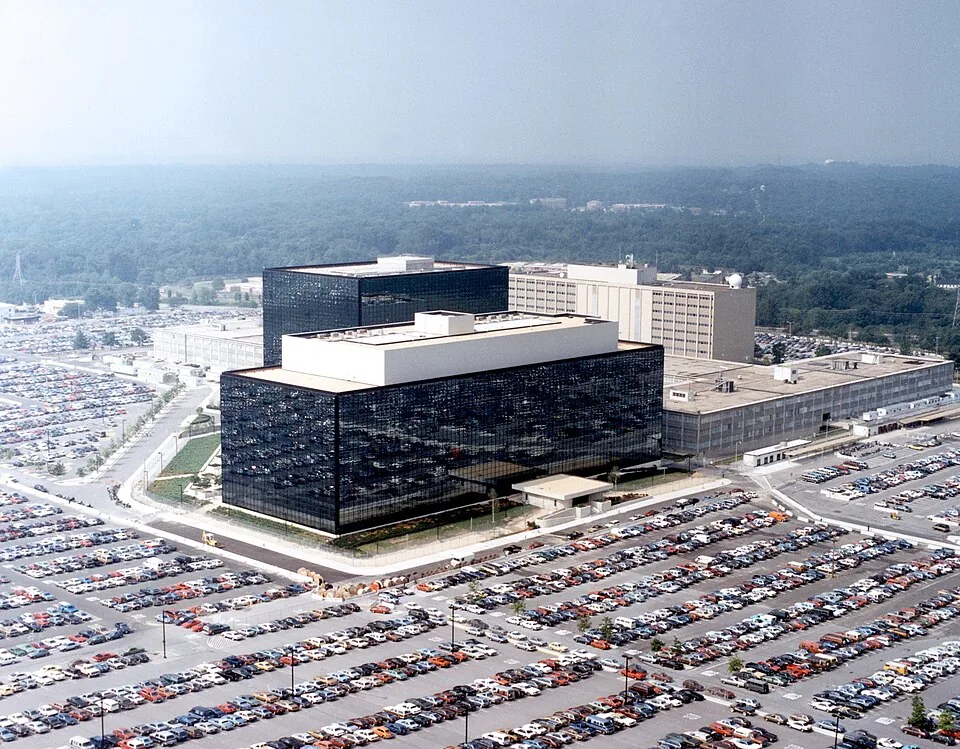
The National Security Agency, the outfit whose entire reputation rests on knowing everything about everyone, cannot currently use its own classified internal network and has not told us why. Six people familiar with the matter told CNN that NSA Net is down, that there is no evidence of a cyberattack, and that the agency has resorted to staggered arrivals for personnel while it figures out what the hell happened.
The world's most famous spy shop is working in shifts like a suburban Applebee's during a plumbing problem.
Explain Like I'm 5 · 39-second video

Narrated and captioned. Made by The Dingo Daily from this article.
What We Actually Know, Which Isn't Much
Here are the facts. NSA Net is the highly classified network the agency uses for internal communications, the thing that lets employees talk to each other about secret stuff without that stuff ending up anywhere it shouldn't. It's down. Six people familiar with the situation confirmed that to CNN.
There's no evidence of a cyberattack at this point, the sources said. The agency is still trying to understand the scope of the problem, and in the meantime it has enacted staggered arrivals for personnel. CNN has asked the NSA for comment.
That's the whole picture. No cause. No timeline. No scope. Just a spy agency that can't talk to itself and a lot of people saying "nothing to see here" in the tone of voice that makes you look very closely.
Staggered Arrivals Are Not a Normal Thing
Think about what staggered arrivals actually mean. You don't change when hundreds or thousands of people show up to work at Fort Meade unless something about the building, the systems, or the workflow has gone sideways enough to require crowd control.
This is an agency that processes some of the most sensitive information on the planet. When its internal communications backbone goes dark and the response is to spread out the commute, that tells you the problem is big enough to touch the physical rhythms of the place.
Maybe it's a mundane hardware failure. Maybe it's a botched update. Maybe it's something nobody has the guts to say out loud yet. The point is that the people who would know aren't talking, and the one thing they've volunteered is that it's not a hack. They said that fast. Reassuringly fast. Suspiciously fast, if you're the sort of person who has watched this government explain things since 2015.
The President Is in Asia, Because Of Course He Is
The timing is a gift that keeps on giving. President Trump is currently in the Philippines, headed to China tomorrow for talks with Xi Jinping and Russian President Vladimir Putin. Yes, that lineup. A summit with the two leaders the American intelligence community spends the most time worrying about, and the agency that listens to them can't use its own network.
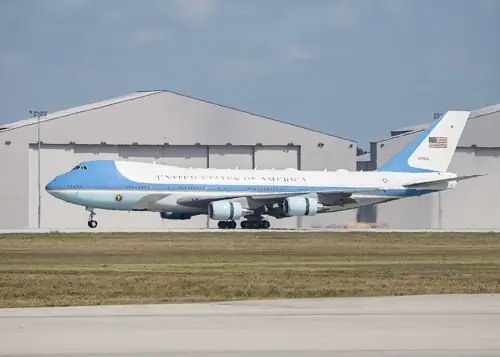
A current and a former US official insisted the outage would not affect the agency's ability to get urgent intelligence to Trump aboard Air Force One. Both described multiple redundancies and backup networks the government can use to communicate securely with the president.
Fine. Good. Redundancies are what redundancies are for. But "we have backups" is the thing everyone says right before discovering the backups have their own problems, and the president is about to sit across from two of the most skilled intelligence-adjacent operators alive. You'd like the home team's phone lines to be, you know, working.
A Very Bad Week for Computers
This doesn't exist in a vacuum, which is where it gets properly unnerving. On Friday, all flights nationwide were grounded for hours after a massive systems failure, producing thousands of delayed or canceled flights. The FAA traced the problem to a single router in Arkansas. One router. In one state. Grounding an entire country's air travel.
Then there was last week's massive Microsoft outage, which left people around the world unable to access Outlook email and Teams meetings. Somewhere, a billion middle managers briefly experienced the bliss of not being invited to a call.
There is no indication that the NSA, FAA, or Microsoft outages were caused by a cyberattack, and nothing links the three. But as CNN put it, they are stark examples of how tech failures can roil markets and potentially threaten national security. You don't need a hostile foreign power to knock the country sideways. Apparently you just need a router and a bad afternoon.
Fragile Systems, Confident Officials
Here's the uncomfortable pattern. A single Arkansas router can ground every flight in America. A Microsoft failure can silence workplaces on every continent. And now the NSA's classified network is offline for reasons nobody will explain. These are not exotic threats. These are ordinary infrastructure failures hitting systems that the country treats as bulletproof.
The reassurances all share a structure: it's probably not an attack, we have backups, it won't affect the president. Maybe every word of that is true. But it's also exactly what you'd say whether or not it was true, and the public has no way to tell the difference because the agency in question specializes in not telling us things.
The Dingo Take
"No evidence of a cyberattack." That's the assurance coming out of the one agency on Earth whose whole job is knowing what's happening on networks, about its own network, while it stumbles through staggered arrivals and can't say what broke. Note the phrasing: no evidence. Not "definitely not." Not "we've ruled it out." Just the absence of evidence, which is a famously comforting thing to rely on at a moment when nobody has finished looking.
Maybe it really is boring. Maybe a router died, a patch went bad, or somebody tripped over a cable in a server room in Maryland. Honestly, that might be the scariest option. We've now watched a single Arkansas router ground every flight in the country and a Microsoft failure silence the planet's inboxes, and the lesson is that the machinery holding up modern American life is held together with optimism and duct tape. The NSA is just the latest place the tape came loose.
So here's what you should want. A plain explanation, delivered soon, from people willing to put their names on it. Not anonymous sources vouching for redundancies while the president heads into a room with Xi and Putin. If the backups work, prove it. If the cause is dull, say so. And if the answer is something worse, tell the people whose taxes pay for this place before they read it somewhere else.



Comments