Ukraine says it sent seven sea drones across the Mediterranean on Sunday and put a Russian navy corvette on the bottom of a Libyan harbor, roughly 2,400 kilometers from the nearest front line. Libya says the ship was only badly damaged. Russia says nothing at all.
Explain Like I'm 5 · 40-second video

Narrated and captioned. Made by The Dingo Daily from this article.
Seven Drones and One Very Bad Sunday in Benghazi
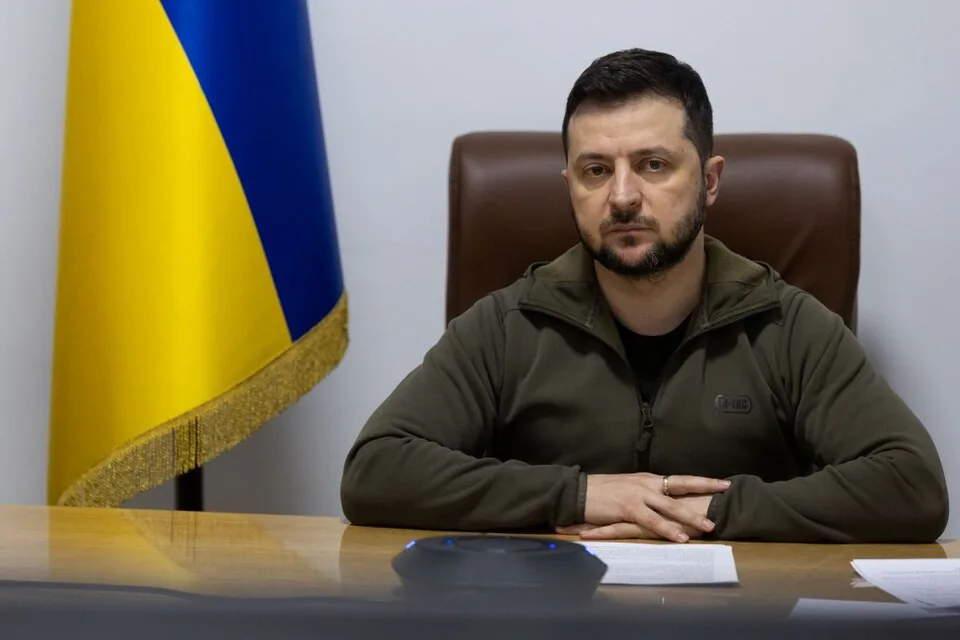
President Volodymyr Zelenskyy announced Monday that Ukrainian forces struck the Russian corvette Merkury while it sat at the Benghazi Naval Base in eastern Libya, according to reporting from NPR and the Associated Press. He said seven Ukrainian-made naval drones did the job and that, despite "all the enemy's efforts to counter the attack," the ship was sunk. He called it "an exemplary Ukrainian operation in response to Russia's war."
The Merkury was one of Russia's newest warships, commissioned the year after Moscow launched its full-scale invasion. Zelenskyy also said Ukrainian forces destroyed a Ka-27 military helicopter that was aboard the corvette. The ship had docked in Benghazi to refuel and take on supplies under a cooperation agreement between Russia and the eastern-based Libyan government.
Residents woke up to loud explosions and flames at the base. Civil defense crews rushed in and put out the fire. At least 10 people, including Libyan and Russian nationals, were wounded, according to one Libyan official quoted by ABC News Australia.
Sunk, or Just Extremely Damaged?
Here's where the story gets slippery. Zelenskyy says the Merkury sank. Two Libyan officials told the AP the corvette was severely damaged. Africanews, citing Libyan authorities, reported that the ship was struck inside the port and that the helicopter aboard it sank, while the vessel itself was heavily damaged rather than lost.
Those are different outcomes, and the difference matters. A sunken warship is a headline. A burned and battered one that might be repaired is a longer, messier story. We don't have independent confirmation of which version is right, and Moscow isn't helping.
Kremlin spokesman Dmitry Peskov declined to comment. The Russian Defense Ministry, he said, would provide more information "if deemed to be appropriate." Translation: do not hold your breath.
A Cargo Ship Named Angara Also Had a Bad Day
The Merkury wasn't the only target. Zelenskyy said Ukrainian forces also hit the dry cargo ship MV Angara, which he said Moscow used to transport weapons. His one-word summary of the result: "target hit."
Libyan officials described the Angara as a sanctioned vessel that supported Russian military supply routes to Syria and Libya. Libyan naval units took part in rescue operations for the crew of the targeted commercial vessel, said Abu Bakr al-Badri, a naval operations officer with the Libyan National Army. He added that Libya's forces will stay on high alert "in order to respond to any threat against the country's security."
So the picture is a Russian warship and a sanctioned Russian supply ship, both parked in a friendly port that Moscow presumably thought was safe. It was not safe.
Libya Wants to Know How Ukraine Got There
The eastern Libyan government wrote to UN Secretary-General António Guterres and the Security Council demanding an international investigation, specifically into the potential use of western Libya to prepare and launch the attack. That is not a random accusation.
Libyan officials told the AP earlier this year that Ukrainian forces are operating in western Libya under a covert deal endorsed by the West. Most are drone experts, working mainly out of an air base in Misrata, with a presence at other military facilities in Tripoli and the coastal town of Zawiya. Those officials said Ukraine used Libyan territory to strike a Russian tanker in the Mediterranean in March.
So Libya is split between rival governments, one hosting Russian ships in the east and another reportedly hosting Ukrainian drone teams in the west. The UN mission in Libya expressed "serious concern," called for "an immediate, independent and transparent investigation," and said Libya "must not become a battleground for foreign conflicts." That sentence is already a little late.
The Baltic, Estonia, and a War Leaking Over the Borders
Benghazi was not the only maritime incident this weekend. On Saturday, a drone hit a Russian cargo ship in the eastern Baltic Sea, close to Finnish waters. Kyiv has not commented, but the Finnish military said it was likely carried out by Ukraine. All 16 crew were evacuated onto a nearby Russian ship, and one was slightly injured.
On Monday, Russia's Foreign Ministry accused Estonia of allowing Ukraine to use its airspace "on the quiet" to launch attacks on Russian targets. Moscow called such moves provocative and warned they risk triggering an open war with Russia.
That is a lot of geography for a war that started in eastern Ukraine. Zelenskyy, speaking by video to the NATO Parliamentary Assembly in Berlin, noted that Ukraine has hit Russian oil refineries as far away as western Siberia and Russian warships in the Mediterranean. Ukraine is reaching out in every direction, and the neighbors are getting nervous.
Meanwhile, Back in Ukraine, Russia Kept Killing Civilians
None of this happened in a vacuum. A Russian strike on a five-story apartment block in a village near Kyiv killed 11 people Sunday morning, regional police said. Rescuers pulled a 7-year-old child and a 79-year-old woman alive from the rubble.
On Monday, three people were killed when Russia struck a hospital in Zaporizhzhia. Two more died when Russian forces hit a vehicle marked as evacuating residents from Kramatorsk. Russian missiles and drones have also devastated Ukraine's power grid just as winter arrives.
Ukraine kept hitting back. An oil refinery in Russia's Rostov region halted work after a Ukrainian drone and missile assault that lasted more than six hours, and Perm region officials reported an attack on industrial sites more than 1,000 kilometers from Ukraine. The European Commission also proposed a new sanctions package targeting dozens of Russian banks, crypto platforms, and sports teams competing under the Russian flag. All 27 member states must sign off, which can take weeks, and the measures will likely change along the way.
The Dingo Take
Seven drones. Roughly 2,400 kilometers. One corvette that Russia commissioned a year into the invasion, now either on the harbor floor or on fire at a dock in Benghazi, depending on whom you believe.
There's a real argument that this is a brilliant operation. Ukraine is outgunned and outmanned on the front, so it keeps finding ways to make Russia pay in places Moscow assumed were out of reach. Operation Spiderweb did it to Russian air bases. Now it's Russian ships in a Mediterranean port. If you're the Kremlin, you have to wonder where on the map is actually safe.
But look at the other side of the ledger, because the UN did. Libya is a fractured country with two rival governments, one hosting Russian warships and the other reportedly hosting Ukrainian drone teams under a deal the West endorsed. Ten people were wounded at that base. Every country that quietly lets one side use its territory is volunteering to become the other side's target. Ukraine has every right to hit the invader wherever it can. The people left cleaning up the wreckage in Benghazi never signed up for any of it, and nobody asked them.



Comments