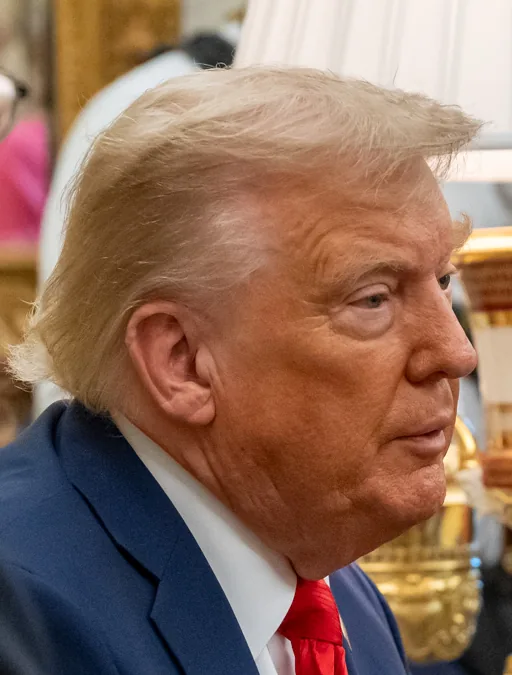
On Monday, Nvidia's board reinstated CEO Jensen Huang, a White House ally and Trump project donor, less than two weeks after he resigned over a string of affairs. The president publicly took credit for the move, and the value of his own Nvidia holdings rose by as much as $15 million that same day.
Explain Like I'm 5 · 43-second video

Narrated and captioned. Made by The Dingo Daily from this article.
The Math on a Monday Morning
Let's start with the numbers, because they do most of the work here. Trump's investment accounts owned up to 370,000 Nvidia shares as of September 30. Nvidia's stock price surged more than 30% on Monday after news of Huang's reinstatement broke. The Financial Times, which first reported the estimate, put the president's single-day gain at up to $15 million.
Fifteen million dollars. In one day. For a man who holds the most powerful job on earth and, by his own account, personally arranged the event that made the stock go up.
The surge also set off a broad rally across the tech sector, which had sold off sharply after Huang's exit. So the president's pressure campaign didn't just pad his accounts. It lifted a whole market he happens to be invested in.
He Bragged About It on Television
Here's the part that should make you put your coffee down. Trump didn't hide his role. He told CNBC that he "convinced them" and "made the deal" to bring Huang back.
The Financial Times noted that Trump applied pressure to the board over the weekend after watching what was once America's most valuable company, along with the wider tech sector, hemorrhage value the week before. Read that again. The motive described is a market slump that was costing him money.
Mehdi Hasan of Zeteo summed it up cleanly: the president of the United States called into a private company's board meeting and pressured them into reinstating a fired CEO whose actions his own government is investigating, and personally made $15 million in the process. Nobody has offered a good rebuttal to that sentence, because there isn't one.
The CEO He Went to Bat For
Now consider who got rescued. Huang resigned less than two weeks ago after revelations that he had several extramarital affairs, including with a subordinate and with a woman scrutinized by US intelligence over her contacts with the Chinese government.
That last detail is not a gossip-column footnote. We're talking about the head of the company that makes the chips at the center of the AI race, tangled up with someone intelligence officials looked at over her ties to Beijing. Nvidia is also facing a Securities and Exchange Commission probe over its accounting practices.
Rep. Don Beyer of Virginia called Trump's intervention "psychotically crooked." He argued the president is attempting to grant functional immunity to Nvidia and declare Huang "exonerated" even though ongoing investigations continue to reveal national security risks and a seeming contempt for the law.
A Very Long Relationship With One Stock
This was not a one-off flirtation. A BBC analysis of Trump's financial disclosures over the last two years found his investment accounts purchased Nvidia shares worth between $23 million and $86 million. He has bought Nvidia stock 85 separate times through a number of investment accounts.
He has sold some, too. Over 19 sales since returning to the presidency, Trump gained between $3.5 million and $10.2 million, according to his own government disclosures.
So we have a president who buys a particular company's stock repeatedly, sells it periodically, takes calls from its donor-CEO, and then steps into its boardroom when the share price craters. Huang, for the record, is a Trump project donor. Every piece of this is a connection the public is supposed to just shrug at.
Democrats Want to Know What Happened Before the Announcement
Top Democrats have launched a congressional probe into what they're calling a Trump-Nvidia scheme. Sen. Chris Van Hollen said of the reinstatement, "This is what a rigged system looks like."
Sen. Ruben Gallego of Arizona raised the question that matters most for anyone who understands how insider trading works. "We need to investigate what stock positions took place before the announcement," he said Monday. "This White House is the most corrupt in history."
That's the thread to pull. The gain on shares he already held is bad enough. What did anyone buy, sell, or tell anyone else in the window between the weekend pressure campaign and Monday's public news? Those are answerable questions, and the disclosures and trading records exist.
The Dingo Take
Two weeks ago, Nvidia's CEO was out of a job, the stock was in free fall, and a federal accounting probe was circling. By Monday afternoon, the CEO was back, the stock was up more than 30%, and the president's portfolio was fatter by up to $15 million. Nothing about the underlying facts changed in between. The only new ingredient was Donald Trump picking up the phone.
That's the whole story, and it's why this is so much worse than a typical conflict of interest. We're not talking about a president whose investments happened to benefit from policy. We're talking about a president who intervened directly in a private company's governance, announced it on cable news, and collected the proceeds. He's not even pretending to keep the two jobs separate anymore. Why would he? Nobody has made him.
As Hasan put it, in any other era this would be a monumental political scandal. The only reason it isn't treated as one is that the corruption now arrives so often and so openly that the public has been trained to flinch and move on. Don't. Gallego is right that the question is what happened before the announcement, and Democrats finally have subpoena power to ask it. Make them use it.

Comments