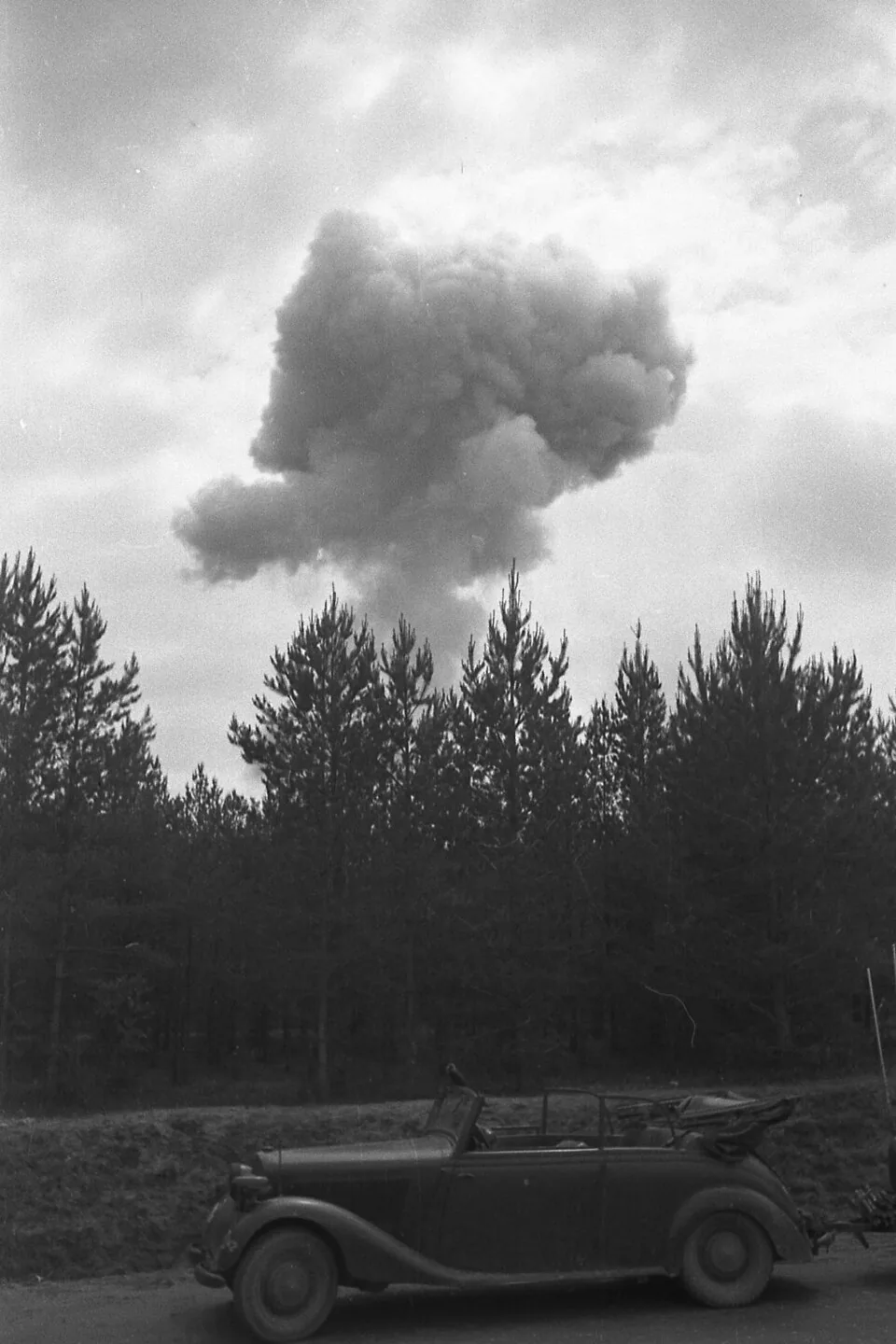
The Army blew up roughly five tons of degraded lead azide at an Iowa ammunition plant Wednesday morning, and within fifteen minutes the EPA announced that its monitors had detected "ZERO" airborne lead. There's a catch. A Purdue engineering professor says the instruments listed on the EPA's own data website aren't built to detect lead in real time and need two to three hours of lab analysis, which makes the instant all-clear a little hard to take at face value.
Explain Like I'm 5 · 41-second video

Narrated and captioned. Made by The Dingo Daily from this article.
Victory Lap Before the Dust Settles
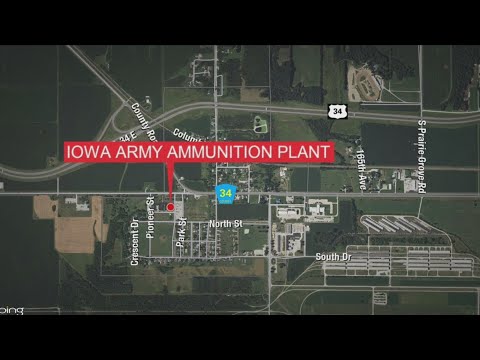
The detonation went off at 9 a.m. local time at the Iowa Army Ammunition Plant in Middletown, a town of about 350 people. Livestream footage showed a few loud pops and a faint smoke cloud. A reporter four miles north felt a percussion and a shock wave roll across a farm field. A woman a mile from the site said she heard two short booms and her dog barked.
The celebration started almost immediately. Maj. Gen. Eric Shirley called it "tremendously successful" and said the Army reduced the risk "as close to zero as is absolutely humanly possible." ATF Director Robert Cekada said it went "100% as planned." A senior administration official told CBS News that "the explosion exceeded all expectations." President Trump said early reports showed the mitigation efforts "far exceeded expectations."
That's a lot of people agreeing with each other very fast. Nobody had a lab result yet.
The Zero That Might Not Mean Zero
Fifteen minutes after the blast, the EPA said four monitoring stations in the area detected no lead in the air. Two hours later, it said the readings hadn't changed. The agency's message was a triumphant "ZERO detection of airborne lead throughout the region."
Andrew Whelton, a professor of civil, environmental and ecological engineering at Purdue, pointed out the problem. The instruments listed on the EPA's data website are not designed to detect lead in real time. "You have to send them to a lab," he said, and the analysis takes at least two to three hours. He thinks it's far too early to draw conclusions about lead pollution levels.
The Army's own deposition modeling had suggested it would take several hours for the plume to disperse. So the government announced a clean bill of health on a timeline its own models said was too short to mean anything. The EPA didn't immediately respond to questions about its data or its instruments.
To be fair, Whelton also said the blast looked smaller than he expected given the Army's pre-detonation descriptions, and that any release may be more contained to the site than it could have been. That's genuinely good news if it holds. It just hasn't been shown yet.
Why the Army Says It Had to Do This
The facts behind the detonation are alarming on their own. The Army stored the lead azide in earthen-covered containers for decades. An inspection in March found that the material had degraded and "recrystallized" inside and outside the drums, which made it highly sensitive to friction or movement. About 68 drums, roughly 10,000 pounds, sat in a small Mississippi River town waiting to go off.
Officials say cold weather raises the risk of a spontaneous explosion, which is why they pushed to act now. "It's just a matter of time when we have an uncontrolled detonation," Cekada said. "It's not a matter if, it's a matter of when." Acting Army Secretary Adam Telle said the Army looked at other options but "we were never able to find a viable alternative."
The 8th Circuit Court of Appeals, which temporarily blocked the plan last week, lifted that block Monday. The court acknowledged "the very real risks presented by the Army's planned detonation" but concluded that an uncontrolled, unplanned explosion would be worse. MIT's Lincoln Laboratory, asked by the Pentagon to review the plan, agreed that a controlled detonation beat the risk of a sudden one.
The Neutralization Contract That Vanished
Here's where the "no viable alternative" line gets complicated. According to NBC News, citing a New York Times report, the Army did pursue another way to deal with this stuff. It awarded a contract to MuniRem Environmental, which makes a chemical product that dissolves in water and can be sprayed onto explosives to neutralize them. No blast required.
MuniRem's CEO, Valentine Nzengung, told NBC the Army canceled the contract shortly after starting it. Army Col. Aaron Teller said the neutralization approach proved to be unsafe.
Maybe that's true. Plenty of ideas that sound great turn out to be bad when you apply them to thousands of pounds of unstable explosive. But the public was told there was nothing else, and then it turned out something else had been tried and dropped. That deserves a real explanation, in public, with evidence.
Everyone Was Warned, Sort Of
The Army's own forecast maps showed a plume of lead dust drifting southwest across Iowa and into northeastern Missouri, potentially traveling as far as 100 miles, with the heaviest effects within about 30 square miles of the plant. Lead is a potent neurotoxin. There is no safe level of exposure, and children face the biggest threat. Once lead lands in soil or on surfaces, it can stay there forever unless someone physically removes it.
And the people in the path say they got almost no notice. Residents scrambled to change Thanksgiving plans, tape windows, cover gardens, buy cleaning supplies and get their kids out of town. A farmer named Jill Holler, who lives about 20 miles west of Middletown, spent Sunday night in the dark taking soil samples so she'd have a baseline to compare against later. "It's just frustrating," she said.
Elected officials from both parties in Iowa and Illinois slammed the military over its communication. Soldiers went door to door Tuesday afternoon telling people in the five-mile evacuation zone to leave, and FEMA is covering short-term hotel stays through Friday. Environmental groups including the Sierra Club and the Iowa Environmental Council challenged the EPA's emergency permit, arguing residents didn't get adequate notice or evidence that detonation was the best option.
Trump Makes It a Political Hostage Situation
In the middle of all this, the president decided to make an unstable explosive stockpile a partisan weapon. On Monday, Trump said the government wouldn't proceed until the appeals court ruled and unless Democratic Iowa Gov.-elect Rob Sand signed off. If Sand or the courts disagreed, Trump said, the administration would not proceed and would "be forced to hold the incoming Governor responsible for any and all death or destruction."
Sand isn't in office yet. His input wasn't required. He responded by saying the administration should decide based on information from the people it brought in months ago, who have been on the ground in Middletown for weeks. He added that Iowans are "entitled to know how Middletown came to this situation."
That's the right question. The Army sat on a decaying pile of explosives for decades, found out in March it had become dangerously unstable, and spent the months since arriving at a plan that residents learned about days before it happened. Whatever happens next, the blame doesn't belong to a governor-elect who hasn't taken the oath.
What Happens Now
The immediate picture looks better than the worst case. The Army says all of the barrels were definitively removed, with no secondary explosions and no infrastructure damage. Missouri Gov. Mike Kehoe said federal and state reports indicated the blast was "well-contained." Gov. Kim Reynolds called it "successful" and promised to keep Iowans informed.
But independent experts say it will take time to determine how much lead was actually deposited and what the risks are. That means soil tests, lab results and a lot of people like Holler waiting to find out what's sitting in their fields. Iowa Gov.-elect Sand said more testing needs to be done. He's right.
The Dingo Take
Declaring total success before the lab results exist is not a safety plan, it's a press release.
Maybe the Army nailed it. The blast may well have driven the explosion into the ground the way they said, and the lead may well be sitting in a crater inside a fence. That would be a genuine relief for a lot of scared people. But the government's first move was to announce "ZERO" using instruments a Purdue professor says can't deliver that answer in real time, while its own models said the plume would take hours to disperse. That's not confidence. That's a victory lap taken to calm people down.
The people of Middletown and the communities downwind deserve better than vibes from a podium. They deserve the lab data, the soil sampling, a straight answer on the canceled neutralization contract, and an honest accounting of how a stockpile of explosives got left to rot until it needed a controlled blast to fix. The Army can take its bow when the results come back. Until then, it should keep the confetti in the box.




Comments