Almost 200 American women died from ectopic pregnancies between 2020 and 2025, nearly twice the number from the previous six-year stretch, and the spike was sharpest in states with abortion bans. The proof wasn't buried in a vault. It was sitting in a public federal dataset, and according to a ProPublica analysis, more than a dozen maternal health leaders had no idea.
Explain Like I'm 5 · 50-second video

Narrated and captioned. Made by The Dingo Daily from this article.
A Number That Leaped Off the Page
ProPublica reporters were digging through CDC death certificate data, the kind of resource journalists and academics use all the time to track mortality trends. They were looking at pregnancy-related deaths nationally. Then one trend jumped out and grabbed them by the collar.
Between 2020 and 2025, almost 200 women died after ectopic pregnancies. The previous six-year period had roughly half that many. The increase was particularly stark in states that had banned abortion.
As far as the reporters could tell, nobody had said so publicly. Not the states. Not the federal government, whose own dataset they were reading.
A Death That Should Never Happen
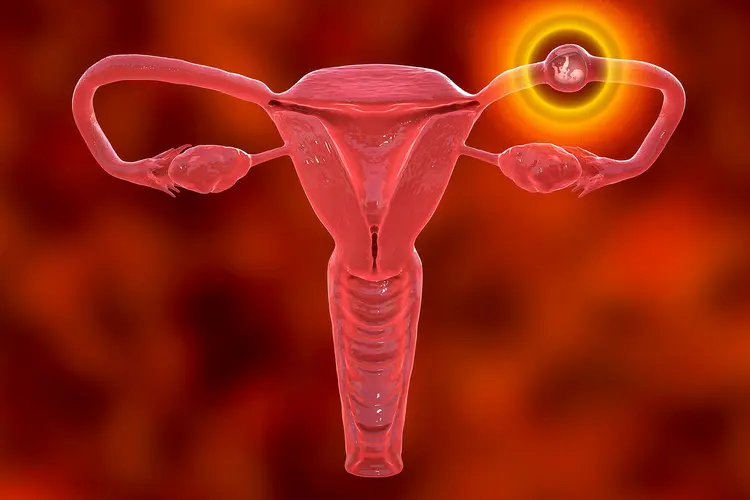
An ectopic pregnancy is when an embryo fails to implant in the uterus and starts growing somewhere else, most often in a fallopian tube. It keeps growing until the organ ruptures and the bleeding becomes catastrophic. It affects up to 2 percent of pregnancies. It is rare. It is also brutally dangerous.
Dr. Alice Abernathy, an OB-GYN in Philadelphia, put it plainly: a death from an ectopic pregnancy should be a "never event." Never. As in, the system exists so this doesn't happen.
And it is not a theoretical danger. Kyleigh Thurman's right fallopian tube ruptured after she struggled to get ectopic care in Texas in 2023. "I genuinely thought I was going to die," she said. Leitaea Lowrimore of Oklahoma, denied treatment at multiple hospitals this February, said in a lawsuit challenging her state's abortion ban that she asked her husband if she was going to die. "I kept thinking about our kids."
Nobody Is Counting
Here's the thing. The leading cause of death in the first trimester of pregnancy has been ectopic pregnancy, and the country barely studies it. The CDC doesn't track how many ectopic pregnancies happen each year. It doesn't require providers to report them. The most recent nationwide study ProPublica could find only looked at data through 2013.
The United Kingdom saw a similar spike in the years after the COVID-19 pandemic and responded by changing emergency services and promoting awareness of ectopic symptoms. The U.S. doesn't run national maternal mortality reviews the same way. We leave most of it to state committees.
That's a problem, because state numbers are tiny and bounce around. A handful of deaths one year, a handful the next, nothing that screams pattern. Add them together nationally and the pattern screams. ProPublica reached out to review committees in states with bans after publishing. Many said they hadn't identified an increase and had no plans to look into it further, despite the findings.
The Agency With the Data and the Empty Offices
So why didn't the CDC raise the alarm? Nobody knows. ProPublica asked what the agency had done to investigate or address the trend. A spokesperson for the Department of Health and Human Services, which oversees the CDC, didn't answer that question. The spokesperson said the agency continues to track maternal mortality trends, investigate their causes and fund research.
That is a sentence engineered to say nothing. It does not say "we noticed." It does not say "we're looking."
The CDC has epidemiologists who review death and birth records. It has done its own investigations in the past. But the agency across two administrations has failed to publicly respond to the increase. Maternal health experts point to staffing cuts under the Trump administration since the start of last year. The CDC's Division of Reproductive Health lost most of its 100 employees, according to a lawsuit filed by more than a dozen state attorneys general.
Gutting the Watchdogs, Then Asking Where the Alarm Went
Sit with that for a second. The government dismantled much of the team whose job was to study reproductive health, and then the public heard nothing about a doubling of deaths from a condition that is supposed to be survivable.
That's not proof that anyone deleted a warning on purpose. ProPublica is careful on this point, and so are we. The reporting establishes the spike, the geography of it, and the silence. It does not establish a cover-up.
But an agency with its staff carved out doesn't sound alarms it no longer has the people to hear. ProPublica also notes that studying the impact of abortion bans has become politicized and that federal agencies have been gutted. You don't need a conspiracy when you can just turn off the smoke detectors.
The Dingo Take
Officials in ban states say their review committees found no increase in ectopic deaths and see no reason to dig further. The national numbers say nearly 200 women died in six years, almost double the period before, with the sharpest rise where abortion is banned. Both of those things are in the reporting. Only one of them is a number.
The committees aren't lying, exactly. They're looking through a keyhole. State-level counts are small and noisy, so each committee sees a few deaths and shrugs. Meanwhile the federal agency that could see the whole picture lost most of its reproductive health staff and answered ProPublica's question with a paragraph of fog. That is how a problem stays invisible: everyone responsible can truthfully say they didn't see it.
And the women are not abstractions. They are people who bled in hospital hallways and asked their husbands if they were going to die. A "never event" happened almost 200 times, and the first people to add it up were reporters, not the government that wrote the numbers down. If you wanted to design a system to ignore preventable deaths, you would build it exactly like this: keep no count, cut the staff, and let the states squint at their own small pieces.





Comments