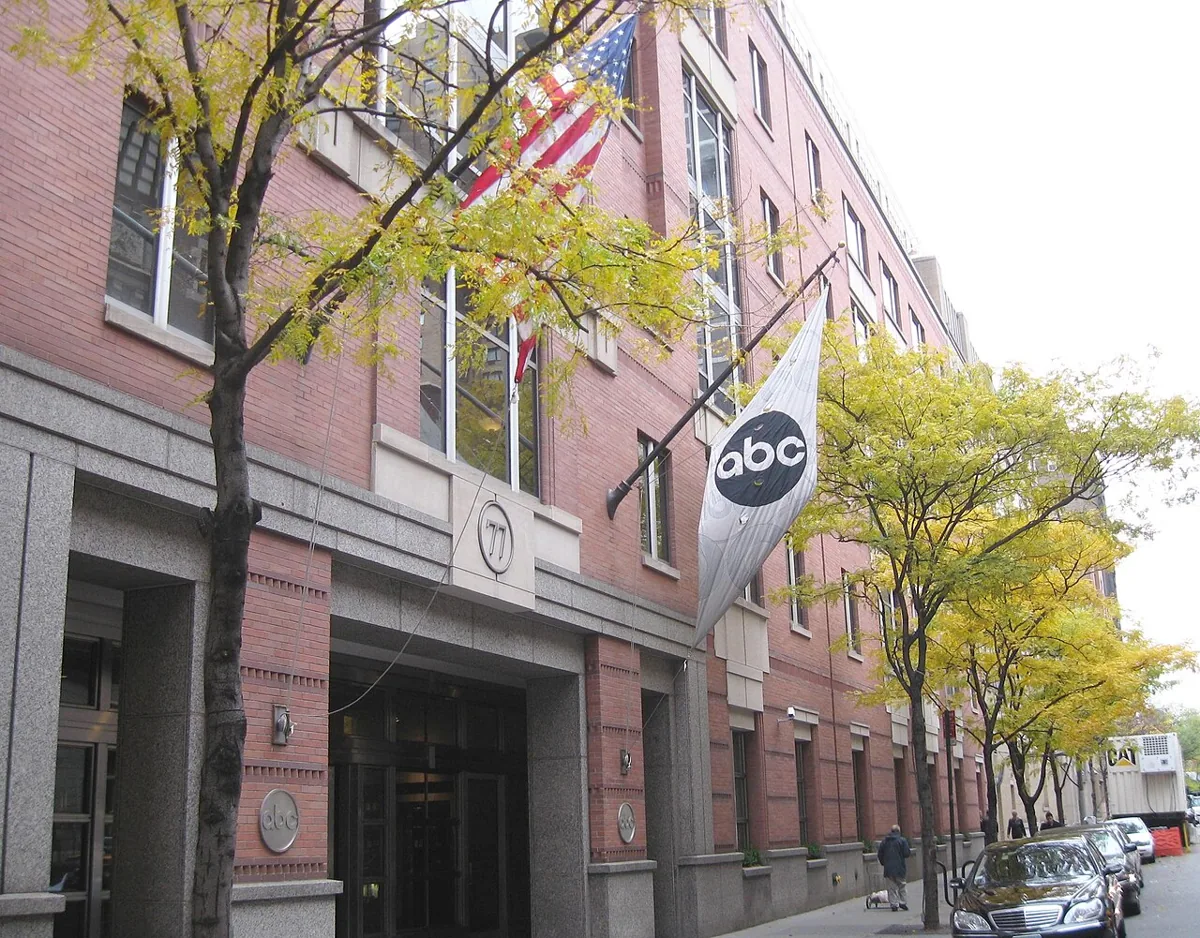
A federal judge sat down, counted the number of times President Trump publicly demanded that ABC lose its broadcast licenses, and got to eleven. Then she ruled that FCC Chairman Brendan Carr "has taken President Trump's rhetoric as his marching orders" and shut down his early review of eight Disney-owned ABC stations. Her verdict on the case: "This is not a close case."
Explain Like I'm 5 · 46-second video

Narrated and captioned. Made by The Dingo Daily from this article.
Eleven Calls, One Obvious Pattern
U.S. District Judge Loren AliKhan, a Biden appointee, issued a 45-page preliminary injunction Wednesday barring the Federal Communications Commission from taking "any continuing or further action" on its early license renewal proceedings against ABC and Disney, according to NPR and CBS News. She also denied the FCC's motion to dismiss the lawsuit, so the case keeps moving.
The judge leaned hard on the public record. She wrote that what started in 2020 as Trump asking how ABC "can keep getting a license" if it reports "fake news" has "crescendoed into repeated calls for the Commission to strip ABC's broadcast licenses for their editorial decisions." The court counted eleven of those calls over the past two years. The most recent was in July 2026.
Eleven. Not a slip of the tongue. Not a stray late-night post. A sustained, documented campaign, followed by a federal agency doing exactly what the president kept asking for.
The Kimmel Timeline Is Doing a Lot of Work
Here is the sequence. Jimmy Kimmel made a joke that Melania Trump had "the glow of an expectant widow." Trump criticized the skit on social media and called on ABC to fire him. The very next day, on April 28, the FCC ordered Disney's eight owned-and-operated stations to file their license renewals years ahead of schedule.
Those licenses were not due until 2028 at the earliest, and some not until 2031. The FCC had not ordered an early review like this in more than 50 years, per the Reuters and AP reporting carried by Al Jazeera.
Judge AliKhan was not impressed by the coincidence. "It is no coincidence that President Trump criticized Mr. Kimmel's skit on social media and the very next day Defendants initiated the early license renewal proceedings," she wrote. When a federal judge uses the word "coincidence" like that, she is not complimenting your timing.
The DEI Excuse Meets the Judge
The FCC's official explanation is that it was investigating ABC and Disney over diversity, equity and inclusion practices and possible violations of anti-employment-discrimination rules. Government lawyers say the agency has been looking at the broadcaster since last year and found ABC's responses to its information requests insufficient. Justice Department attorney Dimitar Georgiev-Remme told the court the commission simply "decided to look for information that it needed by calling for early renewal."
Disney's lawyers called that a pretext. The judge agreed enough to find ABC likely to succeed on its retaliation claim. She noted the enforcement push began with an employment practices investigation in March 2025 and escalated to the early renewal order only after Trump's Kimmel tantrum.
So the agency wanted information, and the fastest way to get it, apparently, was to put eight stations in the nation's biggest markets, including New York, Los Angeles, Chicago and Houston, on a path that could end with them losing their licenses and going dark. Totally normal. Standard document request.
What the Chill Actually Looked Like
This was not a theoretical harm. ABC's lawyers laid out specific newsroom decisions made under duress. ABC declined to air Trump's July 2026 Oval Office address on its television network, though it streamed the speech digitally, and the network's legal team said it would not have made that choice absent pressure from the FCC.
Kimmel's interview with then-Democratic Senate nominee James Talarico of Texas was uploaded to YouTube instead of airing on ABC's late-night show. Talarico won his race earlier this month. And "The View" stopped booking candidates for political office in the months before the fall elections, after the FCC floated that the show might be subject to equal-time rules that historically have not applied to talk shows.
The judge connected the dots. "The prospect of license non-renewal has also factored into plaintiffs' calculus of when and how they cover President Trump and political topics," she wrote. That is the whole ballgame. The threat does the censoring. Nobody has to issue an order.
Where the Judge Stopped Short
ABC did not win everything. AliKhan declined to grant a broader ban on the FCC "taking any actions, formal or informal, to coerce or threaten Plaintiffs with sanctions" over editorial discretion. She said the network had not specified what future threats it feared beyond the early renewal proceedings.
That matters, because Carr has not exactly been shy. Last year, after another Kimmel joke, he said on a podcast: "We can do this the easy way or the hard way." He has also suggested networks could lose licenses over their coverage of the Iran war. Trump demanded licenses be revoked when some networks passed on his July primetime speech.
A separate federal judge ruled six weeks ago in a case brought by CNN, MS NOW and Politico, finding that Trump likely barred their reporters from the White House because he considers their reporting biased against him. The administration is appealing, and the White House is still limiting those outlets' access anyway.
The Reaction: Victory Lap and Sour Grapes
ABC called the ruling "an important victory for the First Amendment." Anna Gomez, the lone Democrat on the FCC, said the agency has spent nearly two years weaponizing its licensing authority and urged every broadcaster facing pressure to "choose courage over capitulation."
The FCC's response was a statement that the portion of the ruling granting Disney's motion is "wrong on the facts and wrong on the law," and that the agency "will continue to use our lawful authority to hold broadcasters accountable to their public interest obligations." Carr did not respond to NPR's request for comment.
The context for Disney's newfound spine is not flattering. In December 2024, a few weeks before Trump returned to office, Disney paid $16 million to settle a lawsuit Trump brought against ABC News. Disney's new CEO, Josh D'Amaro, now says the company is fighting back to protect ABC's journalistic integrity. "We're very principled on this," he said.
The Dingo Take
The FCC says this is about diversity, equity and inclusion compliance and "public interest obligations." The facts say otherwise. The agency ordered a first-in-half-a-century early license review the day after the president demanded a comedian be fired, and the president had already called for ABC's licenses eleven times. Nobody was confused about the motive. The FCC just hoped the paperwork would be confusing enough to hide it.
And look at what the pressure bought. A network that stopped booking political candidates. An interview with a future U.S. senator shoved onto YouTube. A presidential address that ABC wouldn't have skipped without a federal regulator breathing down its neck. That's the product. Not a revoked license, which almost never happens, but a newsroom that flinches. The threat is the whole point, and it worked until a judge said so out loud.
Don't pop the champagne yet. This is a preliminary injunction, the FCC is promising to fight, and Carr just said he'll keep using his "lawful authority," which is a phrase doing heroic work in that sentence. Disney also paid Trump $16 million before it found its courage, so forgive us if we hold the applause. But a federal judge has now written down, in 45 pages, that the chairman of the agency regulating American airwaves treats the president's grudges as marching orders. Frame that one.



Comments