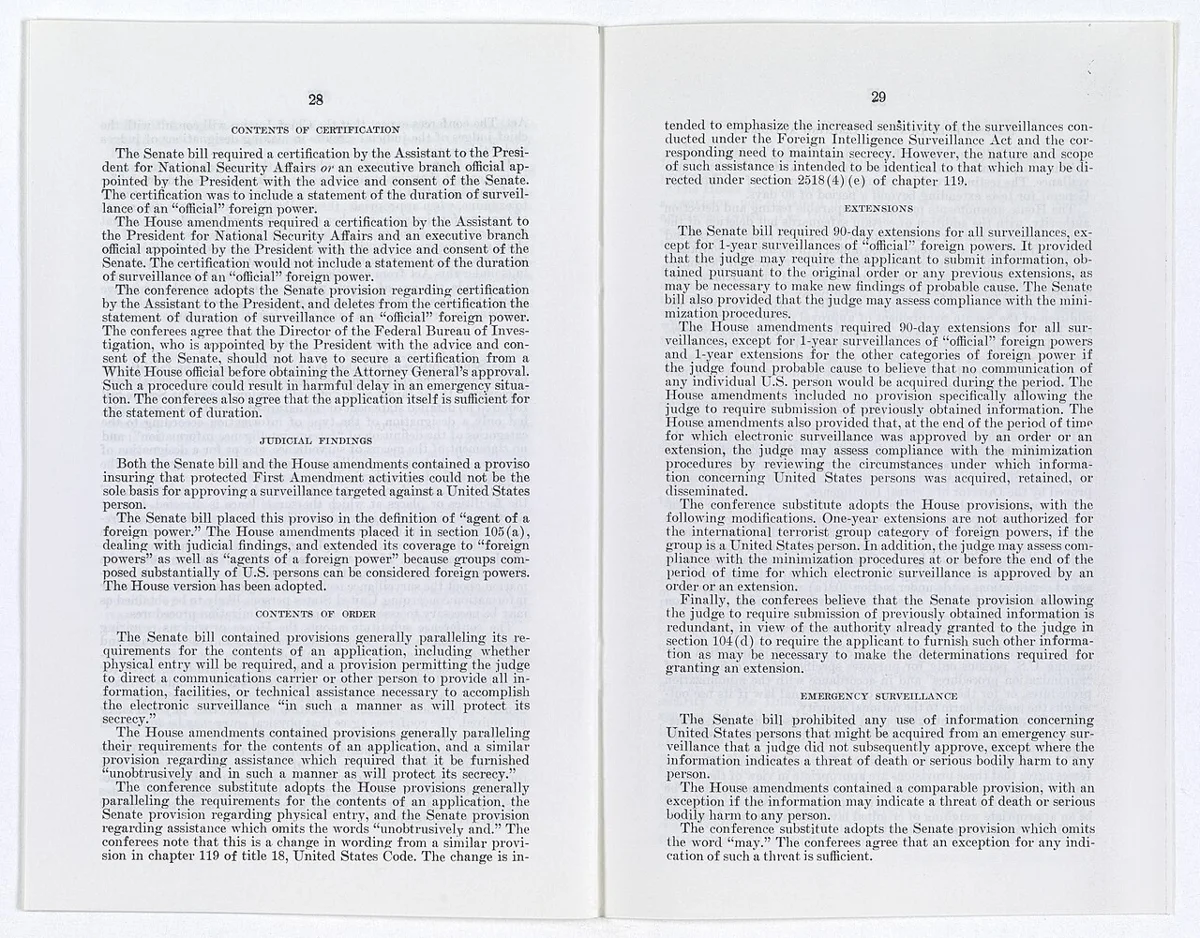
At midnight on Saturday, one of the most powerful surveillance tools in the American intelligence arsenal quietly died, not because Congress couldn't agree on the policy, but because Donald Trump decided the guy who ran the Federal Housing Finance Agency should oversee the nation's spies. Section 702 of the Foreign Intelligence Surveillance Act has lapsed, and you can thank a mortgage regulator for it.
What Section 702 Actually Does (And Why Losing It Is a Big Deal)
Section 702 has been around since 2008. It allows the government to collect electronic communications from foreign targets abroad without a warrant, and the intelligence it generates feeds directly into the president's daily briefing. According to congressional intelligence committee members, roughly 60% of that briefing comes from material collected under this law.
Senate Majority Leader John Thune, a Republican from South Dakota, put it plainly on the Senate floor Thursday. "It is a program that makes Americans more safe," he said. "The intelligence derived from the 702 program is something that has saved American lives, in theaters of conflict, preventing terrorist attacks, preventing drug runners from getting drugs into this country."
Documents the intelligence community sent to House Republicans earlier this year, first reported by Politico and confirmed by the White House, were even blunter: "FISA Section 702 is often the primary or only source of intelligence in areas where access to other sources of collection would be extremely dangerous and/or costly." No other foreign intelligence authority, the documents stated, can replicate its speed or reach. So, naturally, we let it expire.
Enter Bill Pulte, America's Least Qualified Intelligence Chief
Here is the part where this story stops being merely embarrassing and starts being genuinely surreal. Democrats had, until recently, been willing to extend Section 702. Then Trump announced he was tapping Bill Pulte, the current head of the Federal Housing Finance Agency, to temporarily serve as Director of National Intelligence.
Pulte has no national security experience. What he does have, according to CBS News, is a track record of going after some of Trump's political enemies on allegations of mortgage fraud. Democrats looked at that combination and said, essentially, no. They refused to hand surveillance authority of this scope to a man whose national security resume begins and ends with understanding adjustable-rate mortgages.
This is not a frivolous objection. The DNI sits atop the entire U.S. intelligence community and would have direct oversight of how Section 702 gets used. Democrats have spent years pushing for warrant requirements to protect Americans whose communications get swept up incidentally in the collection. Handing that unchecked power to a loyalist with no intelligence background, during an administration that has already used federal agencies to target political opponents, was apparently a bridge too far.
The Expiration That Has Never Happened Before
Congress has punted on Section 702 twice since it first lapsed in April, kicking the deadline down the road rather than making a hard call. This time, there was no kick. The authority expired at 12 a.m. Saturday, which is, per CBS News, the first time this has happened since the law was originally authorized in 2008.
Republican Rep. Rick Crawford of Arkansas, who chairs the House Intelligence Committee, flagged one of the more immediate practical concerns: communications providers might simply stop cooperating with government data requests now that the legal statute underpinning those requests no longer exists. This is not a hypothetical. Sen. Mark Warner, the Virginia Democrat and vice chairman of the Senate Intelligence Committee, told reporters that a couple of major companies actually threatened to walk away in 2024 before Congress renewed the law. "I think they don't mind participating as long as they get indemnification," Warner said. "If the indemnification goes away, that's why we've always tried to not get into this territory of having it expire."
Is Anyone Actually Going Dark Right Now?
Not immediately, according to the people who know how this works. The Foreign Intelligence Surveillance Court recertified the program through March 2027, and that certification stays in effect regardless of whether the underlying statute has lapsed. Elizabeth Goitein, the senior director of the Brennan Center's Liberty and National Security Program, told CBS News flatly: "Section 702 will not go dark. That is a myth."
Democratic Sen. Dick Durbin of Illinois backed that up, saying the existing statute makes authorities enforceable until the recertification runs out. Rep. Jamie Raskin of Maryland, the ranking Democrat on the House Judiciary Committee, said "everything that's already been authorized and certified is already in motion" and will remain so through March 17, 2027.
But here is what nobody is saying: that this situation is fine. Warner, even as he helped block the extension over Pulte, acknowledged that the expiration scenario is "a high-risk proposition." The legal cover from the court recertification is real, but it is not the same as having an active, fully-functioning statute. And when CBS News asked Warner about implications for major upcoming events like the World Cup, he acknowledged 702 is not the intelligence community's only tool. That is the kind of answer you give when the real answer makes you feel sick.
The Section 702 Civil Liberties Problem Hasn't Gone Away Either
Lost in the chaos of the Pulte debacle is the fact that Section 702 was already deeply controversial before any of this happened. Civil liberties-minded lawmakers in both parties have pushed for years to require a warrant before the government searches Americans' data that gets incidentally swept up in the collection process. Those reforms have never made it into law.
The FBI's documented history of abusing the program, a series of violations serious enough that CBS News notes they nearly tanked the law's 2024 renewal, gave those reformers serious ammunition. So Section 702 was already limping into this fight carrying baggage. Add a DNI nominee with no national security credentials and a habit of weaponizing financial regulators against political targets, and you have a recipe for exactly the train wreck that just happened.
The Dingo Take
Let's be clear about what just occurred. Congress has repeatedly been warned, by members of both parties, by intelligence professionals, by the institutions that depend on this tool every single day, that letting Section 702 expire would be reckless. And it expired anyway, not because of a principled bipartisan debate about the limits of government surveillance, but because the president decided to hand oversight of the entire intelligence community to a guy whose main qualification appears to be loyalty and willingness to go after Trump's enemies using financial regulation as a weapon.
Democrats are not wrong to oppose Pulte. That's not the point. The point is that Trump put them in this position deliberately or through sheer recklessness, and either explanation is damning. You do not nominate a mortgage regulator with no intelligence background to run the DNI during a reauthorization fight for the country's most sensitive surveillance authority unless you either don't understand what you're doing or don't care about the outcome.
The legal recertification provides a cushion, and the lights are not going off tomorrow. But the cushion runs out in March 2027, the providers are already getting nervous, and Congress is now dealing with a situation that has never occurred before, without a functioning legal framework to fall back on. If something goes wrong between now and whenever this gets fixed, the person who caused it nominated a housing finance bureaucrat to run American intelligence and dared Democrats to say something about it.




Comments