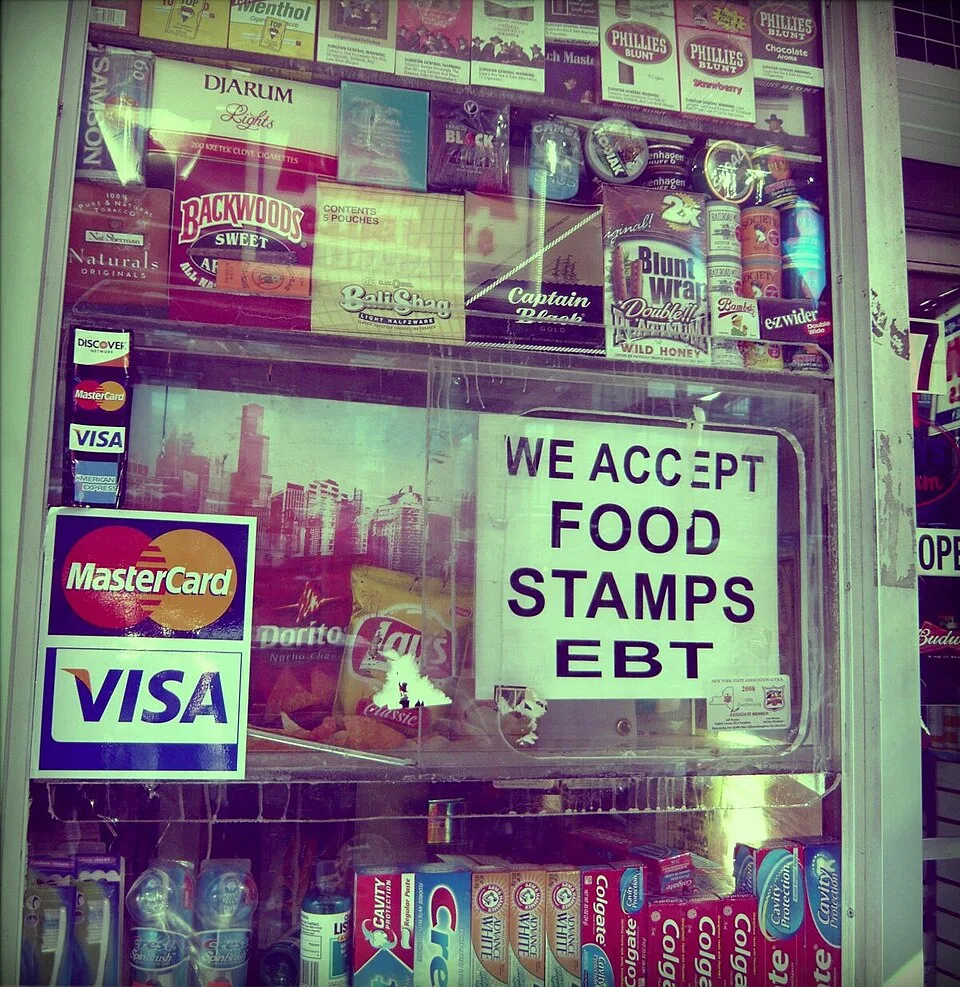
The Trump administration has a new way to deny you a green card: find out if you ever used Medicaid, food stamps, or housing assistance, and hold it against you. Starting as early as next week, the Department of Homeland Security is rescinding a Biden-era rule that limited what benefits could be used in immigration screening, handing officers broad new power to judge whether applicants are too poor, too sick, or too dependent to deserve permanent legal status in America.
The 'Public Charge' Test, Now With More Teeth
Here's the thing about the public charge rule: it's not new. U.S. immigration law has included some version of it for generations. The idea is straightforward enough on paper — the government screens immigrants to see if they're likely to become primarily dependent on public support. What has always been up for bitter debate is what counts.
Prior to Trump's first term, the standard was pretty narrow. DHS followed 1999 guidance that focused mainly on cash welfare and long-term government-funded institutional care. Medicaid? Not counted. Food stamps? Not counted. Housing assistance? Also not counted. The test was strict in spirit but limited in scope.
Then came 2019. The first Trump administration blew the doors open, expanding the test to include SNAP, most Medicaid, and certain housing programs. A wave of lawsuits followed, the Supreme Court let the rule stand anyway, and it went into effect in February 2020. Biden walked it back in 2022, returning to the narrower approach. Now, according to CBS News, DHS is undoing that and going straight back to the Trump-era version, wider discretion and all.
What Officers Can Now Actually Consider
Under the new final rule, USCIS officers reviewing green card applications will be able to conduct case-by-case assessments that factor in an applicant's age, health, family status, assets, financial resources, education, skills, and whether they've received means-tested benefits. CBS News confirmed those benefits explicitly include food stamps, Medicaid, and housing assistance.
This is a significant expansion from the Biden-era standard, which CBS News reports limited consideration primarily to cash welfare payments meant to cover basic living expenses and long-term institutional care paid for by the federal government. The difference between those two categories is enormous. Medicaid alone covers tens of millions of low-income Americans, including many people who work full-time but whose employers don't offer health coverage.
USCIS Director Joseph B. Edlow told CBS News the rule is about "reaffirming the requirement of self-reliance, protecting public resources and ending policies that encouraged dependency on the backs of hard-working American taxpayers." Self-reliance. From the administration that just handed billionaires a massive tax cut. Sure.
The Numbers Are Staggering
CBS News reports that DHS estimated in its November 2025 proposal that roughly 588,000 adjustment-of-status applicants each year will fall under public charge review. That's not a small pilot program. That's half a million people, annually, who now have their medical history and their EBT card usage treated as potential evidence against them.
And that 588,000 figure doesn't even capture the full picture. DHS itself acknowledged in that same proposal that the rule could create a "chilling effect," leading approximately 950,000 people in immigrant households to disenroll from or give up public benefits they legally qualify for. Nearly a million people. Skipping doctor's appointments. Going without food assistance. Pulling children off nutrition programs. Because they're afraid that using a legal benefit will get them deported or denied permanent status.
To be crystal clear: that 950,000 figure includes U.S. citizen children who were born here and have every legal right to those benefits. Their parents, terrified of the consequences, may simply stop using them.
Who's Technically Exempt (and Who Isn't)
USCIS officials told CBS News that the rule applies to noncitizens inside the U.S. who are applying to adjust their status to lawful permanent residence, along with noncitizens seeking admission as immigrants or nonimmigrants. There are exemptions carved out by Congress, historically covering refugees, asylees, Special Immigrant Juveniles, certain trafficking and crime victims, and Violence Against Women Act self-petitioners.
Officials also specified that benefits received by an applicant's family members won't be treated as the applicant's own use, though officers can still consider them when looking at the applicant's overall financial picture. The example CBS News received: if family benefits suggest the applicant can't actually support the household, or if those benefits appear to be functionally subsidizing the applicant, officers can weigh that too. So it's not counted against you, except when it kind of is.
The rule is expected to be filed for public inspection Thursday and takes effect early next week. Any applications filed before the effective date won't have prior benefit use counted against them, unless that use involved cash assistance or long-term institutionalization. A new version of Form I-485, the adjustment-of-status application, will also be required. Older versions submitted on or after the rule's effective date won't be accepted.
A Rule That Barely Gets Used, With Consequences That Are Very Real
Here's the darkly absurd footnote to all of this: CBS News notes that formal public charge denials have historically been extremely rare. The government built an elaborate screening apparatus, litigated it all the way to the Supreme Court, and actual denials on public charge grounds almost never happen.
So why does this rule matter so much if it almost never results in a formal denial? Because the point was never purely the denial. The chilling effect IS the policy. When immigrant families disenroll from Medicaid rather than risk it showing up in an immigration file, when parents stop taking their kids to the food pantry, when people avoid housing assistance they desperately need, that's the outcome the rule is designed to produce. You don't have to formally deny anyone anything. You just make them too scared to ask for help.
That's not immigration enforcement. That's governance by fear.
The Dingo Take
Let's call this what it is. The Trump administration just turned the social safety net into a trap. Benefits that Congress made available to low-income residents, that courts have repeatedly upheld, that serve American-born children every single day, are now evidence that you don't deserve to stay. The message is explicit: if you ever needed help, you don't belong here. The administration's own internal assessment projects that nearly a million people will respond by quietly abandoning benefits they're legally entitled to. DHS knows this. They wrote it down. They published it in the proposal and moved forward anyway.
And spare me the "self-reliance" framing. This administration's economic agenda has been a relentless upward transfer of wealth, with tax cuts for corporations and the ultra-rich paid for by cuts to programs serving the poor. The people being told to prove their self-reliance are the ones working jobs without health insurance, paying rent in cities with broken affordable housing markets, feeding families on SNAP because the wages haven't kept up since the 1970s. They're not dependent. They're surviving. And now surviving is being used against them.
What makes this particularly ugly is the timing precision of the chilling effect. You don't need mass deportations when mass fear does the same job. The rule doesn't have to deny 588,000 applications to succeed. It just has to make enough families put down the Medicaid enrollment form and back away slowly. By DHS's own math, it's already working on nearly a million of them before the ink is even dry.





Comments