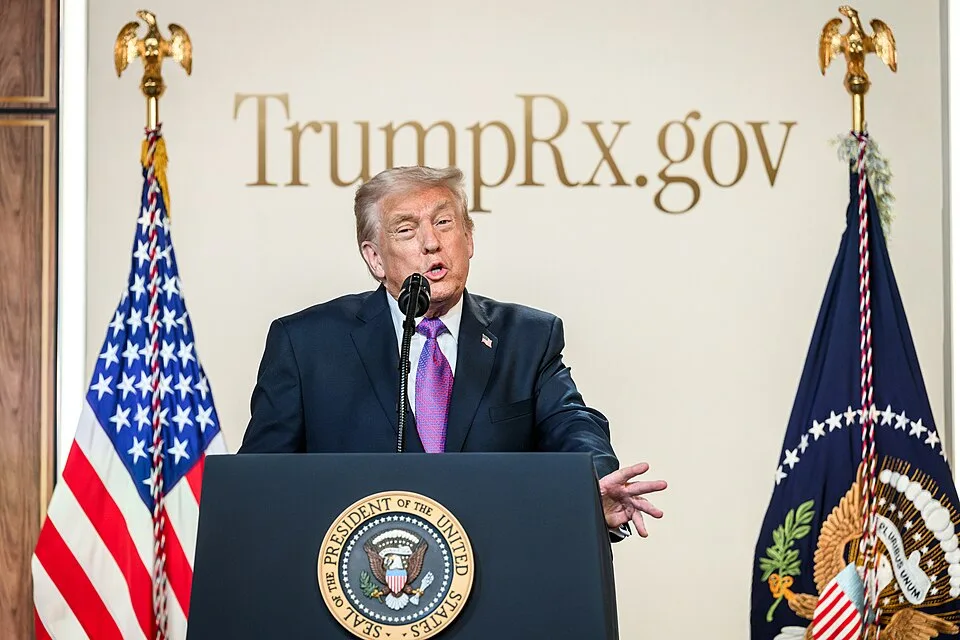
The president called TrumpRx "the biggest thing to happen in healthcare in many, many decades." Nearly six months in, the site covers fewer than 12% of the brand-name drugs made by the very companies that signed deals to be on it. That is not a healthcare revolution. That is a landing page.
The Promise Was a Supermarket. The Reality Is a Convenience Store.
TrumpRx launched on February 5 with considerable fanfare, a White House-adjacent ceremony, and the kind of presidential boasting that makes cable news producers briefly consider quitting. The pitch was simple: pharmaceutical companies had cut deals with the Trump administration, and now Americans could go to a government website bearing the president's name and get cheaper drugs directly.
As of mid-July, the site lists 92 brand-name drugs from 15 of the 17 companies that announced agreements with the administration. Sounds decent until you hear the other number. According to NPR's analysis of an FDA database of marketed drugs, those same companies make more than 800 brand-name drugs currently on the market. Do the math. TrumpRx is offering deals on less than 12% of the available inventory.
"The key takeaway is that most of these companies are doing this for a small number of products and in a limited setting," Dr. Ben Rome, a health policy researcher and physician at Brigham and Women's Hospital, told NPR. "They're not engaging to do this on a large scale." Which is a very polite way of saying the pharmaceutical industry looked at the White House's demands, offered up a handful of drugs nobody was panicking about, and called it a revolution.
Pfizer's Deal Is Real. It's Also Missing Their Biggest Drugs.
Pfizer has the most drugs on TrumpRx by a wide margin, with 30 listings. That sounds impressive right up until you learn that Pfizer has at least 178 brand-name drugs on the market. So yes, Pfizer showed up. Pfizer showed up like a student who technically submitted the assignment.
The drugs generating the most revenue for Pfizer are notably absent. NPR reports that Eliquis, the blood thinner Pfizer co-markets with Bristol Myers Squibb, is not on TrumpRx. Ibrance, a treatment for advanced and metastatic breast cancer, is not on TrumpRx. Paxlovid, Pfizer's COVID treatment, is not on TrumpRx. What is on TrumpRx? Xeljanz, Pfizer's blockbuster pill for inflammatory diseases like rheumatoid arthritis, listed at $1,518 with up to a 53% discount.
Here is the problem with that. Xeljanz now has a generic version called tofacitinib. According to NPR, patients paying out-of-pocket can buy the generic on Mark Cuban's Cost Plus Drugs website for about $30 for 60 tablets. The presidential deal price is $1,518. The non-presidential, no-ceremony, nobody-gave-a-speech price is $30. This is the program.
Two Companies Signed Deals and Have Zero Drugs on the Site
Gilead and Regeneron both announced agreements with the Trump administration that included TrumpRx discounts. Neither company currently has a single drug listed on the website. Not one. Zero.
Both companies told NPR they plan to add one drug each. Gilead will eventually list Epclusa for hepatitis C. Regeneron will eventually list Praluent for high cholesterol. When exactly these drugs will appear at a discount has not been determined, the companies said. So two companies signed highly publicized deals, got the positive press from the announcement, and have not actually done anything yet. That's a bold negotiating outcome for the administration.
To be fair, Pfizer did release a statement saying it was offering savings as high as 85% off sticker prices on more than 30 medicines. Pfizer spokesperson Kat Romaniuk told NPR, "We will continue to make regular assessments and adjustments as the program evolves." Corporate for: we'll see.
The Generics Problem Nobody Wanted to Talk About at the Launch Event
In May, TrumpRx quietly added hundreds of generic drugs through partners like Cost Plus Drugs and Amazon Pharmacy. This effectively split the site into two sections: a "presidential deals" tab for the brand-name discounts, and a "standard prices" tab for generics and brand-name drugs that are more expensive than their generic counterparts.
NPR found that at least some of the 79 drugs listed as presidential deals already have generic competition. Januvia and Janumet, two of Merck's three drugs on the site, are both available as generics. The analysis found that Janumet's TrumpRx price of $84.57 does beat the generic version in at least some cases, which is a genuine data point in the program's favor. It is also the kind of fine print that gets lost when a president stands in front of cameras and says this is the biggest healthcare development in decades.
The underlying structure of the whole thing raises a fair question. If the government was going to put together a website linking to Cost Plus Drugs and Amazon Pharmacy for generics, it could have done that without a year of closed-door negotiations with the pharmaceutical industry, tariff threats, and a national security investigation into drug imports.
How We Got Here: Threats, Letters, and Closed Doors
The backstory on TrumpRx is worth understanding because the buildup was enormous and the product is this. The program traces back to a May 2025 executive order aimed at bringing American drug prices in line with what other wealthy countries pay. Last summer, the administration sent letters to 17 drug companies with a list of demands, including selling drugs directly to consumers at lower prices.
The letters included a threat: meet the demands voluntarily, or "if you refuse to step up, we will deploy every tool in our arsenal to protect American families from continued abusive drug pricing practices." Then came closed-door negotiations, including the threat of tariffs tied to a national security investigation into pharmaceutical imports. The text of the actual agreements has not been made public.
All 17 companies eventually announced deals with the administration. The first announcement came with Pfizer in the fall. The last came with Regeneron in April. Every company that got a letter eventually raised its hand and said yes. And the result of all that leverage, all those threats, all those months of negotiation, is a website with 92 drugs on it.
The Dingo Take
Let's be honest about what happened here. The Trump administration had genuine leverage over the pharmaceutical industry. It had tariff threats, a national security investigation, executive orders, and the bully pulpit of the presidency. The drug companies were scared enough to sign agreements. And what the administration extracted from that position of strength, after months of negotiations, was a website covering fewer than 12% of those companies' brand-name drugs, two companies with zero drugs actually listed yet, and some discounts on drugs that already have $30 generic versions.
The pharmaceutical industry has been eating American patients alive for decades. Drug prices in the United States are not a mystery or a complicated policy puzzle. They are the direct result of a government that has, for generations, refused to use its purchasing power to negotiate prices the way every other wealthy country does. A president who wanted to fix that had tools available. He used those tools to get Pfizer to list 30 of its 178 drugs on a website with his name on it.
Trump said this was the biggest thing to happen in healthcare in many, many decades. He said it at a ceremony. He said it with a straight face. The biggest thing to happen in healthcare in many, many decades currently has fewer drugs on it than a mid-sized pharmacy in a strip mall in Ohio. The pharmaceutical companies got the press release. Americans got TrumpRx.
Comments