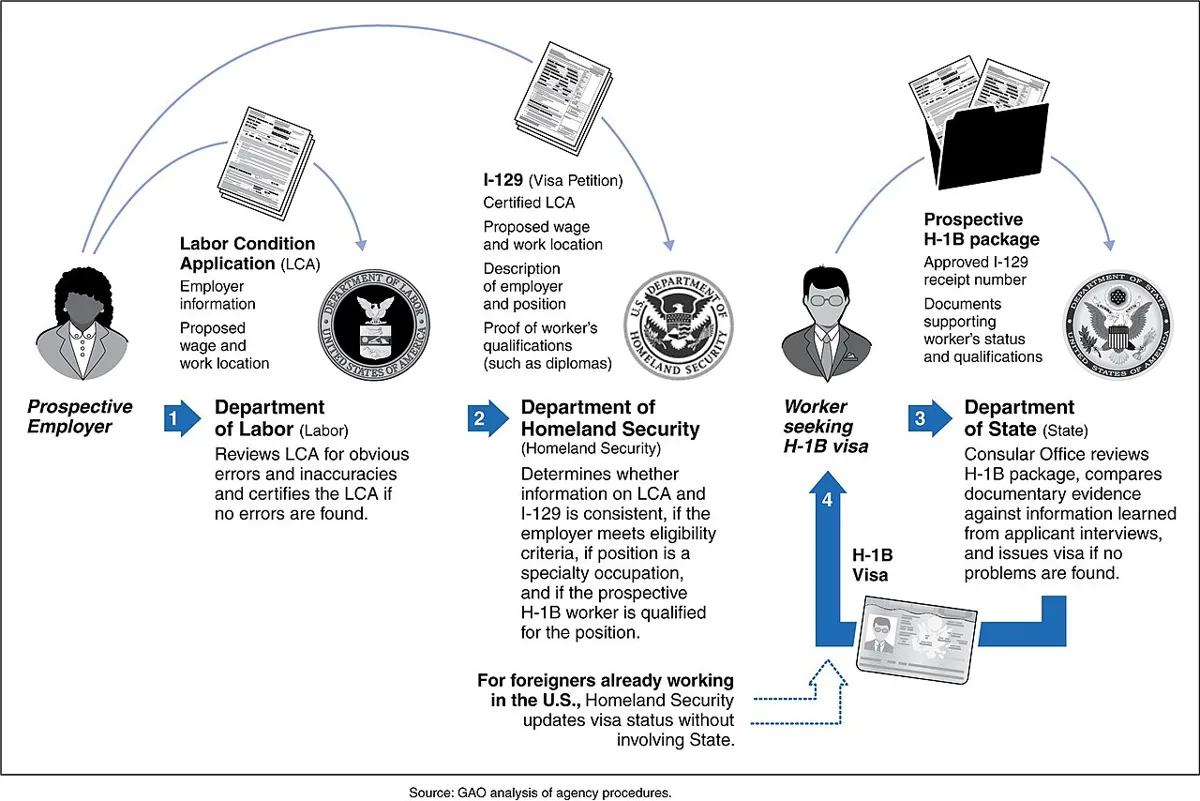
A federal judge looked at the Trump administration's plan to jack up the H-1B skilled worker visa fee from $215 to $100,000 and said, in 42 pages of legal prose, that this is obviously a tax and the White House doesn't have the authority to impose it. The administration's response? They're appealing. Because of course they are.
From $215 to $100,000: The Fee That Broke the Math
Let's put the numbers on the table first, because they are genuinely staggering. The H-1B visa fee, which businesses pay to sponsor a skilled foreign worker, sat at around $215 for years. In September 2025, the Trump administration announced it was raising that fee to $100,000. That is not a typo. That is a 46,000 percent increase.
For Kishore Khandavalli, who runs a software consulting firm in Dallas with nearly 380 employees, roughly half of them on H-1B visas, the math was immediate and brutal. He told CBS News that under the new fee structure, he would have lost about $1 million a year. He stopped hiring foreign workers entirely after the order came down.
This is what policy designed to sound tough on immigration actually does in practice: it doesn't keep Americans employed, it freezes a company's ability to hire anyone, and it puts a business owner in the position of choosing between absorbing an enormous new cost or sending the work somewhere else entirely. That "somewhere else" being, in this case, overseas.
The Judge Did Not Mince Words
On June 8, U.S. District Judge Leo Sorokin invalidated the $100,000 fee policy following a lawsuit brought by 20 states. His 42-page decision, as CBS News reports, was not subtle about what he thought was going on here.
"The substance and application of the $100,000 payment reveal that it is a tax, regardless of what the payment is called," Sorokin wrote. He went on: "There are no statutory powers authorizing [the Trump administration] to implement a $100,000 tax on H-1B petitions." A judge spelling out that you've been calling a tax a fee and hoping no one would notice is not a great legal look.
The ruling represents one of the cleaner examples of a court simply describing what is in front of it. The administration dressed this up as a visa fee. A federal judge read it, thought about it for what appears to be quite a while given the page count, and concluded: no, that is a tax, and you cannot do that.
The Talent Pipeline Nobody Wants to Talk About Losing
Here is the part of this story that tends to get lost in the immigration debate: the H-1B program exists because there is a genuine, documented shortage of qualified workers in certain technical fields in the United States. Khandavalli was direct about it with CBS News. "There's a skills gap between the people that are available in the market and the skills that the market is needing," he said. He's not importing workers to undercut American wages. He can't find enough American workers with the skills he needs.
According to 2023 data from the Pew Research Center, 73% of H-1B visa holders come from India. CBS News traveled to the Birla Institute of Technology and Science in Pilani, India, and found students who have spent years planning to come to the United States for work. One doctoral student, Ravi Bushan, told CBS News that working in the U.S. would be "a career transformation" for him. But the ground has shifted under his plans.
"With the changes in the visa formalities, and the shifts in the way immigration is now seen in the U.S., now I'm looking at diversifying my options, looking at other places," Bushan told CBS News. This is what chilling effects look like. The $100,000 fee is currently blocked by a court order, and highly skilled people who would have come to the U.S. are already making other plans.
The Appeal, and What Comes Next
The Trump administration is appealing Judge Sorokin's ruling, according to CBS News. Which means this is not over. The $100,000 fee is blocked for now, but businesses like Khandavalli's are operating under a cloud of uncertainty about whether the policy comes back in some form or gets replaced by something else the administration cooks up.
Khandavalli told CBS News that if another major barrier goes up, he could end up having to send work overseas. That outcome, a direct result of aggressive anti-immigration policy, would result in fewer American jobs, not more. "Without the H-1B program being affordable to all the businesses, I'm concerned that the talent might leave the country," he said. "I'm concerned about how we're going to innovate in the coming three, four, five years."
That is a software company owner in Dallas, a man who started his own American career on an H-1B visa, asking out loud whether the United States is going to be able to compete in the next decade. It is a question worth sitting with.
The Dingo Take
The $100,000 fee was never really about protecting American workers. If it were, the policy designers would have had to answer the obvious follow-up question: what happens when the companies that rely on H-1B workers can't hire and can't fill the roles and move the operations somewhere that isn't the United States? The answer is not "more jobs for Americans." The answer is the jobs go with them. A federal judge figured this out. The administration is appealing anyway.
There is a version of H-1B reform that takes the legitimate concerns about the program seriously, looks at wage floors, at employer dependency, at the ways some companies use the visa to undercut domestic labor costs. That conversation is worth having. What is not a serious policy conversation is multiplying a $215 fee by 465 and calling it a day. That is a wall built out of paperwork, and like most walls this administration has tried to build, a court just knocked it down.
The appeal is the tell. A White House that actually wanted to fix a broken program would sit with the ruling and go back to the drawing board. This one is going to spend months in court fighting to preserve a policy that a federal judge already called an illegal tax in plain English. Meanwhile, Ravi Bushan is updating his resume for jobs in other countries, and Kishore Khandavalli is running the numbers on offshore options he would rather not be running. America, winning.



Comments