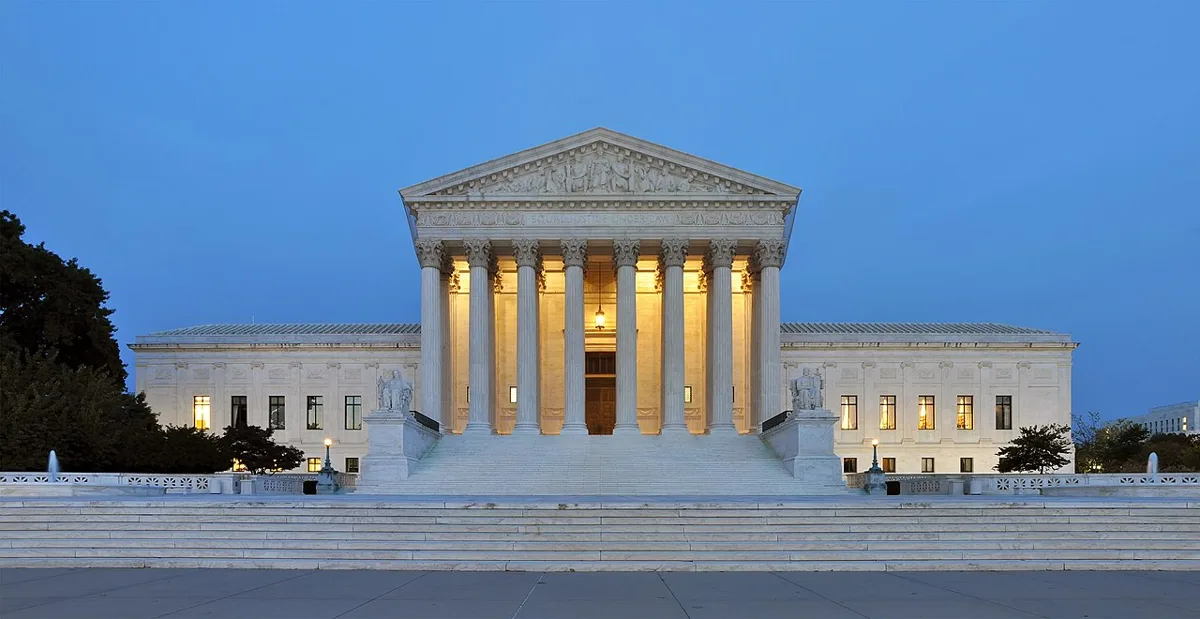
The Supreme Court on Monday told Carter Page, in the polite legal language of a one-line denial with zero explanation, to go home. This closes the book on Page's bid to hold James Comey and other former FBI officials personally liable for surveilling him during the Russia investigation, a case that was already half-dead after Page quietly pocketed a $1.25 million settlement from the federal government.
What SCOTUS Actually Did (And Didn't Say)
The justices denied Page's appeal without comment, which is exactly what the Supreme Court does when it doesn't want to touch something. No explanation, no dissent, no drama. Lower court rulings stay in place, and Page's attempt to sue Comey and other former officials personally is finished.
Justice Ketanji Brown Jackson did not participate in the case. The court gave no reason for that either, which is also standard. Fox News reported the denial Monday.
Page was never charged with a crime. He's spent years saying he was railroaded by a politically motivated FBI investigation, and the official record gives him at least some ground to stand on. That's the frustrating part of this story, and it's worth sitting with for a moment before we get into the rest of it.
The Surveillance Mess That Started All of This
Page was swept up in the FBI's Crossfire Hurricane investigation, the bureau's probe into potential coordination between the Trump 2016 campaign and Russia. The Foreign Intelligence Surveillance Court approved secret warrants to monitor him in 2016 and 2017.
Here's where it gets genuinely ugly. A Justice Department inspector general report later found serious errors and omissions in the FBI's applications to surveil Page. Not minor paperwork hiccups. Significant problems bad enough that former FBI and Justice Department officials admitted, after the fact, that they would not have signed off on the warrants if they'd known the full picture.
The FBI responded by implementing dozens of corrective measures to improve how it handles surveillance applications going forward. That sounds responsible until you remember that the corrective measures came after they'd already surveilled an American citizen using applications the government itself later admitted were flawed.
Why the Lawsuit Failed Even Before SCOTUS Weighed In
Lower courts dismissed Page's lawsuit against Comey and the other named officials before it ever got close to the Supreme Court. The reasoning was procedural and a little maddening: Page had not sued the officials who directly carried out the surveillance. He went after the people at the top, and courts said that wasn't enough under the legal framework he was using.
So the FBI used bad warrant applications to spy on a guy, he sued the people who approved those applications, and courts said he sued the wrong people. That's a special kind of legal frustration that no $1.25 million check fully resolves, even if it softens the blow considerably.
Page reached that settlement with the federal government separately, according to Fox News. It covered the surveillance claims against the government as an institution. But he wanted to keep going after the individuals. SCOTUS just shut that door permanently.
Where This Sits in the Broader Russia Investigation Story
Special counsel Robert Mueller concluded his investigation by finding that Russia did interfere in the 2016 election. He did not establish that members of the Trump campaign criminally conspired with Russia. That's a specific and important distinction that both sides in this ongoing political argument have selectively ignored for years depending on which sentence helped them more.
Page was one of the most contentious figures in that whole saga precisely because he was surveilled, never charged, and the surveillance was later found to be based on flawed applications. The inspector general report handed critics of the FBI a legitimate grievance, separate from all the noise about whether Trump himself did anything wrong.
Now a separate criminal drama is running in parallel. According to Fox News, the FBI has launched criminal investigations of both former CIA Director John Brennan and former FBI Director James Comey. Comey was recently indicted by a grand jury, Page himself commented on that development on Fox News. So Comey's legal exposure did not end just because Page's lawsuit against him did.
The Part Nobody Talks About Enough
Trump has ordered the FBI to declassify documents from the Crossfire Hurricane investigation, according to Fox News. That process is ongoing and will presumably dump more material into an already overcrowded public record that most people have stopped reading carefully.
The pattern here is worth naming plainly. An American citizen was surveilled by his own government using applications that the government later admitted were problematic. He was never charged. He sued. He got $1.25 million from the government. He tried to hold specific officials accountable personally. Courts blocked him on procedural grounds. The Supreme Court declined to intervene.
That is not a story about justice being done. That is a story about a system protecting itself with one hand while writing a check with the other.
The Dingo Take
Here's the thing about the Carter Page saga that makes it so hard to write about cleanly: it contains genuine government misconduct AND it got weaponized by people whose interest in civil liberties begins and ends with whether the target of surveillance is politically useful to them. Both things are true simultaneously, and the country has largely lost the ability to hold both thoughts at once.
Page got $1.25 million from the federal government. That's not nothing. But accountability for surveillance abuse was never really going to come from a civil lawsuit against individuals, and everyone in the legal community probably knew that. The FISA system that enabled this is still running. The FBI implemented its corrective measures and moved on. Comey faces a criminal indictment now, though for different reasons. The machine absorbed the criticism and kept going.
What we're left with is a closed legal chapter in a story that never really ended and probably won't. The 2016 Russia investigation has now outlasted one presidency, contaminated a second one, generated more inspector general reports than most people can name, and produced exactly zero satisfying conclusions for anyone on any side of it. The Supreme Court's wordless one-line denial on Monday felt, somehow, completely appropriate.



Comments