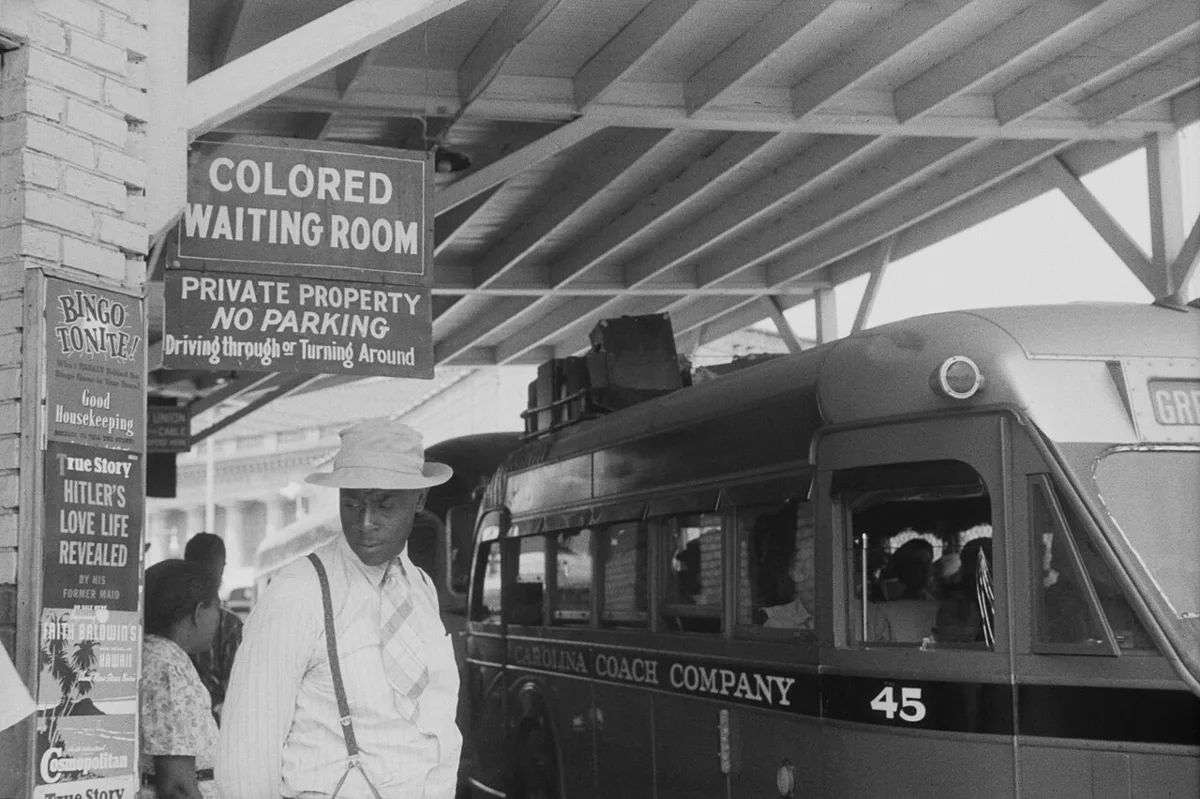
A lawyer who spent decades dismantling Jim Crow's structural remnants in federal court is now saying the machinery being assembled ahead of the 2026 midterms is more sophisticated, more coordinated, and more dangerous than anything he fought before. David Walbert is not a alarmist. He is a man who beat Burke County, Georgia all the way up to the Supreme Court, and he is telling you to pay attention right now.
A Guy Who Actually Knows What Voter Suppression Looks Like
Walbert's first Supreme Court argument was in 1982. He represented Black voters in Burke County, Georgia, a place where African Americans made up 40% of registered voters and had never once elected a Black candidate to office. The mechanism was brutally simple: at-large elections let the white majority outvote Black voters every single time, regardless of population share. No burning crosses required. Just math, rigged by design.
He won at trial. He won on appeal. Then the Supreme Court announced a new rule, in direct contradiction of two centuries of precedent, that election discrimination was legal unless plaintiffs could prove discriminatory intent. Not discriminatory effect. Intent. Good luck getting that in writing.
Walbert helped push Congress to amend the Voting Rights Act to close that loophole, writing in a piece for The Guardian that he 'testified before both the House and Senate committees in support of legislation to prohibit election practices that resulted in discrimination regardless of their purpose.' The amendment passed. The protections held. For a while.
John Roberts, Villain of This Story Since 1982
Here is a detail that should make you spit out your coffee. One of the most aggressive opponents of strengthening the Voting Rights Act during Reagan's Justice Department was a young lawyer named John Roberts. According to Walbert's account in The Guardian, Roberts lobbied members of Congress, wrote position papers, and drafted testimony against the amendment. He lost that fight.
Then he became Chief Justice of the United States. And he spent the next two decades doing from the bench what he couldn't do as a Reagan staffer. The court's gutting of the VRA's preclearance requirement in 2013's Shelby County decision was Roberts writing the opinion. The man failed to kill the Voting Rights Act in 1982 and just kept showing up until he had enough votes to do it properly.
The result, as Walbert documents in The Guardian, was entirely predictable: southern legislatures immediately started passing wave after wave of restrictions, every single one justified by the specter of 'election fraud,' none of them supported by evidence of actual fraud. Voting hours shortened. Early voting curtailed. Precincts closed. Mass purges authorized. Northern Republican-controlled states followed the same playbook. Minority voting rates dropped exactly as intended.
What the Federal Government Is Actually Doing Right Now
Forget the rhetoric for a second and look at the operational picture. Federal agencies under Trump are, according to Walbert's Guardian piece, 'doing everything possible to rig the midterms for Republicans.' That is a civil rights lawyer with 40-plus years of courtroom experience using the word 'rig.' Read it again.
The specific moves: pushing documentary proof of citizenship requirements despite dozens of studies showing non-citizen voting does not occur in 'detectable numbers.' Trying to restrict mail-in voting because more Democrats use it, while Trump himself votes by mail. The Justice Department advocating for voter purges that would disproportionately strip qualified minority voters from the rolls. And the Supreme Court's conservative majority is reportedly poised to rule that a mail-in ballot postmarked by Election Day cannot be counted unless it physically arrives at the election board by Election Day, which would functionally eliminate mail voting as a reliable option.
These are not abstract policy debates. These are targeted mechanisms designed to reduce specific votes. The logic is not hidden. It does not need to be.
100 FBI Agents at an Ohio Voter Registration Group
Last Thursday, according to The Guardian's reporting of Walbert's account, 100 federal agents showed up without warning to serve search warrants and interrogate people connected to an Ohio voter registration organization. One hundred. For a voter registration group. Former Senator Sherrod Brown called it exactly what it was: an effort 'to intimidate eligible voters.'
In Texas, Attorney General Ken Paxton has been bringing lawsuits and criminal indictments against Democratic-leaning Latino organizations and officials under state laws that Walbert describes as criminalizing things like paying canvassers for their gas money. Walbert's point is not that Paxton needs to win these cases. He does not. The prosecutions themselves are the mechanism. Fear is the product. Reduced Democratic turnout is the outcome.
This is the part that tends to get lost in the noise of daily Trump coverage: the goal is not always conviction. Sometimes the goal is just making people scared enough to stay home.
The Part That Should Actually Terrify You
All of the above is the appetizer. Walbert's deepest concern, spelled out in The Guardian, is what comes after Election Day. Trump and Republican allies have already demonstrated, in 2020, that they are willing to use manufactured claims of fraud to argue that elections they lost were stolen, and to push states toward submitting alternate slates of electors.
The infrastructure being built now, the citizenship requirements, the purges, the intimidation campaigns, the pending court rulings on mail ballots, is partly about suppressing votes before they happen. But it also creates a ready-made cloud of procedural chaos that can be weaponized after votes are counted. If you've spent six months telling the public that the election system is riddled with fraud, losing becomes a lot easier to explain away as theft.
Walbert has seen this movie before, in fragments, across decades. His concern, as someone who has watched the slow erosion of every protection he spent his career building, is that in 2026 all those fragments are assembling into something coherent and something much harder to fight in court after the fact.
The Dingo Take
Let's be clear about what is being described here. A man who argued voting rights cases before the Supreme Court, who helped write the legislation that closed the loopholes the Supreme Court opened, who has been in this fight since before most of our current political reporters were born, is saying that what he sees happening ahead of November 2026 is worse than what he spent his career fighting. That is not a tweet from a panic account. That is a professional assessment from someone with the receipts.
The John Roberts throughline in this story deserves more attention than it gets. The same lawyer who tried to kill the Voting Rights Act as a Reagan staffer, failed, and then spent 20 years on the Supreme Court methodically dismantling it piece by piece is now positioned to preside over whatever legal challenges arise from the 2026 election. The system does not have a firewall for this. The firewall was the Voting Rights Act, and it is gone.
The FBI showing up with 100 agents at a voter registration group in Ohio is the kind of sentence that should end careers and trigger congressional investigations and dominate three news cycles. Instead it is a paragraph in an op-ed. That gap between what is happening and how loudly it is being treated as an emergency is itself part of the problem. Walbert is not warning you that something bad might happen. He is documenting, in real time, something that is already underway.


Comments