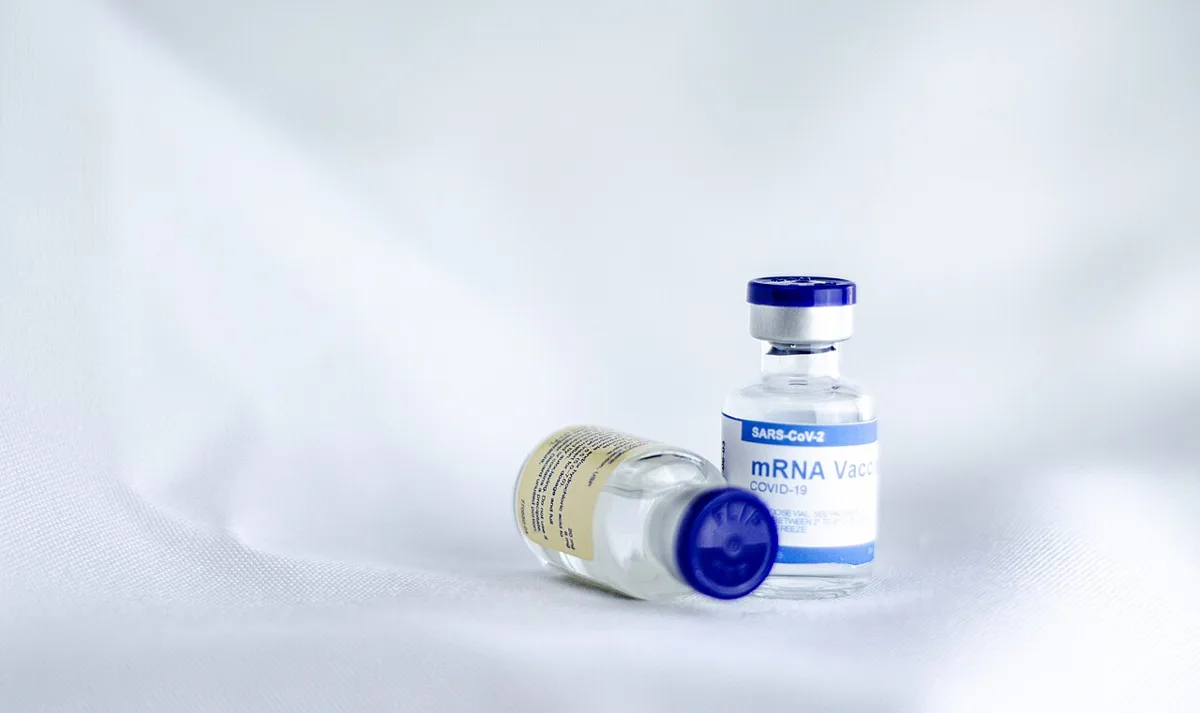
The FDA's top vaccine advisory committee voted unanimously Thursday to recommend Moderna's new mRNA flu vaccine, mFlusiva, for adults 50 and older. This is the same technology Robert F. Kennedy Jr. was so terrified of that he yanked nearly $500 million in federal research contracts to help kill it. The committee didn't blink.
The Vote RFK Jr. Didn't Want to Happen
The Vaccines and Related Biological Products Advisory Committee, known as VRBPAC, voted unanimously to recommend Moderna's mFlusiva Thursday. According to NPR, this was the first time the panel has reviewed a new vaccine application since 2023. Let that sink in for a second. Three years. Under a health secretary who thinks vaccines cause autism and a president who has spent a decade treating public health expertise like a personal insult.
The vote is not final approval. The full FDA still has to sign off. But a unanimous recommendation from its own expert advisory panel is about as clear a signal as science sends. The FDA would have to actively ignore its own committee to block this vaccine, which, given the current administration, is not as reassuring a thought as it should be.
Half a Billion Reasons This Almost Didn't Happen
Kennedy didn't just complain about mRNA vaccines. He pulled back nearly $500 million in contracts to develop them, as NPR has previously reported. When the FDA initially declined in February to even review Moderna's application, critics called it political interference wearing a regulatory mask. The agency reversed course two weeks later after a wave of public criticism, which is how we ended up at Thursday's unanimous vote.
So to recap the timeline: Kennedy guts mRNA research funding. FDA initially refuses to review the application. Public backlash forces a reversal. Committee unanimously recommends the vaccine anyway. This is what happens when you try to suppress science by bureaucratic attrition and the scientists just keep doing science.
What mRNA Actually Does (Since Someone Has to Say It)
The misinformation fog around mRNA vaccines is so thick at this point that it's worth spending a moment on what Moderna actually submitted to the FDA. The vaccine delivers microscopic doses of mRNA that instruct your body to produce flu antigens, building immunity. Moderna's brief to the FDA stated explicitly that the vaccine does not enter the cellular nucleus, does not interact with the genome, and does not persist in the body.
Dr. Jesse Goodman, a former director of the FDA's Center for Biologics Evaluation and Research, told NPR that claims mRNA vaccines cause cancer or alter your DNA are "not possible" and "disproven." Dr. Anna Durbin of Johns Hopkins, who sits on the VRBPAC and voted Thursday, pointed to the fact that over 6 billion doses of mRNA vaccines have been administered since 2020 and described their safety profile as "incredibly safe." There is no credible scientific debate about this. There is a political debate, which is a very different thing.
Why This Vaccine Is a Bigger Deal Than the Vote Alone
Here's what gets public health researchers genuinely excited beyond the immediate political circus. mRNA flu vaccines can be produced faster and more precisely than traditional flu vaccines. Moderna's vice president of epidemiology, Dr. Evan Anderson, told the committee Thursday that the mRNA platform could cut the strain-targeting window from roughly six months down to two to three months, the same compressed timeline used for COVID-19 vaccines. That matters enormously when a new flu strain emerges out of nowhere.
Research published in the New England Journal of Medicine and Nature Immunology found that the mRNA flu vaccine produced a longer-lasting immune response and antibodies that recognized more flu strains than standard vaccines. A postdoctoral researcher at Washington University in St. Louis, Hanover Matz, told NPR that this kind of detailed antibody quality analysis isn't something typically done in standard vaccine research, meaning the scrutiny applied to this vaccine went beyond the usual bar. The FDA's own clinical reviewer, Dr. Gauri Raval, presented data suggesting the Moderna vaccine may offer greater efficacy than standard-dose comparators in preventing more severe flu.
And the stakes are not abstract. The CDC told the committee Thursday that the 2025-2026 flu season produced at least 32 million cases, 390,000 hospitalizations, and 24,000 deaths in the United States alone. Roughly 85% of people eligible for the flu vaccine this year were not fully vaccinated.
A Breath of Fresh Air in a Room Full of Smoke
Dr. Paul Offit, director of the Vaccine Education Center at Children's Hospital of Philadelphia and a former member of this same FDA advisory panel, did not hide his feelings about Thursday's result. "It's such a breath of fresh air, considering what we've gone through with Robert F. Kennedy Jr.," he told NPR.
That quote is doing a lot of work. Offit has spent the better part of two years watching the nation's top health official spread debunked vaccine myths from a government podium while slashing research budgets and installing conspiracy-adjacent allies throughout the public health apparatus. A unanimous vote from a panel of actual scientists recommending a vaccine built on technology Kennedy has personally tried to strangle is, under the circumstances, a significant moment.
The Dingo Take
Let's be clear about what this vote means and what it doesn't mean. It means that when you put a room full of scientists in front of the actual data, they tend to agree with the data. It means that the mRNA platform, which Kennedy spent considerable government time and money trying to hobble, just passed its most politically hostile review environment in modern history with zero dissenting votes. It means 24,000 people died from the flu this past season while the people running the country's health agencies were busy questioning whether vaccines work at all.
What it doesn't mean is that the fight is over. The FDA still needs to formally approve the vaccine. Kennedy is still the Secretary of Health and Human Services. The infrastructure he's been systematically dismantling doesn't rebuild itself because one advisory committee voted the right way. And the 85% of eligible Americans who skipped their flu shot this year didn't do so because mFlusiva wasn't available yet.
The scientists won this round. Good. They should win every round, because they're the ones who actually understand what's in the syringe. But Kennedy didn't gut mRNA research funding as a one-time gesture. He did it because he plans to be there a while, doing more of the same, and hoping nobody notices the body count accumulating in the meantime. Pay attention.



Comments