New York City health officials had just finished patting themselves on the back for closing out a Legionnaires' outbreak on the Upper East Side. Then the South Bronx happened. One person is dead and four more are sick after a new cluster of Legionnaires' disease was confirmed in the Melrose and Morrisania neighborhoods, according to The Guardian, and the city's cooling towers are back under the microscope.
What's Actually Going On in the South Bronx
On Thursday, New York City officials announced that the municipal health department had launched an investigation into a community cluster spanning ZIP codes 10451 and 10456 in parts of Melrose and Morrisania, according to The Guardian. Five confirmed cases. One dead. Community health workers now canvassing the neighborhood.
The city's health commissioner, Alister F. Martin, confirmed that sampling of cooling towers in the area has been completed, with testing underway at the city's public health laboratory. Those big industrial units that sit on rooftops and push out mist all summer long are the usual suspects in these outbreaks, and for good reason.
Martin urged anyone who has lived, worked, or even visited the affected area since late August and is experiencing flu-like symptoms to contact a healthcare provider immediately. Fever, chills, muscle aches, a cough that won't quit. If that's you and you've spent any time in the South Bronx recently, this is your sign to pick up the phone.
How Legionnaires' Actually Gets You
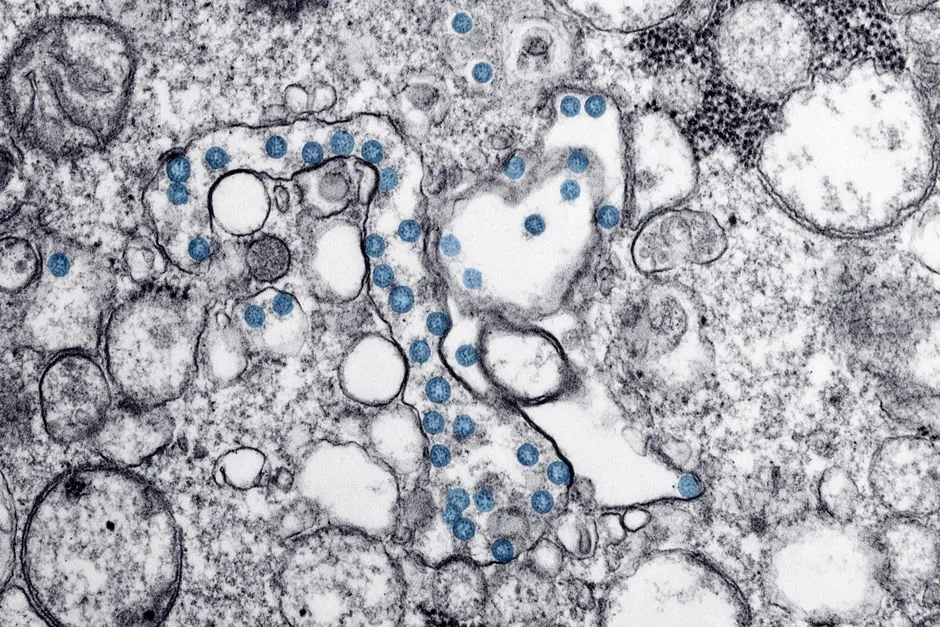
Here's a quick refresher, because it matters. Legionnaires' disease is a severe form of pneumonia caused by Legionella bacteria, which thrive in warm, stagnant water, according to the CDC. We're talking cooling towers, showerheads, hot tubs, complex plumbing systems. Basically every piece of infrastructure that makes dense urban living possible.
You don't catch it from another person. There's no hand-to-hand transmission, no sneezing on the subway spreading it around. You get it by breathing in contaminated water droplets or mist. That's what makes cooling towers such a recurring villain in these outbreaks. They produce exactly the kind of aerosolized mist Legionella needs to find its way into someone's lungs.
The CDC also notes, somewhat terrifyingly, that the bacteria can grow in a vehicle's windshield wiper fluid tank if it's been filled with water instead of actual washer fluid. That detail will live rent-free in your brain now. You're welcome.
The good news, such as it is: the disease is treatable with antibiotics when caught early, and the city says it is currently safe to use air conditioners, drink tap water, and shower unless they advise otherwise. So hold off on the full prepper spiral for now.
This Is Not the First Time, Not Even Close
New York has been here before. The Upper East Side cluster identified in July was barely in the rearview mirror when this new one surfaced, and city officials are quick to note that multiple community clusters in a single season aren't unheard of. According to The Guardian, the city saw two clusters each in 2015, 2017, and 2018, and three in 2016.
That context is useful but it's also a little grim. What it tells you is that this is a recurring, predictable failure mode baked into aging urban infrastructure. The bacteria grow, the cooling towers spread them, someone dies, the city investigates, buildings are told to drain and disinfect, and then a few years later it happens again.
The disease itself got its name from a 1976 outbreak in Philadelphia that hit attendees of an American Legion convention particularly hard. Fifty years later, the bacteria still does exactly what it did then, and cities still scramble to contain it the same way.
What the City Is Doing Right Now
The health department has issued an alert to medical providers, advising them to consider Legionnaires' when evaluating patients with compatible symptoms. That's the right call. Legionnaires' can look like regular pneumonia or the flu in its early stages, and the window for effective antibiotic treatment is not infinite.
Building owners whose cooling towers test positive are being directed to drain, clean, and disinfect them, The Guardian reports. That process is standard procedure at this point, but it only works if the testing is comprehensive and fast and the building owners actually comply. Two of those three things are within the city's direct control.
Health Commissioner Martin acknowledged that New Yorkers may have "heightened concerns" after the recent Upper East Side cluster, which is a very diplomatic way of saying people are reasonably freaked out about contracting a potentially fatal lung infection from their rooftop air conditioning unit two months in a row.
The Dingo Take
Two Legionnaires' clusters in one New York City summer is not a coincidence. It's a maintenance problem with a body count. Cooling towers on thousands of city buildings require rigorous, consistent inspections and water treatment to keep Legionella from taking hold. When that system works, nobody gets sick. When it slips, the people who tend to pay the price are the ones in neighborhoods like the South Bronx, where buildings are older, code enforcement has historically been spottier, and the residents have fewer resources to navigate a sudden health crisis.
The city's response so far looks competent enough on paper. Sampling done, testing underway, health alerts issued, workers canvassing the neighborhood. But "competent response after the outbreak" is a considerably lower bar than "preventing the outbreak in the first place." The Upper East Side cluster was declared over just weeks ago. The ink was barely dry.
Somebody died in Morrisania from a disease that has been understood, preventable, and recurring in this city for decades. That person's family is getting condolences from the health commissioner in a press statement right now. At some point the question stops being "what is the city doing in response" and starts being "why does this keep happening" and whether anyone with actual power over building inspection budgets and cooling tower enforcement is going to answer it.




Comments