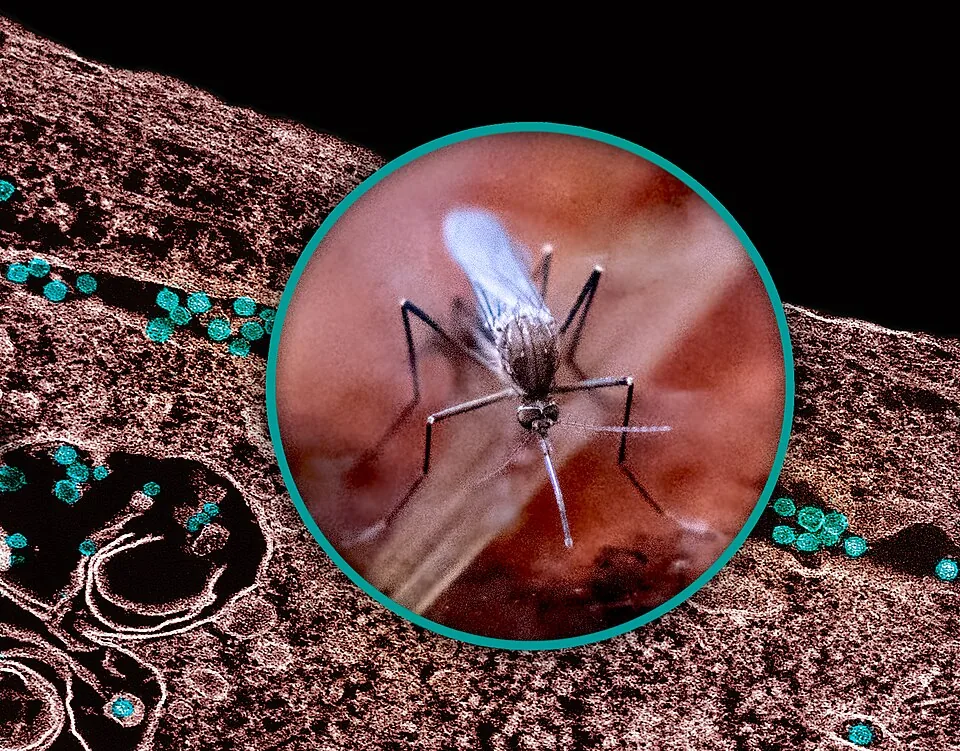
West Nile virus is having its worst early summer in over two decades, and the CDC is sounding the alarm. Delaware's response? Eighty chickens stationed across the state in groups of four, doing the job that no app, no algorithm, and apparently no amount of federal health infrastructure has managed to replace. This is not a metaphor. The chickens are literal.
The Most 2026 Sentence You Will Read Today
In July, the CDC warned that West Nile transmission started unusually early this year, with more cases in early summer than any point since 2004. That is a genuinely alarming public health development. So Delaware deployed chickens.
Not metaphorical chickens. Not a chicken-themed surveillance app. Actual Rhode Island Red chickens, sitting in wire enclosures at 20 locations around the state, getting bitten by mosquitoes, and then getting their blood tested to see what those mosquitoes are carrying. The program has been running since the early 1980s. It works. According to The Guardian, officials call them "sentinel chickens."
"They kind of are the proverbial canary in the coal mine," said Tom Moran, head of the mosquito control section at the Delaware Department of Natural Resources and Environmental Control. Except it's chickens. In the mosquito. You get the idea.
Why Chickens, Specifically
Here is the genuinely clever part, because there is one. Chickens are what Moran calls a "dead-end host." Mosquitoes bite them, the chickens develop antibodies, officials test those antibodies, and everyone finds out there's a problem before humans start showing up in emergency rooms with flu-like symptoms in August. The chickens cannot spread the virus. They just absorb the information and report back.
Unlike mosquito pool testing, which involves collecting and testing batches of insects, the chickens don't fly away. That sounds like a low bar, but it matters enormously. If a chicken tests positive, officials know infected mosquitoes are active in that exact location. Not somewhere nearby. Not somewhere in that general county. There. Which means targeted spraying, targeted public warnings, targeted outreach to doctors and veterinarians.
"It gives you a little more surgical information," Moran told The Guardian. The tradeoff is that it takes about a week for chickens to develop antibodies after being bitten, which is slower than mosquito pool testing. Delaware tried both. They kept the chickens. "The chickens sometimes pick up virus activity in an area that the mosquito pools did not," Moran said.
Forty Years of Chicken Data Is Actually a Gold Mine
This is where the story gets more interesting than a bit about poultry surveillance probably deserves. Decades of sentinel chicken data, collected on paper and sitting in filing cabinets at state health departments, turns out to be extraordinarily valuable for predicting how bad a viral season is going to be.
Lindsay Campbell, an associate professor of entomology and nematology at the University of Florida, has spent years digitizing those paper records and building predictive models from them. As The Guardian reports, she has combined the chicken data with temperature records, precipitation patterns, land cover information, and even community birdwatching data from eBird to track how bird migration moves the virus from state to state through mosquito populations.
The models can identify conditions that predict bad seasons months in advance. For West Nile specifically, Campbell's team has found precipitation and temperature patterns several months before chickens start testing positive that correlate with elevated risk. "The information that these programs have been able to provide is really invaluable," she told The Guardian. Robert Guralnick, curator of biodiversity informatics at the Florida Museum of Natural History and a co-author on the research, put it plainly: "It's a clever way to gather really good information about what's happening."
The Rocky Problem (Yes, Really)
No story about government chicken programs is complete without an operational crisis, and Delaware delivered one. For the first several years of the program, officials used white leghorn chickens. This turned out to be a mistake.
White leghorns, Moran explained to The Guardian, are "very flighty." They escaped constantly. They ran into bushes. They sprinted into forests. State officials responsible for monitoring one of the most sophisticated mosquito-borne illness early warning systems in the country were spending up to an hour per animal just catching the damn birds. "It's literally like a scene from Rocky, where you're chasing the chicken around," Moran said. Once they switched to Rhode Island Reds, calmer and less interested in jailbreaking, everything improved significantly.
Delaware has also kept the program flexible enough to test for other diseases if needed. When West Nile first appeared in the state in 2000, they pivoted from testing dead wild birds to testing their sentinel chickens, which they already had. If a neighboring state detected something like St. Louis encephalitis, Moran said, Delaware could "probably pretty quickly get up to speed and start testing for that here too."
What the Early Numbers Actually Mean
Let's not lose the thread here. The chicken story is fun, but the reason it's in the news is that the CDC issued a warning in July about West Nile transmission levels not seen this early since 2004. That is a real public health concern, not background noise.
West Nile can cause serious neurological illness and death, particularly in older adults and people with compromised immune systems. Most people who get infected never develop symptoms, which sounds reassuring until you consider how that makes it very easy to undercount and underreact. Doctors are advised to think of West Nile when patients show up with flu-like symptoms outside of flu season, and early surveillance systems, including the chickens, help prime them to look.
The virus moves predictably from north to south as migrating birds carry it and mosquitoes pick it up from those birds. Delaware's season typically starts in early August. This year it started earlier elsewhere. The chickens are watching.
The Dingo Take
You are supposed to find it funny that the United States public health early warning system, in the year 2026, relies in meaningful part on eighty chickens sitting in wire cages in Delaware getting bitten by mosquitoes. And it is funny. It is also, if you think about it for more than thirty seconds, completely rational, time-tested, and effective in ways that a lot of expensive, heavily lobbied alternatives have failed to be. The chickens have been doing this since 1982. They have a track record.
What this story actually illustrates is how often the boring, old-school, un-glamorous public health infrastructure is the thing that quietly keeps people alive, right up until the moment some administration decides it's unnecessary overhead and cuts it. Sentinel chicken programs cost almost nothing. The data they generate has been powering predictive disease models for decades. They work. The fact that they're also hilarious is, frankly, a bonus.
Keep an eye on West Nile this year. The CDC's July warning was not routine. The early season numbers are genuinely elevated and, with mosquito season still running hot through September and into October in many states, the risk window is still open. Take your DEET seriously. Drain standing water. And maybe, just once, appreciate the chickens.




Comments