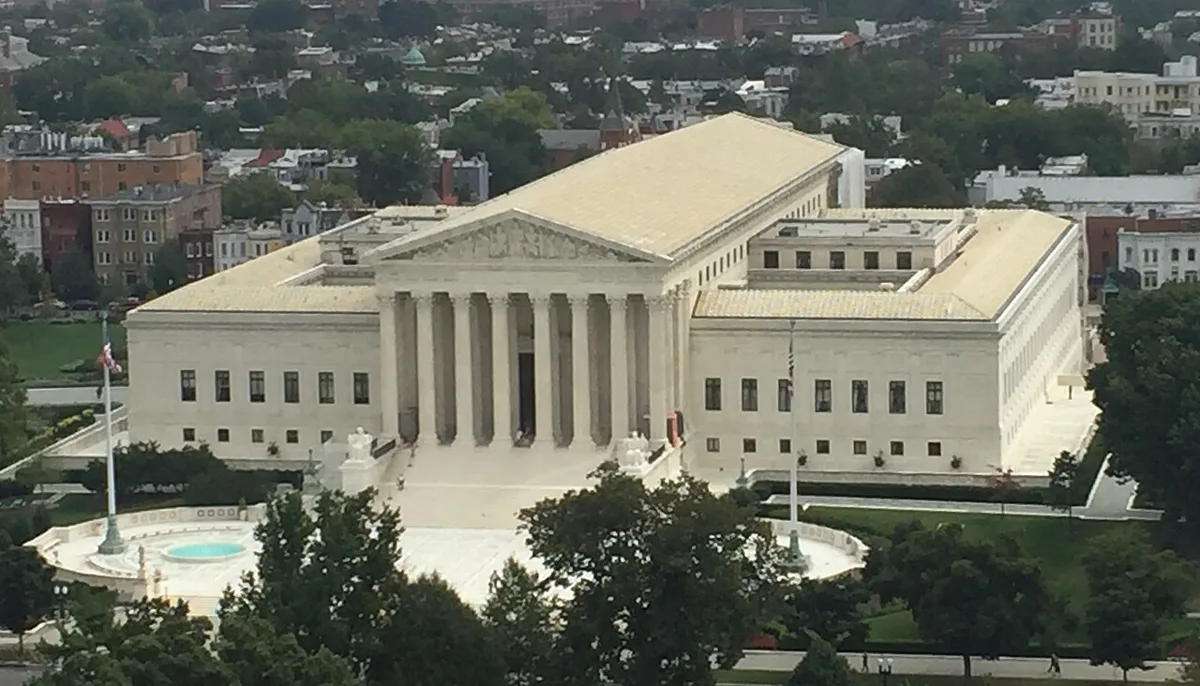
The Supreme Court is about to tell millions of American-born children whether the ground they're standing on still belongs to them. Before the term wraps up later this month, the justices will rule on Donald Trump's attempt to gut birthright citizenship and his administration's push to strip legal protections from Haitian and Syrian immigrants who have lived and worked here for years. No pressure.
What the Court Still Has to Decide
The Supreme Court's term ends in late June, and the biggest cases always come last. According to The Guardian's live coverage, at least one ruling was expected Wednesday, with the most consequential decisions still pending. That's how the court works: the easy stuff comes out early, and the cases that could reshape the country get saved for the finale.
Two immigration rulings are at the top of that list. One would determine whether Trump can unilaterally end birthright citizenship for children born on American soil to undocumented parents or parents on temporary visas. The other would settle whether the administration can terminate Temporary Protected Status for Haitian and Syrian immigrants, effectively ending their legal right to live and work in the United States.
Birthright Citizenship: The 14th Amendment Is Not a Suggestion
Here's the thing about birthright citizenship: it's been settled law for over 150 years. The 14th Amendment says, explicitly, that anyone born on American soil is a citizen. The Trump administration's position is essentially that the federal executive branch can decide that certain babies, because of who their parents are, don't count. Courts across the country have blocked this policy. The question now is whether the Supreme Court agrees.
"Birthright citizenship is one of America's most consequential commitments," Adam Strom, executive director and co-founder of Reimagining Migration, told The74. "For the millions of immigrant-origin children in our schools, this isn't an abstraction. It's the ground they stand on." That's not rhetoric. That's a description of what's actually at stake: the legal identity of children who were born here, grew up here, and have never known any other country.
The administration's argument hinges on a reading of the 14th Amendment so tortured it would make constitutional scholars reach for a drink. The phrase "subject to the jurisdiction thereof" has always been interpreted to mean diplomats and enemy soldiers are excluded, not the children of undocumented farmworkers. Reinterpreting it to exclude those children would require ignoring over a century of precedent and legal consensus.
TPS: Ripping Up the Welcome Mat
The Temporary Protected Status case is a different animal but equally brutal in its implications. TPS is a humanitarian designation that lets people from countries experiencing crises, like Haiti after repeated earthquakes and political collapse, or Syria after a decade of civil war, stay and work legally in the United States. These are not people who snuck across a border. They came with permission.
The Trump administration wants to terminate those protections, sending people back to situations the United States government itself once acknowledged were too dangerous to return to. The Guardian reports the Supreme Court will rule on whether that termination is legal. If it goes the administration's way, we're talking about hundreds of thousands of people being uprooted from lives and communities they have built, in some cases, over decades.
The Fed Fight Is Also on the Docket
Because two major immigration cases weren't enough, The Guardian also notes the court has another pending decision on Trump's attempt to fire a member of the Federal Reserve's Board of Governors. This one matters because the Fed's independence from political interference is, historically speaking, one of the key guardrails keeping the American economy from becoming a president's personal toy.
If the court rules that a president can remove Fed governors at will, every future administration gains the ability to bully the central bank into whatever interest rate policy helps them politically in the short term. That's the kind of change that sounds abstract until inflation comes roaring back and everyone's mortgage rate doubles.
Meanwhile, in the Rest of the News
The Guardian's live blog also covered Trump signing a 14-point agreement with Iran, which he called a "major win." Guardian correspondent Andrew Roth's read is considerably more honest: the US entered this conflict with maximalist goals and exited with a pragmatic deal to stop the bleeding, political cost be damned. A win, technically. A win in the way that catching half your house on fire and putting it out before it spreads is a win.
And Luigi Mangione's legal team has officially signaled they will pursue a psychiatric defense in his Manhattan state court trial for the killing of UnitedHealthcare CEO Brian Thompson, according to court proceedings reported Wednesday. Whether that strategy holds up in front of a jury is a different question entirely.
The Dingo Take
The Supreme Court is about to do something historic, one way or another. If it upholds birthright citizenship and blocks the TPS terminations, it will be reaffirming that the United States is still, at some basic level, a country governed by its own laws rather than the whims of whoever currently holds the presidency. If it rules the other way, it will be handing the executive branch a tool to redraw the boundaries of legal personhood based on parentage. That is not a slippery slope argument. That is a description of what the administration is explicitly asking for.
What makes this moment so genuinely disorienting is that we're talking about rights guaranteed by a constitutional amendment passed after the Civil War specifically to prevent the government from creating categories of people born here who don't belong here. The men who wrote the 14th Amendment knew exactly what it felt like to live in a country that did that. They fixed it. And now we're watching an administration ask nine justices to un-fix it.
The rulings are coming. Days away, maybe less. Whatever the court decides, tens of millions of people in this country will wake up the next morning in a fundamentally different legal reality than they went to sleep in. If you're not paying attention to this, you need to start.




Comments