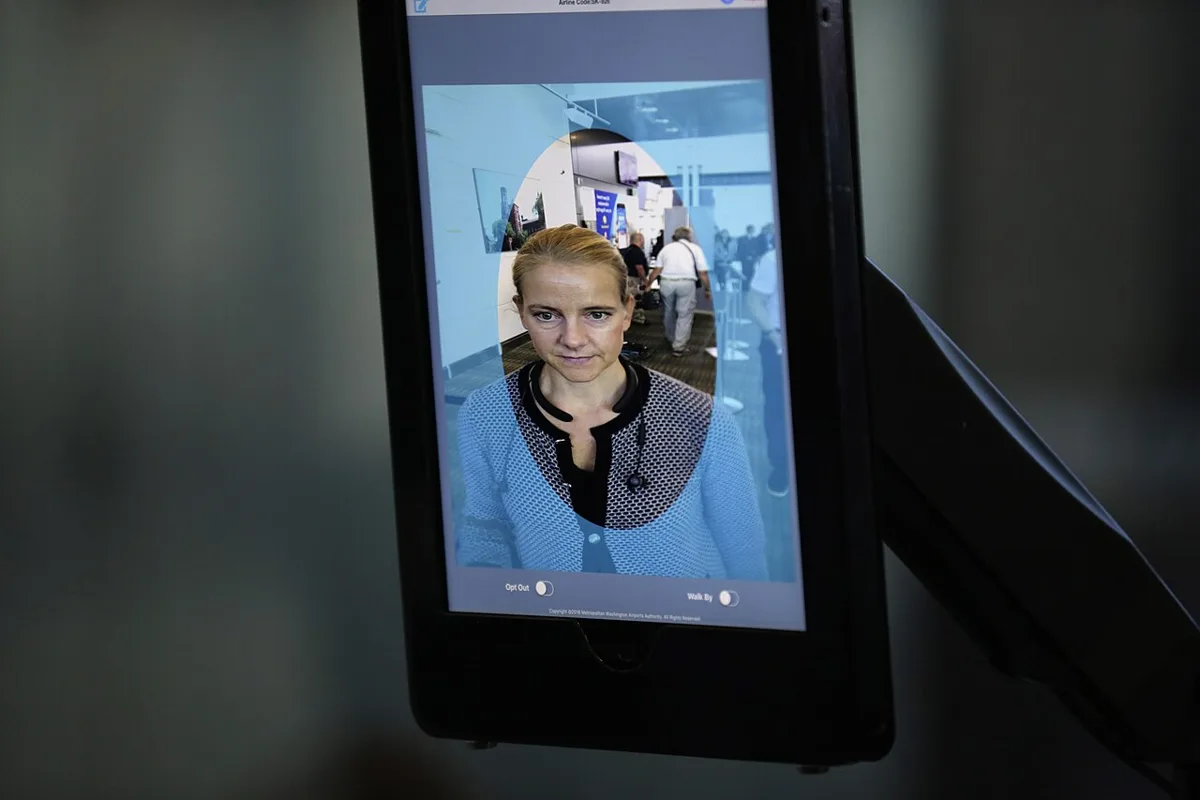
The Department of Homeland Security has a new toy for local police, and it is exactly as alarming as it sounds. A newly revealed DHS document outlines plans to hand officers a mobile app that scans the face of anyone they stop and runs it against 250 million government records, in real time, on the street. No warrant. No probable cause spelled out. Just point, scan, and wait for instructions from ICE.
What This App Actually Does
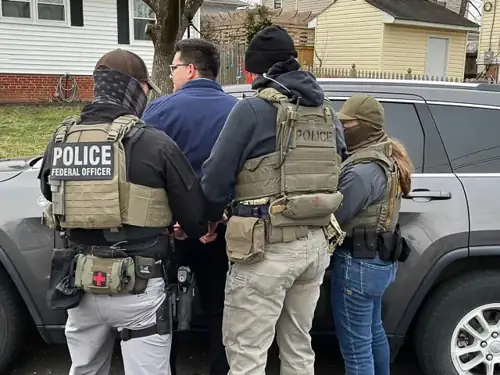
The tool is called the ICE Task Force Module, and NPR is reporting that it was described in an internal DHS document that recently came to light. Local police working on behalf of the federal immigration enforcement apparatus would use this app to scan the faces of people they encounter during routine stops in their communities.
Once a face is scanned, the app compares it against a database pulling from more than 250 million records, including State Department visa files and the Traveler Verification Service. The app then spits out one of two outcomes: it tells the officer to either "not detain or arrest" the person, or it hands them a reference code to pull more information directly from Immigration and Customs Enforcement headquarters.
Read that back slowly. A local cop stops someone. Scans their face. And then receives a binary directive from a federal immigration agency telling them what to do next. That is not a policing tool. That is a franchise model for federal immigration enforcement, with local officers as the frontline workers.
Who Gets Scanned, Exactly?
That is the question nobody in the administration seems eager to answer. The document does not appear to limit the use of this app to situations where officers already suspect someone of being undocumented. It applies to "individuals they stop in their communities," which is doing a tremendous amount of work as a phrase.
If your face gets scanned every time a participating officer decides to stop you, and that scan gets run against a quarter-billion government records, you are living in a surveillance state. Full stop. The fact that this is being rolled out through a partnership program with local police, rather than deployed directly by federal agents, does not make it less of a surveillance state. It just adds a layer of plausible deniability.
Civil liberties groups have spent years warning that facial recognition technology deployed by law enforcement is error-prone, disproportionately misidentifies people with darker skin tones, and creates exactly this kind of mission creep. Here we are.
The Judicial System Cannot Save You From This Either
The DHS facial recognition news lands the same week that a student-led group at Emory Law School filed a petition asking the Supreme Court to take a hard look at how the federal judiciary handles misconduct within its own ranks. The issue is narrow but important: tens of thousands of federal court employees, unlike virtually every other worker in America, are not covered by landmark civil rights protections and have no independent agency to turn to if they face harassment or discrimination on the job.
The case centers on whether the courts' internal self-policing system provides anything resembling due process or equal protection. That is a genuinely significant question. It is also a little on the nose that it arrives in a week when the government is rolling out new tools to conduct face scans on people in the street with minimal oversight, while the institutions theoretically responsible for checking that kind of power are being asked whether they can even check themselves.
Meanwhile, The Iran Deal Is Already Wobbling
On a completely different front, the White House's big foreign policy achievement of the week is already showing cracks. Vice President JD Vance had been set to fly to Switzerland to negotiate the next phase of a peace framework with Iran, following a memorandum signed by Trump and Iranian President Masoud Pezeshkian. That trip has now been postponed, and officials have not explained why, according to NPR's Rob Schmitz.
The U.S. Central Command did lift a blockade on ships entering and exiting Iranian ports, which was one of the agreed ceasefire conditions. But Israel's ongoing bombardment of southern Lebanon is complicating everything. The agreement explicitly promises to protect Lebanon's territorial integrity. Israeli Prime Minister Benjamin Netanyahu has made equally explicit that Israeli forces are staying in southern Lebanon. These two things cannot both be true at the same time.
Members of Netanyahu's cabinet have called the deal "bad for Israel," members of the American right have started pinning their dissatisfaction on Vance personally, and Iran's foreign ministry has said the signing ceremony is off. As NPR's Danielle Kurtzleben notes, Vance is the public face of these negotiations, which means if this falls apart, he is the one holding the bag. The man is not a seasoned diplomat, and the job in front of him is enormous.
One Good Thing Happened This Week
Barack Obama's Presidential Center had its grand opening in Chicago yesterday, which produced the extremely funny image of every living former president showing up except the current one. Trump was not invited to the dedication, though Obama Foundation CEO Valerie Jarrett graciously noted earlier this month that he is welcome to visit the museum on his own time. He did not.
The ceremony featured Bruce Springsteen, Christina Aguilera, John Legend, and Stevie Wonder, among others. Speakers made subtle references to democracy and American ideals that required no subtlety whatsoever to decode given the current political moment. Obama was there. The vibes, NPR reports, evoked the hope and change era. Whether that registers as comfort or cruelty probably depends on your disposition this particular Thursday.
The Dingo Take
Let's be precise about what the ICE Task Force Module represents. This is not a targeted investigative tool. This is infrastructure. You build infrastructure like this when you intend to use it broadly and permanently, not as a temporary measure in a handful of extreme cases. Handing local police a face-scanning app tied to 250 million records and a direct line to ICE is how you nationalize immigration enforcement without ever having to call it that. The local cops get to be the ones doing the scanning, and the feds get to be the ones making the call. Everyone gets plausible deniability. Nobody gets oversight.
The constitutional questions here are not theoretical. The Fourth Amendment protections against unreasonable searches do not disappear because the search is conducted by an algorithm on a smartphone instead of by an officer rifling through your glove box. Courts have not caught up to this technology, the legislature has shown no urgency, and the executive branch is clearly not waiting around for permission. Which brings us back to that Emory Law School petition, and the uncomfortable reality that the institutions designed to pump the brakes on exactly this kind of overreach are, themselves, under scrutiny for failing to hold their own people accountable.
The Vance-Iran situation is its own slow-motion disaster in progress, but the facial recognition story is the one that will quietly reshape daily life for millions of people long after whatever happens in Switzerland is forgotten. Pay attention to the thing that feels like a footnote. It usually isn't.



Comments