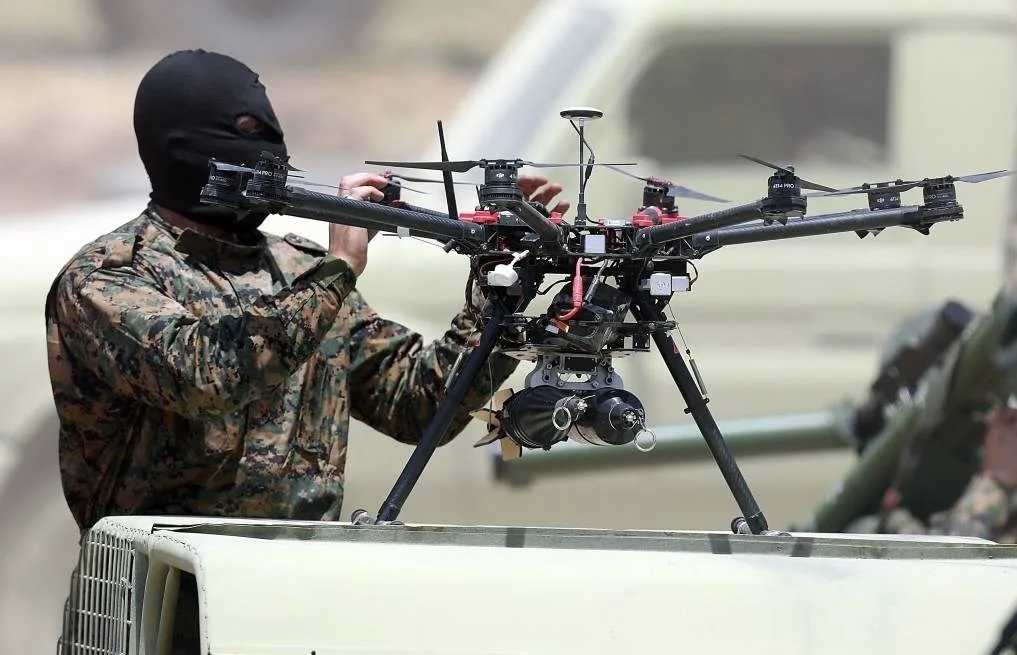
A Hezbollah drone blew up a tank in Southern Lebanon overnight, killing four Israeli soldiers including a battalion commander, and somehow managed to also blow up an emerging nuclear deal with Iran in the same twenty-four hours. One strike, two catastrophes. Welcome to the Middle East in 2026.
Four Soldiers Dead, One of Them Named
The IDF announced Friday that four of its soldiers were killed overnight in Southern Lebanon. The New York Post reports that Lt. Col. Dor Gedalia Ben Simhon, 32, from Kibbutz Beit HaShita, has been identified as one of the dead. He commanded the 52nd Battalion, known as 'The Breachers,' inside the 401st 'Iron Tracks' Brigade. The other three names have not yet cleared military censors. Their families have been notified.
According to initial reports, the attack involved an explosive drone hitting the battalion commander's tank directly. That's not a stray shot. That's a precision strike on a high-value target. Killing a lieutenant colonel in his vehicle is the kind of operation that takes planning, intelligence, and a willingness to dramatically escalate a conflict that was, at least nominally, under ceasefire arrangements.
A Ceasefire In Name Only
The New York Post notes that military sources described this attack as one of the most serious Hezbollah violations of the ceasefire in recent months. Let that sink in for a second. There is a ceasefire. And within that ceasefire, Hezbollah has apparently been conducting a running series of violations serious enough that this one qualifies as among the worst of them.
The IDF responded with extensive strikes across Southern Lebanon targeting Hezbollah positions and infrastructure. So the ceasefire is now a framework inside which both sides are conducting military operations and occasionally killing each other's soldiers. That's not a ceasefire. That's a war with better PR.
Israeli officials told the Post that the drone strike on the battalion commander's tank left them with no choice but to respond. They used the phrase 'no choice,' which is doing an enormous amount of diplomatic work. Whether you buy that framing or not, the result is the same: Southern Lebanon is on fire again, and a senior Israeli officer is dead.
The Ripple That Reached Switzerland
Here is where the story gets genuinely strange. The New York Post reports that Iran canceled a planned delegation trip to Switzerland, where technical talks on implementing the recently signed US-Iran Memorandum of Understanding were supposed to begin. Iran's stated reason? Israeli military operations in Lebanon constitute a violation of that MoU.
And then, almost on cue, the White House announced that Vice President JD Vance had postponed his own trip to Switzerland. The two cancellations arriving together suggests the diplomacy was already fragile enough that one bad night in Southern Lebanon could knock the whole thing over.
A Memorandum of Understanding with Iran is not nothing. It represents months of back-channel work and a genuine attempt to stabilize what has been one of the most volatile geopolitical fault lines on the planet. The idea that a Hezbollah drone strike in Lebanon can unravel that kind of diplomacy in hours tells you exactly how thin the ice is under everyone's feet right now.
What the IDF Is Saying and Not Saying
The military has confirmed Ben Simhon's identity and notified the other three families, but has not released further details about the attack's circumstances or the other soldiers' names. That's standard procedure during the notification window, but it also means the full picture of what happened overnight remains incomplete.
Ben Simhon, the Post notes, is the latest senior officer to be killed during Israel's ongoing operations against Hezbollah in Southern Lebanon. That phrase, 'the latest,' is doing quiet, terrible work. It implies a list. It implies that this has happened before and will probably happen again. A 32-year-old battalion commander from a kibbutz is dead, and the sentence structure of the official reporting treats that as a recurring data point.
The Bigger Picture Nobody Wants to Say Out Loud
What we have here is a conflict that officially exists inside a ceasefire, producing casualties significant enough to kill an international diplomatic process, while the two major outside powers, the US and Iran, were literally in the middle of trying to stabilize the region through a new agreement.
The timing could not be worse, or, depending on who you think benefits from chaos, it could not be more precise. Hezbollah does not fire precision drones at battalion commanders by accident. Iran canceling its Switzerland trip hours later is either a coincidence or it is not. Those are the only two options.
The IDF says it struck Hezbollah infrastructure extensively in response. Iran says Israeli operations violate the MoU. JD Vance is not going to Switzerland. Four soldiers are dead. The ceasefire is a fiction. And the diplomatic framework that was supposed to prevent all of this from getting worse is now in a waiting room somewhere, wondering if anyone is coming back for it.
The Dingo Take
Four soldiers dead. A battalion commander killed in his own tank. And somehow that same drone strike managed to detonate a diplomatic agreement between the United States and Iran that took months to construct. You almost have to admire the efficiency, in the bleakest possible sense of the word.
The 'ceasefire' framing deserves to be retired at this point. When military sources describe an attack as 'one of the most serious violations in recent months,' they are quietly admitting there have been enough violations to build a ranking system. A ceasefire with a violation leaderboard is not a ceasefire. It is a public relations arrangement stapled over an active conflict, and everyone involved knows it.
The part that should genuinely alarm people is Switzerland. A Memorandum of Understanding with Iran represents the kind of painstaking, unglamorous diplomacy that actually prevents wars from getting bigger. Iran walks away from those talks, Vance postpones his trip, and the whole architecture wobbles because of one overnight operation in Southern Lebanon. The connective tissue between these crises is not coincidental, it is structural. And nobody in a position of power seems to have a plan for what happens when it tears.


Comments