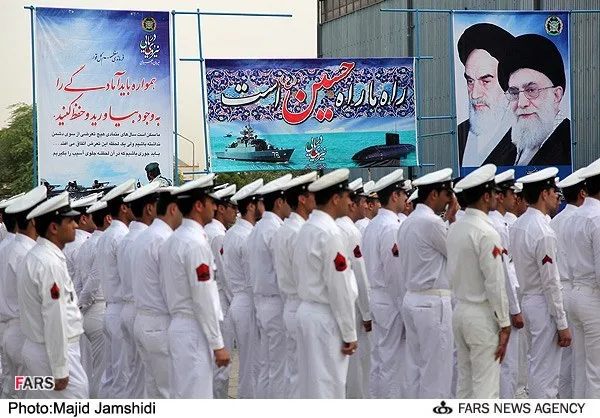
Two days. That's how long it took for the deal Donald Trump signed with Iran to functionally fall apart. The Islamic Revolutionary Guard Corps announced Friday that the Strait of Hormuz is closed again, nuclear talks are canceled, and any ship that shows up anyway will be "targeted." The ink on the memorandum of understanding was barely dry.
What the IRGC Actually Said, Word for Word
The announcement came over maritime radio channels, which is a very cinematic way to torpedo a diplomatic agreement. According to the New York Post, the IRGC's statement demanded three things before the strait reopens: Israel must withdraw from Lebanon, the US naval blockade must be "completely" lifted, and American forces must exit the Persian Gulf entirely.
"Any vessel that defies this directive will be targeted." That's a direct quote. Not a warning, not a suggestion. A threat, broadcast over open radio to every ship captain in the region.
The statement accused the United States of violating the memorandum of understanding that Trump and Iranian President Masoud Pezeshkian signed Wednesday. Two days ago. The agreement that was supposed to get nuclear talks started.
The MOU That Lasted Roughly 48 Hours
Here is the timeline, because it matters. Wednesday, Trump and Pezeshkian sign the MOU. Friday, the first round of nuclear talks, scheduled in Switzerland, gets called off entirely. Also Friday, Iran recloses the strait. US Central Command had formally lifted its two-month naval blockade on Iranian ports Thursday, apparently in good faith. That good faith lasted about eighteen hours.
The New York Post reports that the US has not given any reason for the postponement of the talks. Nothing. No statement, no explanation, no spokesperson on background. Which is either a sign that negotiations are continuing in some form behind the scenes, or that the entire thing has collapsed and nobody wants to say so out loud yet.
A source told the Post on Wednesday that Iranian hardliners were already arguing against attending the MOU signing ceremony until Israel pulled its troops from southern Lebanon. So the warning signs were there. The hardliners, it turns out, had more leverage than the diplomats.
The Lebanon Problem Nobody Solved
Iran's position, as stated in the IRGC announcement, is that Israel leaving Lebanon is a precondition of the agreement. Israel has been operating in southern Lebanon hunting Hezbollah, and it has shown no indication of stopping anytime soon. The US has not publicly pressured Israel to change course. So Iran is using the strait as the lever.
This is not a new dynamic. Iran has used the Strait of Hormuz as a pressure point for decades precisely because it works. Roughly a fifth of the world's oil supply moves through that waterway. Closing it, or even credibly threatening to close it, sends energy markets into spasms. It is a blunt instrument, but it is a very effective one.
The problem for the Trump administration is that its MOU apparently did not resolve the Lebanon question, the US troop presence question, or clearly define what "complete" lifting of the naval blockade actually means. Iran says the blockade removal was not complete. US Central Command says it was. Someone is either wrong or lying.
What This Means for Every Ship in the Region Right Now
The IRGC statement asked ships, "for the sake of their security and safety," not to approach the strait. That phrasing is doing a lot of work. It is the kind of polite language that means "we will shoot at you" in diplomatic-speak.
US Central Command had spent two months enforcing a naval blockade on Iranian ports. That blockade is now lifted, per American statements. But the strait is closed again, per Iranian statements. The practical result is a maritime zone where the legal and military situation is genuinely unclear, and where an armed force has just announced it will treat noncompliant vessels as targets. Ship insurance rates are going to do something very unpleasant on Monday morning.
The Dingo Take
Let's be honest about what happened here. The Trump administration signed a memorandum of understanding with Iran on Wednesday, lifted a naval blockade in good faith on Thursday, and watched Iran reclose the Strait of Hormuz and cancel talks on Friday. If a Democratic president had done this, Fox News would be running a chyron that said "WORST DEAL IN AMERICAN HISTORY" on a twelve-hour loop. Because it's Trump, his base will somehow find a way to frame this as four-dimensional chess.
The deeper problem is that the MOU apparently left every genuinely hard question unanswered. Israel's presence in Lebanon? Unresolved. US troop presence in the Gulf? Unresolved. What "complete" blockade removal actually means? Apparently not defined clearly enough for the two sides to agree on whether it happened. These are not footnotes. These are the entire substance of the dispute. Signing a framework agreement that punts all the actual disputes to a later negotiating round is not a deal. It is a photo opportunity.
The Iranian hardliners who were arguing against attending the signing ceremony two days ago are now running the show. That tells you everything about where internal power sits in Tehran right now. The moderates who wanted talks do not have the upper hand. And the US response, at least publicly, has been total silence. No explanation for the canceled talks, no statement on the strait closure, nothing. When the most powerful military in the world has nothing to say about a foreign country threatening to shoot at ships in a critical global waterway, something has gone very wrong.




Comments