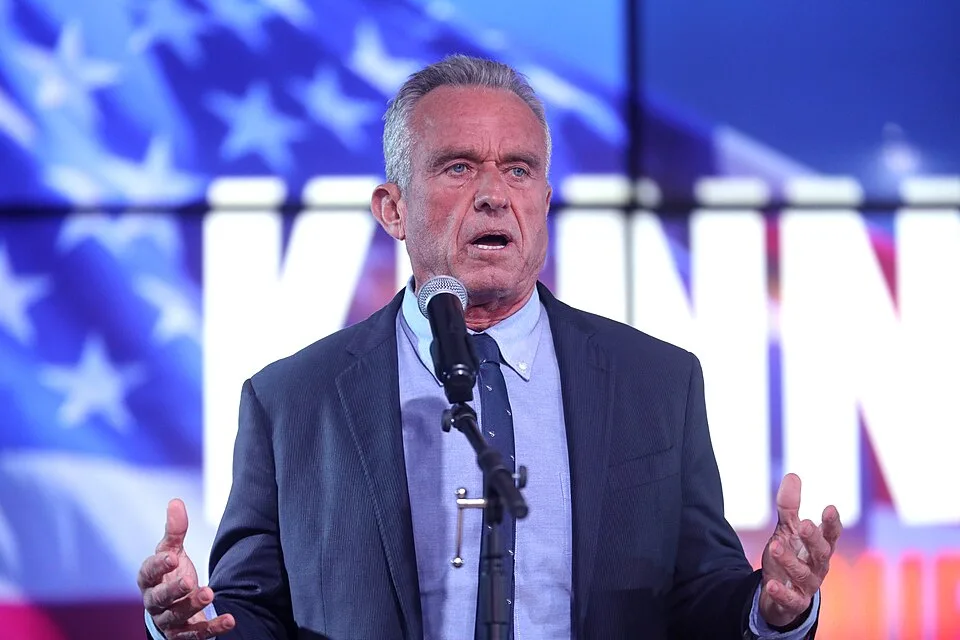
Robert F. Kennedy Jr. and Brooke Rollins spent the better part of this year letting 23 states tell poor people they couldn't buy a Sprite with their food stamps. A federal judge just told them that was never theirs to decide. The ruling landed Monday, and it hit the 'Make America Healthy Again' campaign like a shopping cart to the ankles.
What the Judge Actually Said
U.S. District Judge Amy Berman Jackson did not mince words. In her Monday ruling, she found that the Agriculture Department flat-out exceeded its authority when it signed off on state waivers banning SNAP recipients from purchasing soft drinks and candy. As CBS News reports, her opinion went right to the core of the legal problem: 'Congress defined what food is supposed to be, and it did not authorize the agency to amend or waive the definition it enacted.'
That's lawyer-speak for: you made this up. The Food and Nutrition Act says SNAP can be used for 'any food or food product intended for human consumption,' minus alcohol, hot ready-to-eat food, and tobacco. Congress drew those lines. Not USDA. Not RFK Jr. Congress. The administration apparently needed reminding.
The ruling applies directly to five states where the plaintiffs live: Colorado, Iowa, Nebraska, Tennessee, and West Virginia. But it could be the first domino. According to the Food Research and Action Center, the remaining 18 states with similar bans relied on the exact same USDA process and the same shaky legal assumptions the court just rejected.
The Lawsuit Nobody in Power Wanted to Take Seriously
SNAP recipients in those five states filed suit back in March. Their argument wasn't complicated. The ban, they said, would 'destabilize food access' for people already living on the margins. And it wasn't just about soda being off-limits. The plaintiffs pointed out that some people with chronic illnesses rely on specific drinks and foods to manage blood sugar. Diabetics, for instance, sometimes need fast-acting sugar to treat hypoglycemia. The ban didn't account for any of that.
The National Center for Law and Economic Justice represented the plaintiffs, and senior attorney Katie Deabler said in a statement reported by CBS News: 'This decision makes clear that the USDA cannot bypass the legal guardrails that establish how SNAP must operate across the country.' That's a sentence worth reading twice. There were legal guardrails. The administration drove straight through them anyway.
The confusion wasn't just theoretical, either. With 23 different state-by-state definitions of what was and wasn't allowed, retailers and shoppers were left trying to decode a patchwork of rules that varied depending on which side of a state line you were standing on.
RFK Jr. and Rollins Had Big Plans for Your Grocery Cart
Let's be clear about what the Trump administration was actually trying to do here. Health Secretary Kennedy and Agriculture Secretary Rollins positioned this whole push as the noble heart of the 'Make America Healthy Again' initiative, the idea being that taxpayer money shouldn't subsidize Doritos and Mountain Dew for low-income families. It's a framing that sounds almost reasonable until you remember that SNAP benefits average out to roughly six dollars a day per person.
Kennedy said in a December statement, quoted by CBS News: 'We cannot continue a system that forces taxpayers to fund programs that make people sick and then pay a second time to treat the illnesses those very programs help create.' He is not wrong that America has a chronic disease problem. He is very wrong about the mechanism here. Rich people buy soda too. Nobody is yanking their debit cards.
The USDA, for its part, did not take the ruling quietly. A USDA spokesperson told CBS News: 'The idea that taxpayer funds should not be used to purchase junk food should not be controversial. We will not be backing down from the fight to Make America Healthy Again.' They will be backing down from it, actually, because a federal judge just ordered them to.
The $100 Billion Program That Everyone Has an Opinion About
SNAP is massive. It costs roughly $100 billion a year and feeds tens of millions of low-income Americans. Because the federal government funds it but states administer it, it has always been a target for exactly this kind of policy tinkering. Governors love to use it as a culture war prop. It's one of those programs where the people who need it most have the least political power to defend it.
The Food and Nutrition Act has governed the program for decades, and it deliberately kept the definition of eligible food broad. That was a choice Congress made. The Trump administration's workaround was to issue what are called demonstration project waivers, which are meant to let states test new approaches to the program. The judge found that using those waivers to effectively rewrite what counts as food was a bridge too far. According to CBS News, 23 states had already received such approvals before the court stepped in.
FRAC's SNAP director Gina Plata-Nino wrote in a Tuesday post that the decision 'may provide a roadmap for future challenges' to the remaining state bans. That roadmap is going to get a lot of use.
The Dingo Take
Here is the thing about the SNAP soda ban that the 'Make America Healthy Again' crowd never seemed interested in grappling with: it was never really about health. If it were about health, the administration would be regulating what corporations can put in food, not what poor people are allowed to eat with their six dollars a day. If it were about health, RFK Jr. would be hauling food industry executives into hearings instead of confiscating grape soda from a single mother in West Virginia. The optics are telling. The policy is designed to make SNAP recipients feel surveilled, judged, and punished for being poor.
Judge Jackson did not need to wade into any of that to rule against the administration. She just looked at the statute, looked at what USDA did, and said no. That should have been obvious from the start. Congress writes the law. Agencies implement the law. Agencies do not get to wholesale rewrite the law because a cabinet secretary has a newsletter and a beef with seed oils. The administration burned significant political capital on 23 state waiver deals that are now legally compromised, and their response is to promise they'll keep fighting. Cool. Courts will be waiting.
The people who sued over this were SNAP recipients. Not lobbyists, not think tanks, not a well-funded opposition group. People living on food assistance who saw their ability to buy groceries get arbitrarily scrambled by a federal agency acting outside its authority. They were right. The judge agreed. The USDA is vowing to push forward anyway. Keep an eye on what shape that push takes, because if history is any guide, they're going to find a creative new way to break the same law and make the same people pay for it.


Comments