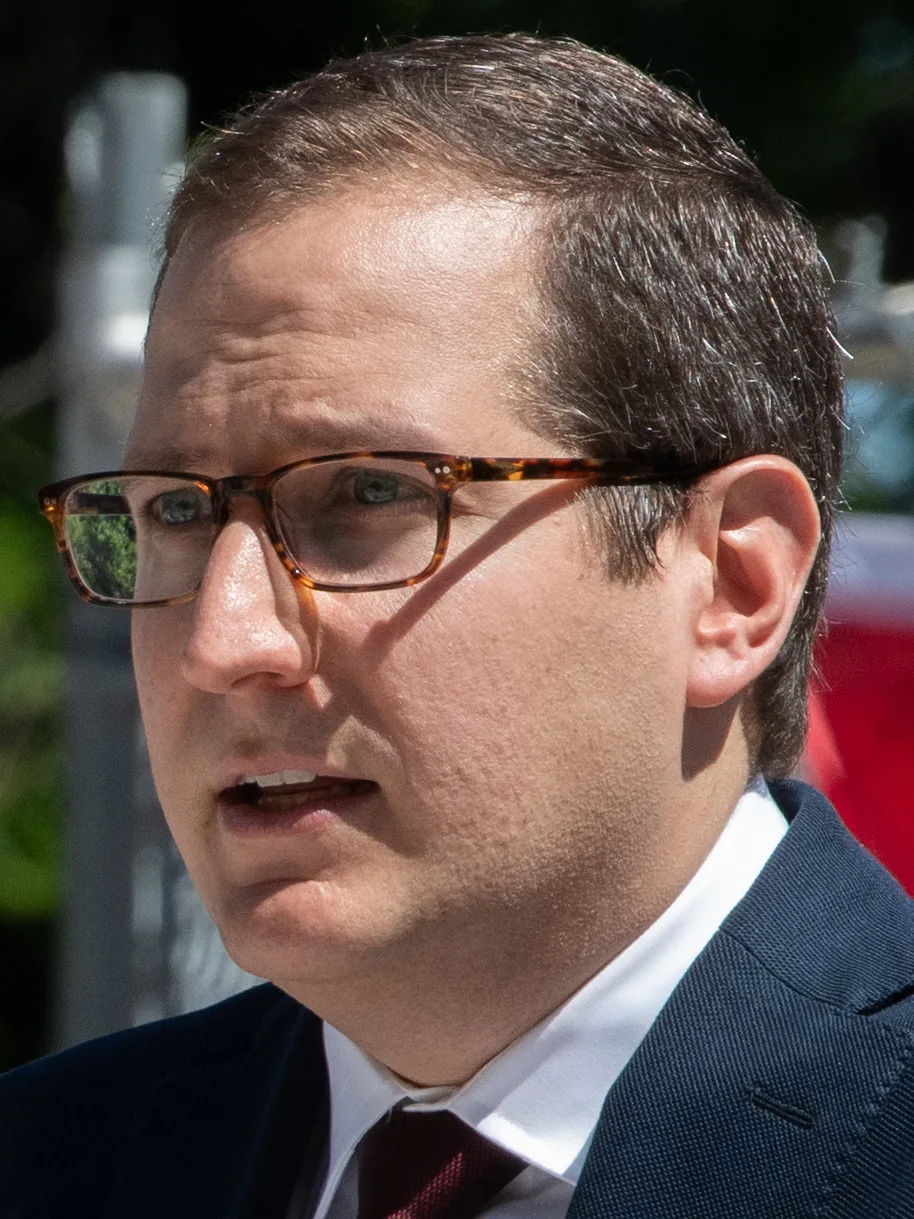
Twenty-six million dollars in political ads, a Kennedy grandson, the man who helped start the Lincoln Project, and a proxy war between rival AI companies all converged on one Manhattan congressional primary. The winner was the state assemblyman from Morningside Heights who most people couldn't have picked out of a lineup two months ago. Democracy is something, man.
So Who Actually Won This Thing
New York Assemblyman Micah Lasher has won the Democratic nomination in the 12th Congressional District, NBC News projects, defeating a field of eight candidates that included George Conway, Jack Schlossberg, and fellow assemblyman Alex Bores in what became one of the most expensive congressional primaries in the country this cycle.
Lasher currently represents District 69 in Manhattan, covering Morningside Heights, Manhattan Valley, and parts of the Upper West Side. The 12th District itself is a large swath of Manhattan: the Upper West Side, the Upper East Side, Midtown. One of the wealthiest congressional districts in the United States. The kind of place where even the progressive voters have vacation homes.
He goes on to face candidates from other parties in November, but let's be honest about what that means. This is a deep-blue Manhattan district. Winning the Democratic primary here is functionally winning the seat. CBS News notes the November race is essentially a formality.
The Endorsement Machine Did Its Job
Lasher's path to victory ran straight through the Democratic establishment's phone tree. He had the backing of retiring Rep. Jerry Nadler, whose seat he's inheriting. He had Governor Kathy Hochul. He had former Mayor Michael Bloomberg, who didn't just lend his name but opened his checkbook wide.
According to NBC News, Bloomberg is still genuinely popular in this district, where older voters punch above their demographic weight on primary day. That's not a knock, that's just the math of who shows up to vote in June. And Lasher had worked for all three of those endorsers at various points in his career, which means this wasn't some transactional arrangement cobbled together in the final weeks. He built this coalition over years.
An allied super PAC, funded primarily by Bloomberg's money, spent heavily to reinforce Lasher's Democratic credentials, specifically hammering his record on fighting the Trump administration's immigration policies, per NBC News. In this district, in this political moment, that's not a side issue. That's the whole conversation.
The AI Billionaire Cage Match That Ate the Race
Here's where this primary got genuinely weird. Alex Bores, the other assemblyman in the race, made AI regulation a central part of his campaign, arguing that new safeguards are needed before rapid AI development reaches a point of no return. A sensible enough position. Then the money arrived.
NBC News reports that Think Big, a super PAC tied to pro-AI group Leading the Future, spent at least $8 million against Bores. The top funders of Leading the Future include leaders at OpenAI and aligned venture capitalists, who apparently decided a New York City congressional primary was the correct venue to relitigate their entire regulatory philosophy. On the other side, AI company Anthropic supported a competing super PAC called Jobs and Democracy PAC, which spent almost $7 million defending Bores.
So OpenAI and Anthropic, two companies currently locked in an existential competition to build the most powerful AI systems on earth, decided to spend a combined $15 million fighting over a Manhattan congressional district. As NBC News puts it, the battle between warring AI factions "sucked up much of the oxygen in the race." Lasher sidestepped the whole circus, kept his head down, and won.
The Famous Losers Deserve Their Own Paragraph
Jack Schlossberg, grandson of John F. Kennedy, finished a distant third in his first bid for public office. He was endorsed by former House Speaker Nancy Pelosi, which felt like a big deal in January and maybe mattered less by June. You get the sense that running for a Manhattan congressional seat as a Kennedy with a Pelosi endorsement should be closer to a layup than this, and it wasn't.
George Conway, the conservative lawyer who became one of the most prominent anti-Trump voices in the country and co-founded the Lincoln Project, also ran and did not win. Conway is a genuinely interesting political figure and his presence in a Democratic primary said a lot about how thoroughly Trump has scrambled the old partisan categories. It just didn't translate into votes.
Both Conway and Schlossberg had name recognition that most local politicians would sell organs for. Lasher had Kathy Hochul returning his calls. Turns out that matters more.
Meanwhile, Brooklyn Progressives Knocked Out an Incumbent
While Manhattan was doing its expensive thing, the 10th Congressional District, covering Lower Manhattan and parts of Brooklyn, produced its own significant result. Brad Lander defeated two-term incumbent Rep. Dan Goldman for the Democratic nomination, CBS News reports. That's a genuine upset.
Lander, the former city comptroller, ran to Goldman's left, calling him a "corporate Democrat" who failed to stand up to billionaires. He had endorsements from Mayor Zohran Mamdani and Vermont Sen. Bernie Sanders, and he's also the Working Families Party nominee, meaning he consolidates the left-of-center vote going into November.
Goldman wasn't exactly a pushover. He's a former federal prosecutor, he led Democrats' first impeachment proceedings against Trump in 2019, and he came in backed by both Governor Hochul and House Minority Leader Hakeem Jeffries. Lander beat him anyway. Lander was famously arrested by ICE agents last year while observing immigration court proceedings, a moment that CBS News notes happened while he was actually running for mayor. Whether that was political theater or genuine civil disobedience probably depends on who you ask, but in a Democratic primary in Brooklyn in 2026, it reads like a credential.
The Dingo Take
What New York's primaries illustrate, with the subtlety of a $26 million sledgehammer, is that Democratic primary voters in 2026 are not looking for celebrities or crossover appeal. They want the person who has been showing up to local endorsement meetings for ten years, who knows where the bodies are buried, who can get the governor on the phone. Micah Lasher is that guy in the 12th. Brad Lander is that guy in the 10th. The Kennedys and the Lincoln Project alumni went home.
The AI money story deserves more attention than it's getting. OpenAI and Anthropic spent a combined $15 million trying to influence a single House primary in Manhattan. That's not just money in politics in the abstract, that's two of the most powerful technology companies on earth deciding that the way to shape federal AI policy is to buy their way into Democratic primaries before anyone is paying attention. It almost worked. It nearly defined the entire race. Lasher winning by ignoring it doesn't make the underlying dynamic less alarming.
And look, the Goldman loss matters beyond New York. Hakeem Jeffries personally backed him. Kathy Hochul backed him. He lost to a guy endorsed by Bernie Sanders and the Working Families Party. The centrist establishment lane in Democratic primaries is having a rough year, and if that pattern holds through November, the internal argument about what the party actually stands for is going to get considerably louder.


Comments