The Pentagon told Congress the Iran war cost around $29 billion. Now it wants $80 billion. That's not a rounding error. That's not a miscalculation. That's the Trump administration doubling the price tag on a war it started and then asking the people it lied to for the check.
The Number Nobody Wanted to See
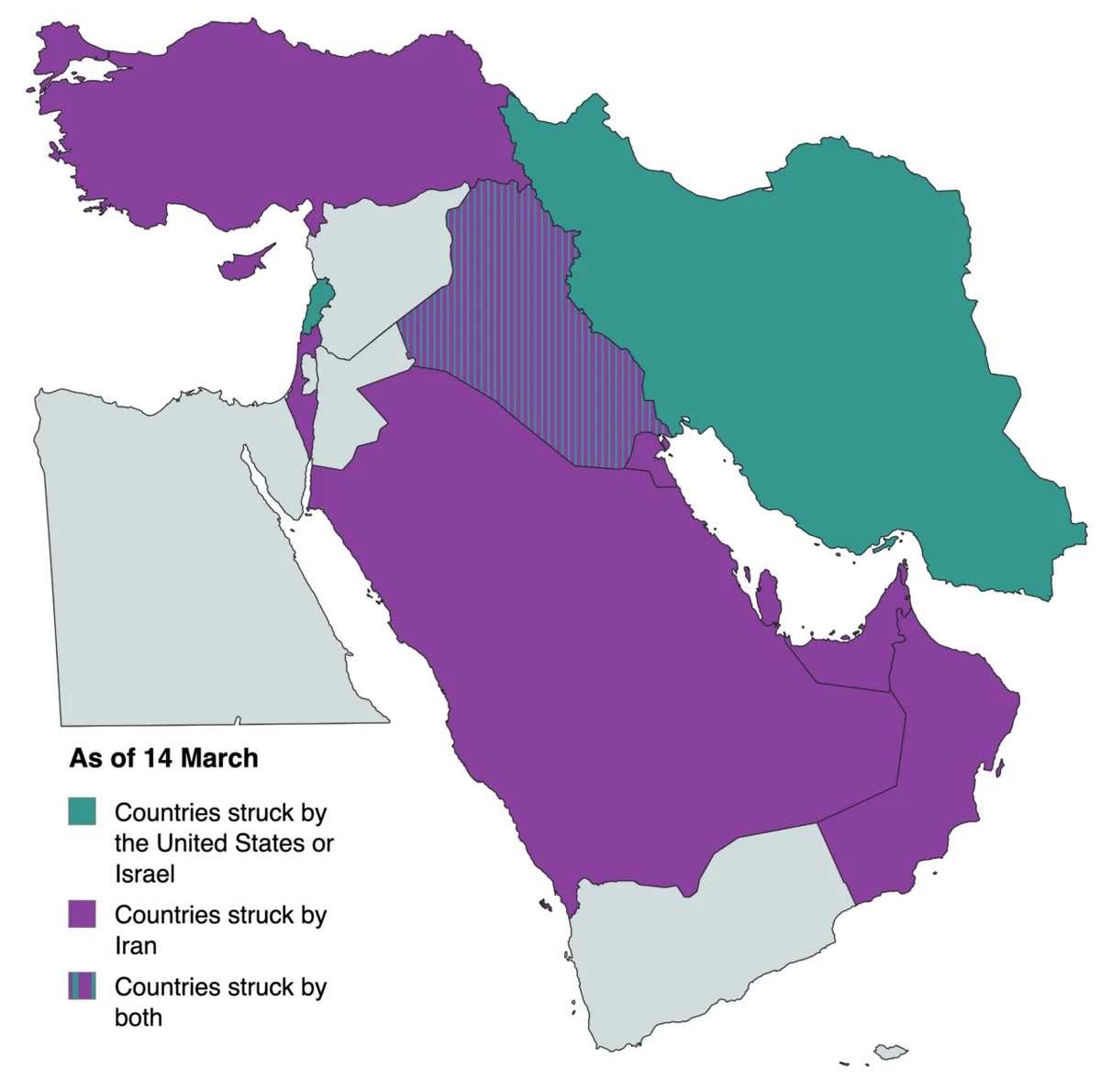
Fox News Digital first confirmed the $80 billion figure, citing a source familiar with the Pentagon's plans. The supplemental funding request is meant to cover the costs of Operation Epic Fury, the U.S. bombing campaign against Iran that began on February 28 and ran until a tenuous ceasefire took hold on April 7.
Here's the problem. War Secretary Pete Hegseth and Pentagon Comptroller Jay Hurst sat in front of lawmakers earlier this year and testified that the war had cost $29 billion. Not $80 billion. $29 billion. Now, just months later, the Pentagon is preparing to ask Congress for nearly three times that amount.
Lawmakers have been waiting since the war began for any kind of honest accounting. What they're getting instead is a number that treats the previous number like it never happened.
What $80 Billion Actually Bought
The gap between what Hegseth testified and what the Pentagon now says it needs isn't hard to explain, even if nobody in the administration seems eager to explain it. Fox News reports that the campaign burned through enormous quantities of SM-3 interceptors, Patriot and THAAD missiles, and Tomahawk cruise missiles. Analysts at the Center for Strategic and International Studies have already warned that restoring inventories of those weapons to pre-war levels could take three or more years at current production rates.
Three years. For the missiles America used in a war that lasted about five weeks.
On June 16, Trump invoked the Defense Production Act to try to speed things up, citing what he called "systemic constraints in the munitions industrial base, including limited production capacity, fragile supply chains, long-lead dependencies, and related production bottlenecks." Which is a very formal way of admitting the U.S. burned through its weapons faster than it can make new ones.
Defense Contractors Are Already at the Table
Trump is set to meet with top defense industry executives at the White House this week, according to Fox News. This is a follow-up to a March 6 meeting where Lockheed Martin, Raytheon parent RTX, BAE Systems, Boeing, Honeywell Aerospace, L3Harris, and Northrop Grumman all promised to quadruple production on high-end munitions systems.
Quadruple. The companies that make the weapons the United States just ran out of are being asked to make four times as many of them. To do that, industry officials say they need Congress to write large, long-term replenishment orders so manufacturers can justify expanding their production lines.
So the sequence here is: start a war, use up the stockpile, invoke emergency powers, throw a summit with the arms dealers, and then go back to Congress asking for $80 billion. Checks out.
Senate Republicans Are Not Exactly Thrilled
Senate Majority Leader John Thune told reporters he understands the need to replenish depleted stockpiles, framing it as a national security necessity. "I think there's a good interest in doing some things that would help ensure that, from a national security standpoint, we're prepared to deter and defeat any threat that comes up," Thune said, per Fox News.
That is the most enthusiastic support Thune could apparently muster. His actual position is essentially "we'll see where the votes are at some point," which is Senate-speak for "this is going to be a fight."
The $80 billion request lands in the middle of an already-chaotic defense spending moment. Trump is simultaneously demanding Republicans push through a third budget reconciliation package loaded with $350 billion in defense funding, tied to his SAVE America Act. That request has already hit resistance from members of his own party who don't want to keep bypassing the normal appropriations process.
The White House Has a Spin for This
White House spokesperson Anna Kelly offered the administration's official framing of the situation. "The United States Military has more than enough munitions, ammo, and stockpiles to serve all of President Trump's strategic goals and beyond, and Operation Epic Fury has exposed what happens when you mess with the United States," Kelly said, per Fox News.
So the military has more than enough weapons, but also needs $80 billion to replace the weapons it used, but the stockpiles are fine, but also Trump invoked the Defense Production Act because of critical bottlenecks. All of that is the official position simultaneously.
Trump, for his part, is calling his latest defense spending push a "generational investment" bigger than Reagan's military buildup, posting on Truth Social that his proposed $1.5 trillion defense budget is "THE ARSENAL OF FREEDOM." The all-caps are his. The price tag is yours.
The Dingo Take
Let's be clear about what happened here. The Trump administration started a war, let its war secretary testify before Congress with a number that was apparently less than a third of the real cost, and is now coming back with the actual bill and acting like this is totally normal budget stuff. Pete Hegseth either didn't know the real number when he testified, or he did know and told Congress something else. Neither option is good. Neither option seems to concern anyone in a position to do anything about it.
The $80 billion ask doesn't even include the $350 billion reconciliation fantasy or the $1.5 trillion defense budget Trump is demanding Republicans find somewhere. The United States just fought a five-week air war, discovered it burned through years' worth of missile inventory, and is now being told by the very defense contractors who make those missiles that they'd be happy to make more if Congress just commits to massive long-term orders. The incentive structure here is not complicated.
Operation Epic Fury is over. The ceasefire is holding, for now. Negotiations are underway. But the financial fallout is just getting started, and Congress is being asked to write an $80 billion check for a war it was told cost $29 billion, by an administration that has shown no particular interest in straight answers. The only people who know exactly how much this war cost are the ones who refuse to say.



Comments