Ten million people felt the ground move Wednesday morning when a 5.6-magnitude earthquake struck Mendocino County at 8:10 a.m., sending wine bottles shattering across grocery store floors and triggering ShakeAlert warnings on phones from the epicenter all the way down to San Jose. Nobody died, which is good. But the quake was just the opening act in what seismologists are now calling a full earthquake sequence, with 44 seismic events already logged and more expected.
What Actually Happened and Where
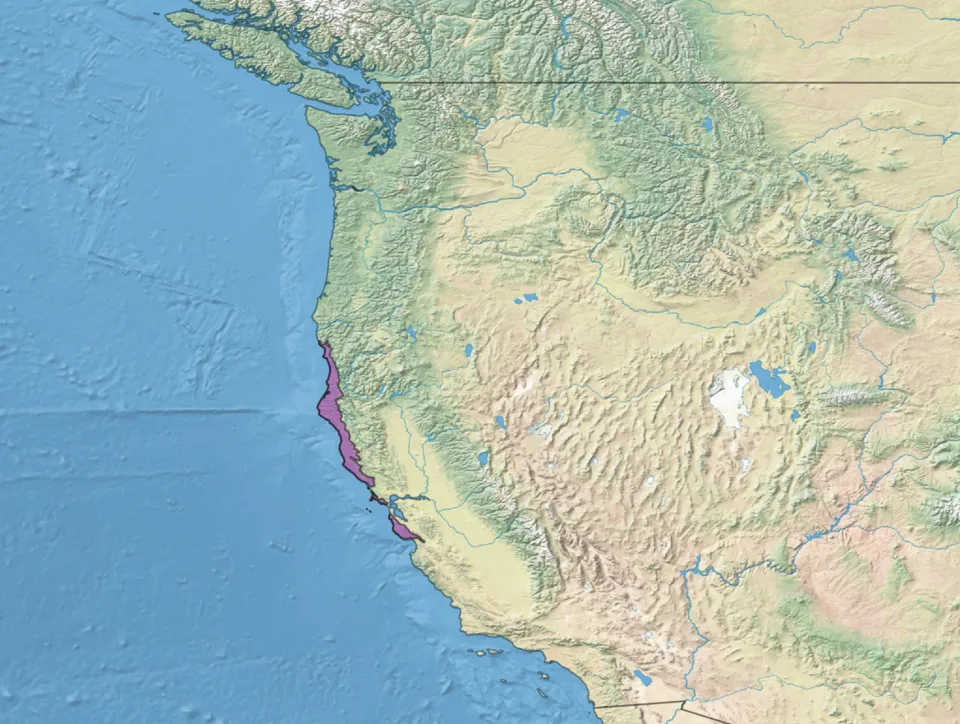
The U.S. Geological Survey placed the epicenter about seven miles north of Redwood Valley, in the inland portion of Mendocino County, at a depth of roughly five miles. That's shallow. Shallow earthquakes punch above their weight class, transmitting energy more efficiently to the surface, which explains why shaking was reported as far away as Sonoma, Walnut Creek, San Jose, and Sacramento.
USGS reports that around 80,000 people experienced what's classified as moderate to very strong shaking. The other 10 million or so felt weak to light tremors, which sounds minor until you remember that 10 million is more people than live in the entire state of Michigan. This was not a local event.
The National Tsunami Warning Center confirmed there was no tsunami threat. Fort Bragg police, about 50 miles west of the epicenter on the coast, told CBS News they had monitored the situation and found no damage in their area. Small mercy.
The ShakeAlert System Did Its Job, Mostly
Here's the part of the story that actually reflects something working as intended. ShakeAlert, the USGS early warning system covering California, Oregon, and Washington, fired off notifications to phones across the region moments before or during the shaking. According to CBS News, Governor Gavin Newsom's office confirmed that more than one million Californians received the alert.
There's one wrinkle. The alert initially flagged the quake at magnitude 6.0. The USGS later revised that estimate down to 5.6. That's a meaningful difference in energy terms, roughly half as much ground motion, but the system's whole value is in giving people a few seconds to drop and cover, not in delivering a precise scientific instrument reading in real time. On that front, it worked.
Newsom issued the obligatory statement urging Californians to download the MyShake app and enable emergency alerts. "As we say, it's not a matter of if, but when the next earthquake will occur," he said. He's not wrong, which is the most unsettling thing about living on the West Coast.
Grocery Stores Took the Worst of It
The most viscerally relatable damage came from stores. The New York Post obtained video from Upper Lake Grocery in Upper Lake showing wine bottles launching off shelves and exploding on the floor, leaving shattered glass and spreading liquid across the aisles in the kind of slow-motion chaos you'd normally only see in disaster movie B-roll. At least one store owner reported thousands of dollars in merchandise damage.
Redwood Valley Market employee Cesar Perez told the San Francisco Chronicle the damage was significant, particularly in the deli section. Additional footage from businesses in Willits showed aisles littered with fallen merchandise across multiple stores. Several grocery stores temporarily closed Wednesday while crews worked through damage assessments.
Residents described the household version of this: dishwashers popping open on their own, drawers flying out, dishes and plates cracking. It's the specific and slightly absurd detail of a dishwasher springing open mid-cycle that really captures what a 5.6 at shallow depth feels like inside a building.
Power Out, Water Disrupted, Damage Assessment Ongoing
PG&E reported that roughly 8,000 customers lost power in and around Willits near the epicenter, according to CBS News. The New York Post, citing PG&E's outage map, put the number of affected customers somewhat higher, with outages spreading across the broader community. PG&E said it found no damage to its own equipment but activated its emergency response plan anyway, sending crews to patrol for gas and electric hazards. Smart call.
Some residents also lost water service, adding a layer of disruption to what was already a messy Wednesday morning. The Mendocino County Executive Office confirmed some injuries but said there were no known major structural damages and no deaths. Officials cautioned that assessments were still ongoing as of Wednesday.
This Is Not Over -- 44 Events and Counting
Seismologists identified Wednesday's 5.6 as the likely main shock in an ongoing sequence. By the time the dust settled Wednesday, 44 total seismic events had been recorded in the area. Most of the aftershocks were small, below magnitude 2.5, but the USGS also logged preliminary aftershocks of 2.7, 2.6, and 2.5 in the hours after the main event, according to CBS News.
The USGS put the probability of at least one magnitude 3.0 or greater aftershock in the next week at 77 percent. Those odds are not comforting. A magnitude 3.0 is enough to rattle furniture and remind you that you live on a tectonic plate boundary. Whether the sequence produces anything larger remains to be seen, but the USGS's track record of honest probabilistic communication at least means residents are getting straight answers instead of reassuring vagueness.
The Dingo Take
There's a version of this story where Wednesday's earthquake is purely good news. No deaths. No major structural damage confirmed. The early warning system worked. Ten million people got shaken out of their morning routines and then went back to them. Compared to what a 5.6 at shallow depth could produce on a bad day, near vulnerable infrastructure or older unreinforced buildings, this was manageable.
But that version of the story requires ignoring that California has been having the same conversation about earthquake preparedness for decades, that unreinforced masonry buildings still exist throughout the state, and that the window between "manageable" and "catastrophic" on the Richter scale is smaller than most people realize. The ShakeAlert system is real and it works and more people should have it on their phones. Newsom is right about that. The uncomfortable truth sitting underneath all the Wednesday morning coverage is that the Bay Area's major population centers are still waiting for the one that doesn't stop at 5.6.
For now: the wine is gone, the deli section is a mess, and the USGS says there's a 77 percent chance this isn't finished. Keep the shoes near the bed. Know where your gas shutoff is. The next one won't announce itself with a polite countdown.


Comments