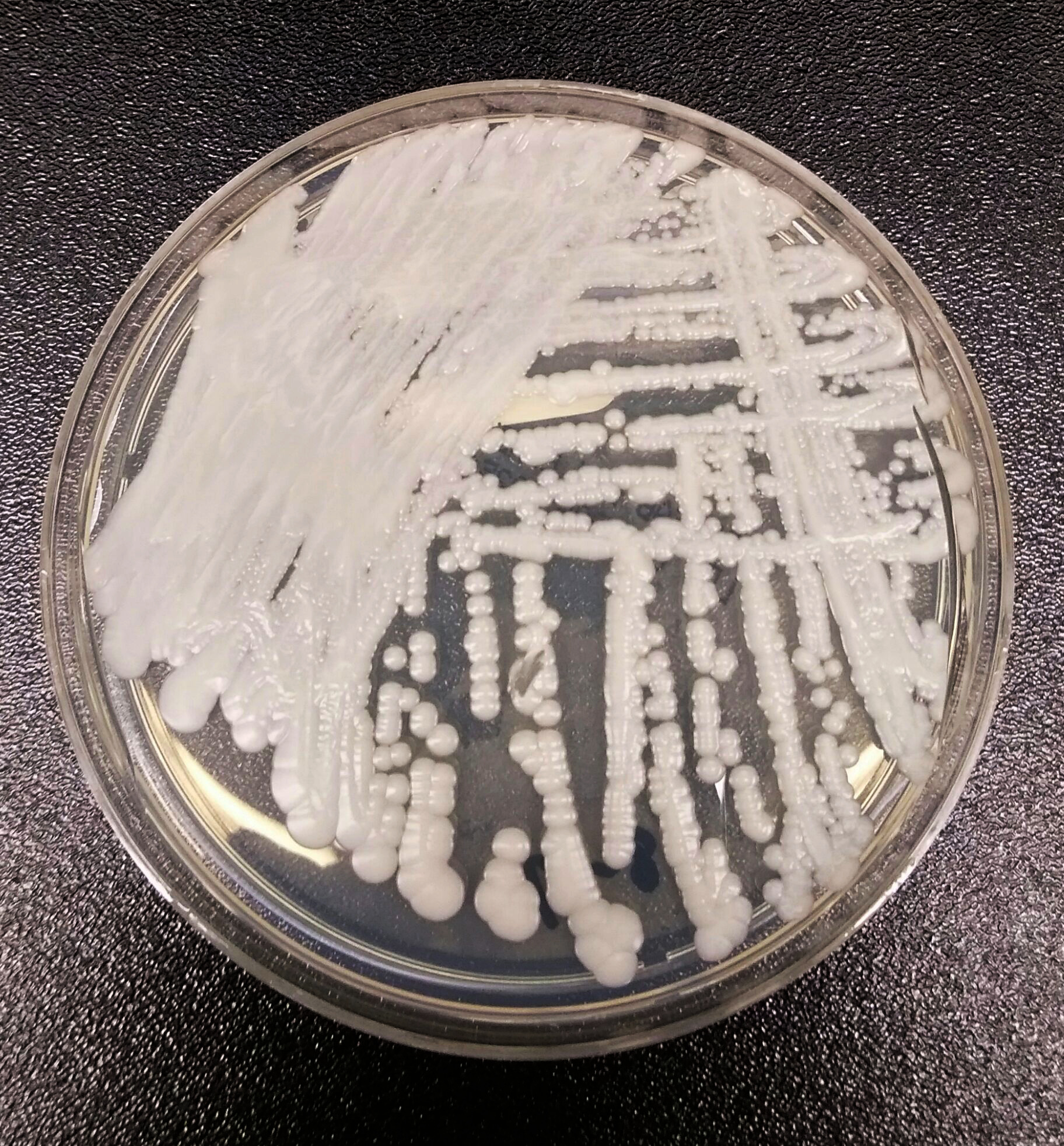
There is a drug-resistant fungus spreading through American hospitals and nursing homes right now, it has shown up in 27 states, and depending on which study you read, it kills somewhere between 30% and 60% of the people it infects. That is not a horror movie premise. That is the current CDC data, as of July 25, 2026.
What We're Actually Talking About Here
Candida auris, or C. auris, is a yeast. Not the kind in your sourdough starter. The kind that gets into your bloodstream and, in a significant share of cases, ends your life. ABC News reports that as of the week ending July 25, the CDC has logged 3,437 confirmed cases across 27 states this year.
California leads the grim tally with 873 cases, followed by Texas at 433 and Tennessee at 283. These are not small numbers. These are real patients in real hospitals, and the fungus that found them did not care what their insurance status was.
The CDC first formally recognized C. auris as a distinct species in 2009, after it was discovered by Korean researchers in 1996. In the fifteen-odd years since, it has gone from medical curiosity to one of the more quietly alarming public health problems in the country. The rate of cases keeps climbing every year. The good news, such as it is, is that the rate of increase has slowed since 2022. The bad news is that the number still went up.
The Drug Resistance Problem Is the Part That Should Keep You Up
Here is where the story stops being just unpleasant and starts being genuinely alarming. A CDC analysis of more than 8,000 C. auris samples from 2022 and 2023 found that over 95% of them were resistant to fluconazole, the first antifungal medication doctors typically reach for. Fifteen percent were resistant to amphotericin B. One percent resisted echinocandins, currently the most reliable treatment option. And a small but real fraction resisted all three drug classes.
Let that sit for a second. A fungal infection with a potential 60% mortality rate that can shrug off the entire antifungal arsenal. The CDC says most infections can still be treated with echinocandins, which is accurate and genuinely reassuring, right up until you notice that the number of cases resistant to those too is moving in the wrong direction.
Drug-resistant infections are, broadly speaking, one of the nastier slow-moving disasters in modern medicine. C. auris is not the only offender, but it is one of the more aggressive ones. It spreads on surfaces. It lives on doorknobs and bedrails. It hitchhikes on catheters and breathing tubes.
Who Is Actually at Risk
To be clear, because panic is not the goal here: most healthy people are not in immediate danger from C. auris. Experts have consistently said that those with fully functioning immune systems have little reason to worry about picking this up in everyday life.
The people in genuine danger are patients in hospitals and nursing homes, particularly those who are immunocompromised, who have had lines or tubes placed in their bodies, or who are already seriously ill. Which is a large and deeply vulnerable slice of the American population at any given moment.
The fungus spreads easily in healthcare settings because those settings are full of exactly the kinds of patients it preys on. It can survive on surfaces for extended periods, meaning standard cleaning procedures are not always enough to stop it moving from one patient to the next. The CDC is explicit about this: infected patients and even asymptomatic carriers can spread it to others.
One Silver Lining That Isn't Nothing
The 2026 case count of 3,437 through late July is actually running about 1,000 cases behind the pace set at the same point last year, according to ABC News. That is not nothing. The rate of increase has slowed. The surveillance infrastructure that tracks this stuff has improved. Awareness in healthcare facilities is higher than it was five years ago.
None of that makes C. auris less dangerous for the patients who contract it. A 30% to 60% mortality rate remains a 30% to 60% mortality rate. The CDC notes, carefully, that because most C. auris patients were already critically ill before infection, it is difficult to isolate exactly how much of the blame belongs to the fungus versus whatever put them in the hospital in the first place. That is a medically honest caveat. It is also cold comfort.
What the slowing trend does suggest is that containment efforts are having some effect. The question is whether those efforts get sustained funding and attention going forward, which in the current political environment is, to put it gently, not guaranteed.
The Dingo Take
You are supposed to look at 3,437 cases of a potentially fatal drug-resistant fungus spreading through American hospitals and feel reassured because it is down from last year. And fine, fine, yes, a declining rate of increase is technically good news. But we are still talking about a pathogen that resists the front-line treatment in over 95% of samples, that lives on hospital surfaces and bedrails and breathing tubes, and that kills somewhere between three and six out of every ten people it seriously infects. That is the baseline. That is what we are measuring improvement against.
The structural problem here is not the fungus itself. Fungi evolve. Drug resistance happens. The structural problem is that the American healthcare system is spectacularly poorly built to handle slow-rolling infectious crises. Hospitals are underfunded. Nursing homes are chronically understaffed. The CDC, which is the institution responsible for tracking and responding to exactly this kind of threat, has spent the last several years being systematically weakened, defunded, and politically undermined. The people most at risk from C. auris are the elderly, the immunocompromised, the critically ill. They are not a powerful lobbying constituency.
This is not a story about a zombie fungus apocalypse. It is a story about a serious, worsening public health problem that requires sustained institutional attention and resources, playing out at a moment when the political appetite for exactly that is somewhere between minimal and nonexistent. Keep an eye on the CDC's case counts. They update weekly. And maybe do not hold your breath waiting for a press conference about it.



Comments