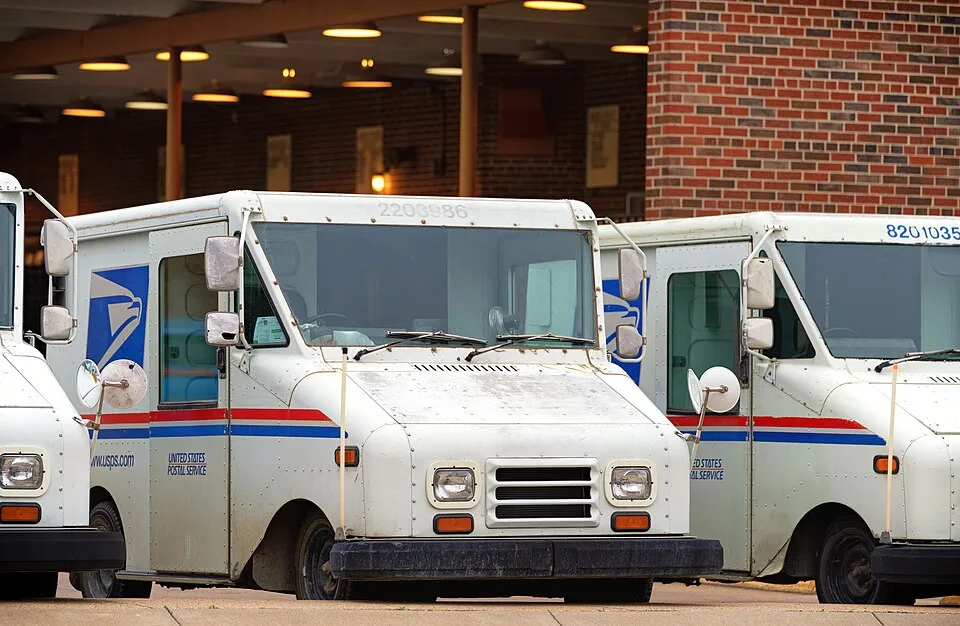
The United States Postal Service is no longer going broke next year. It's going broke in five to eight years instead, and it's buying that extra time by raiding its own workers' retirement funds. Postmaster General David Steiner told Congress on Wednesday that this is, in his words, not something any of us should be comfortable with. Congratulations, everyone. We did it.
The Good News Is You Still Have Mail Until 2031
Let's start with what passes for a win here. Back in February, Steiner was warning lawmakers that USPS might have to stop delivering mail entirely by February 2027. That's not a typo. The oldest federal agency in American history, founded before the country itself was even finished being invented, was staring down a shutdown date roughly eighteen months away.
Now, according to NPR, the agency's latest projections push that cash crisis to somewhere between 2031 and 2034. So, progress. Of a kind. The kind where you've bought yourself a few extra years by doing something everyone agrees is a bad idea.
The something in question is this: the Postal Regulatory Commission has waived USPS' required minimum retirement payments through fiscal year 2030, providing what the commission's acting chair Robert Taub called 'breathing room' worth around $15 billion. In plain English, the post office is skipping contributions to its workers' pension funds to keep the lights on today.
Borrowing From Retirees to Deliver Packages. Sure.
Steiner was unusually blunt with the Senate Homeland Security and Governmental Affairs Committee about what exactly is happening here. 'What we are doing right now is we're basically borrowing money from our retirement plans to fund current operations,' he said, according to NPR. 'I'm not particularly comfortable with that. I promise you our employees are not particularly comfortable with that. You all shouldn't be comfortable with that. None of us should be comfortable with that.'
That's a federal agency head telling Congress, on the record, four separate times in a row, that the current situation is bad. There's something almost refreshing about it. No spin. No optimistic projections dressed up in bureaucratic language. Just a man at a microphone saying: this is broken and I need you to fix it.
Whether Congress will actually act is, of course, the part where the dark comedy really kicks in. Some House Oversight Committee members have asked Steiner for more detailed financial projections before they'll consider reform proposals. Five-year plans and supporting data, please. Meanwhile, the post office lost $2 billion in a single quarter this spring, NPR reports, after losing $9 billion across all of last fiscal year. The math is not waiting for the paperwork.
Stamp Prices Going Up Again, Because of Course They Are
While the structural problems grind on, USPS has been doing what it can. NPR reports the agency signed a multi-year deal to handle last-mile deliveries for DHL eCommerce, cut non-essential spending, and hit customers with a temporary 8% price increase starting in April to cover fuel costs.
There's also a more permanent 5% price hike on the way. The cost of a first-class forever stamp jumps to 82 cents on July 12. That will be, per NPR's count, the eighth stamp price increase in the past five years. Eight increases in five years. If you've been wondering why nobody sends letters anymore, here is at least one contributing factor.
Steiner is also pushing Congress for legislation that would let USPS borrow more money and restructure its retirement obligations. There's a separate conversation brewing about whether the legal requirement to deliver mail six days a week is even financially sustainable anymore. That conversation is going to be unpleasant for a lot of people, and it hasn't really started yet.
Trump Decided This Was the Right Moment to Use USPS as a Political Tool
Because nothing in American governance is allowed to just be one problem, the Trump administration has also decided that a financially desperate, structurally fragile federal agency is the perfect vehicle for two of its most contested political projects.
The first: letter carriers in Huntsville, Alabama and Spartanburg, South Carolina have started knocking on doors to conduct interviews for a field test of the 2030 census, NPR reports. Census advocates are skeptical of the whole arrangement, citing a 2011 Government Accountability Office study that found using postal workers for census interviews 'would not be cost-effective.' Using an agency that's burning through its pension reserves to do work that a decade-old federal study said doesn't make financial sense. Classic.
The second project is worse. In response to Trump's executive order restricting voting by mail, USPS has proposed using information from state election officials to build lists of approved mail voters, and Postmaster General Steiner confirmed to Sen. Gary Peters of Michigan on Wednesday that under the proposed regulation, states that refuse to hand over their absentee voter lists would not have their ballots mailed. USPS, an agency Congress specifically designed to be independent of presidential administration, is now fighting a stack of lawsuits from Democratic-led states and voting rights groups who argue the president has no constitutional authority to set federal election rules this way. They're probably right. That hasn't stopped anything.
What Fixing This Actually Requires
To be clear about the scale of the problem: USPS is a self-funded agency. It does not receive tax dollars to operate. It runs on stamp sales and service fees, and those revenues have been falling for decades as mail volume drops. The agency is also legally required to pre-fund retiree health benefits at a level that no other federal agency faces, a mandate baked in by a 2006 law that has been financially crippling it ever since.
Steiner's ask from Congress is relatively modest given the scope of the problem: more borrowing authority, retirement plan reform, and an honest conversation about service mandates. What he's getting so far is requests for more documents and a White House that wants to turn his agency into an election enforcement mechanism.
The clock, to be clear, is still running. The pension waiver buys time through 2030. The cash runs out somewhere between 2031 and 2034 if nothing structural changes. That sounds like a long time from now. It is not a long time from now. Legislative reform at the federal level, when Congress gets around to it at all, typically takes years of hearings, drafting, negotiation, and procedural fights before anything becomes law. The post office needs Congress to start that process immediately. Congress has historically treated the post office the way most people treat a weird noise their car is making: acknowledge it, tell yourself it's probably fine, and hope it goes away.
The Dingo Take
Here's what's actually happening. The United States Postal Service, which has been delivering mail since 1775, is surviving right now by shorting its own workers' retirement funds. The people who drive those trucks through rain and heat and whatever fresh hell July in Phoenix produces are watching their agency decide that their future financial security is an acceptable thing to spend down so that the institution can keep running. Steiner is at least honest about how bad that is. Whether honesty translates into congressional action is a completely different question.
The Trump chaos layered on top of all this is particularly enraging because it is entirely elective. Nobody asked the Postal Service to become the enforcement arm of a contested voting executive order. Nobody with a functioning understanding of census methodology asked postal workers to conduct door-to-door interviews as a cost-saving measure. These are problems the current administration chose to create, dumped onto an agency that already had more than enough problems, and is now defending in court using arguments that constitutional scholars are not finding especially compelling.
The simplest version of all this is: the post office is going to run out of money. The timeline has been pushed back by raiding pension funds and hiking stamp prices for the eighth time in five years. Congress has the tools to address the structural issues and is currently asking for more PowerPoints before it gets started. And the White House, rather than helping, has decided this is an excellent moment to weaponize the mail. Good country we've got here.




Comments