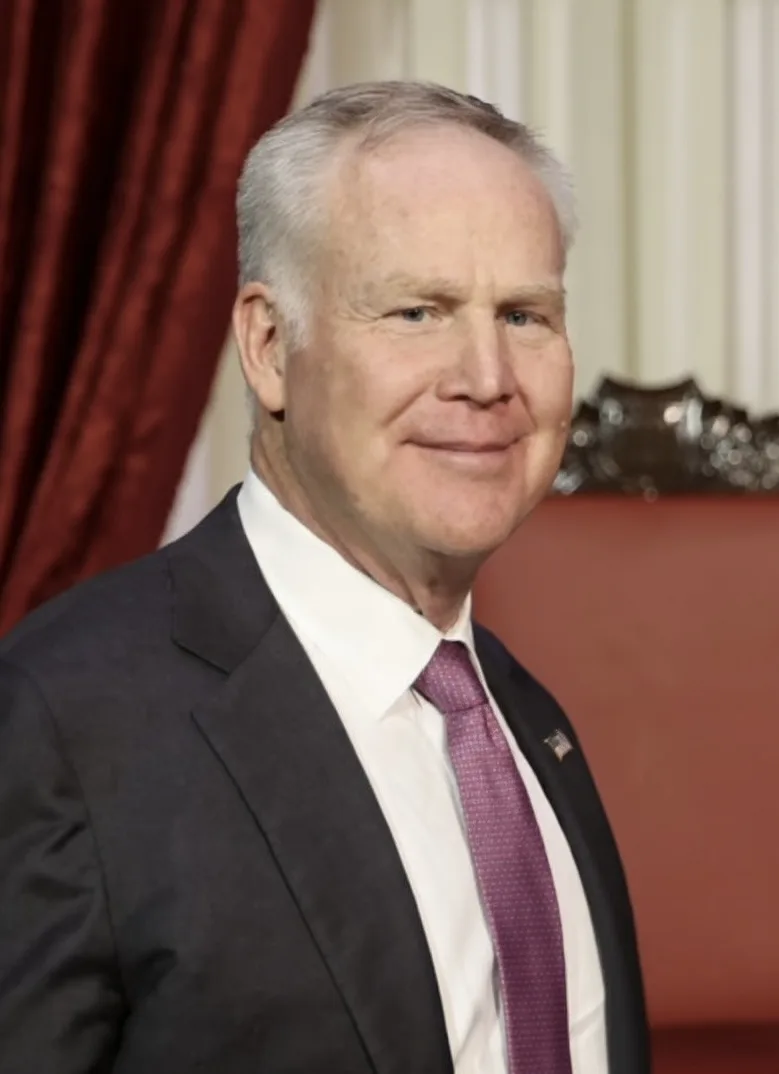
A man who was running a natural gas company six months ago is now a sitting U.S. Senator, and his single legislative priority is making it easier to build natural gas infrastructure. No, there is no recusal conversation happening. Yes, this is completely legal, apparently.
Who Is This Guy and Why Is He Already Writing Bills
Sen. Alan Armstrong, R-Okla., was appointed earlier this year to replace Markwayne Mullin, who vacated his Senate seat to become Secretary of Homeland Security. Before that appointment, Armstrong was the CEO of Williams Companies, an Oklahoma-based natural gas processor and pipeline transporter. He stepped down from that role to take the Senate seat, which he will hold only through the end of the year.
So to recap the timeline: private industry executive gets handed a Senate seat, and his very first move is writing legislation that would dramatically benefit the private industry he just left. Armstrong is not subtle about any of this. Fox News reports he has described permitting reform as the only issue that matters to him during his brief tenure.
The bill is called the American Energy and Mineral Infrastructure Act of 2026. It has the backing of Republican Senators Cynthia Lummis of Wyoming, Rick Scott of Florida, and Katie Britt of Alabama, along with nearly two dozen oil and gas companies. The oil and gas companies part is doing a lot of work in that sentence.
What the Bill Actually Does
The legislation is a package of permitting reforms aimed at clearing legal and bureaucratic hurdles for pipeline developers, LNG export companies, and natural gas producers. That sounds dry. Here is what it actually means in practice.
The bill would make the Federal Energy Regulatory Commission the lead agency for approving interstate pipelines and LNG terminals, explicitly stripping individual states of the power to block federally approved projects. If your state government has concerns about a massive pipeline running through it, Armstrong's bill says that is no longer your problem to have.
It would also broadly reform the National Environmental Policy Act, known as NEPA, which currently requires federal agencies to study environmental impacts before approving major projects. The bill would narrow what agencies are allowed to analyze, limit the scope of environmental reviews, and establish tighter rules for legal challenges in court. Fox News describes this as requiring "evidence-based" review for environmental decisions, which is a remarkable framing for a bill that primarily works to reduce the amount of environmental review that happens.
On top of that, the package would expand the use of standardized permitting approvals under the EPA, create uniform requirements for projects affecting wetlands and waterways, and make it significantly easier to mine critical minerals on federal land.
The Revolving Door, Spinning at Full Speed
There is a concept in Washington called the revolving door, where people cycle between industry jobs and the government positions that regulate those industries. It is an old problem, and plenty of people across both parties have walked through that door. But usually there is at least a pretense of distance. A waiting period. A fig leaf of some kind.
Armstrong's situation offers none of that. He ran Williams Companies, stepped down, got appointed to the Senate, and immediately started writing bills to deregulate the sector Williams Companies operates in. The legislation has the open support of nearly two dozen oil and gas companies. Armstrong's own statement, quoted by Fox News, frames this entirely in terms of what is good for energy producers: "When we can build our own infrastructure and produce our own supply, our allies will be far less reliant on adversarial sources for their energy."
He is not wrong that permitting reform has bipartisan support in theory. It has knocked around Congress for years without ever crossing the finish line, as Fox News acknowledges. The question is not whether the permitting process is slow and cumbersome. The question is whose interests are being served by this particular version of reform, written by this particular person, at this particular moment.
The China Argument, Which Always Shows Up Eventually
Armstrong's pitch, like virtually every energy pitch coming out of Washington right now, leans heavily on the China competition frame. His statement warns that "the U.S. cannot afford to remain idle while our global competitors move ahead," and promises that without action, American consumers will pay through higher utility bills.
This is the all-purpose justification for almost every piece of deregulatory energy legislation in 2026. China is building things fast. China does not have environmental reviews slowing it down. Therefore, the U.S. should build pipelines faster and do fewer environmental reviews. The logic moves very quickly past the question of whether copying China's approach to environmental protection is actually a goal Americans should want.
It is also worth being precise about what is being deregulated here. NEPA reviews, state oversight of interstate projects, wetland protections, the ability to challenge federal approvals in court: these are not arbitrary bureaucratic nuisances. They are the mechanisms by which communities, states, and courts have historically been able to push back on energy projects they did not want running through their backyards. Armstrong's bill does not just speed up the clock. It changes who gets a seat at the table.
What Happens Next
The bill faces the same basic obstacle that every permitting reform bill has faced for years: getting 60 votes in the Senate. The bipartisan appetite for the concept of permitting reform tends to evaporate when the actual text lands, because the details always favor one set of interests over another.
Armstrong told Fox News he is committed to staying on the issue for as long as he is in the Senate, saying, "I won't be stepping off the gas." He will be in the Senate until the end of the year. So we are talking about a few more months of runway.
Whether his bill advances or dies in committee, Armstrong has already done the work of putting a very industry-friendly version of permitting reform into the legislative record. These things have a way of coming back around.
The Dingo Take
Look, permitting reform is a legitimate policy debate. The federal permitting process is genuinely slow, genuinely expensive, and genuinely a barrier to building things in the United States, including things that are not pipelines, like transmission lines for renewable energy. There are good-faith arguments that NEPA reform could help the country build more of everything faster. That debate is real.
But this bill is not arriving in a vacuum. It was written by a man who ran a natural gas company until a few months ago, backed openly by two dozen oil and gas companies, and designed to specifically benefit the sector he came from. It strips state governments of the ability to block projects crossing their territory. It narrows environmental review and limits court challenges. The beneficiaries are not ambiguous. If you wrote a parody of a revolving-door energy bill, it would look like this.
Armstrong's line about not leaving kids a worse country than the one we inherited is a genuinely bold thing to say in a bill that significantly weakens the legal tools communities use to protect their air, water, and land from industrial projects they did not ask for. The country Armstrong inherited had those protections. The one he is building legislation toward has fewer of them. Make of that what you will.





Comments