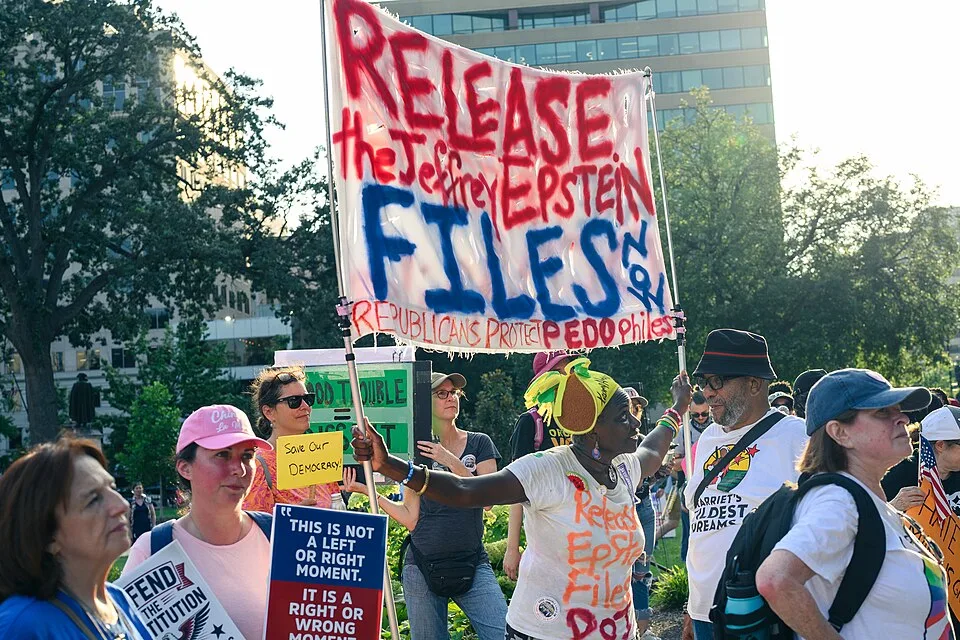
A federal judge just gave the Department of Justice a deadline: hand over more unredacted Jeffrey Epstein records by July 2, or stand up in public and explain why you won't. U.S. District Judge Emmet Sullivan in Washington D.C. issued the order Thursday in response to a lawsuit alleging the DOJ has been sitting on documents it was legally required to release. The department has already coughed up 3.5 million pages, which sounds like a lot, until you remember that apparently there's still more they haven't shown anyone.
What the Judge Actually Ordered
According to Axios, Judge Sullivan's order gives the DOJ until July 2 to comply with a preliminary injunction tied to a lawsuit filed by media legal analyst Katie Phang. Her claim is straightforward and damning: the Department of Justice failed to comply with last year's Epstein Act, a law specifically designed to force the release of Epstein-related records.
The ruling doesn't automatically blow the doors off anything. What it does is put the DOJ in an uncomfortable position where they either produce the documents or produce a public explanation for why they can't. Both options are bad for an administration that has been loudly promising transparency on Epstein while quietly letting deadlines slide.
Judge Sullivan is not a man who enjoys being ignored. He has a track record of holding the government's feet to the fire when it comes to document compliance, and issuing an order with a hard one-week deadline is not a casual move. Someone at the DOJ is having a very bad Thursday.
The Epstein Act and What It Was Supposed to Do
The Epstein Act passed with the kind of bipartisan enthusiasm that only shows up when politicians sense the public is genuinely furious. The idea was simple: the government had been sitting on records related to Jeffrey Epstein's sex trafficking operation for years, the public deserved to know what was in them, and Congress was going to make sure that happened by writing it into law.
The DOJ's response has been to release an enormous volume of material, 3.5 million pages by Axios's count, while apparently still withholding documents significant enough that a federal judge found reason to issue a preliminary injunction demanding more. Three and a half million pages is the kind of number designed to make transparency look exhausting rather than real.
Phang's lawsuit cuts through that. The argument isn't that the DOJ released nothing. It's that what remains sealed is still subject to the law, and the department is still in violation of it. A preliminary injunction is a legal tool that says, basically, stop doing the thing you're doing while we sort this out. A judge doesn't grant one lightly.
The July 2 Deadline Is Now the Only Thing That Matters
Here's where this gets interesting. July 2 is not far away. The DOJ has a narrow set of options: release the documents, provide a detailed legal justification for why specific materials remain exempt, or ignore the court and invite a much worse situation.
Ignoring a federal judge's order is not a great strategy, though this particular administration has shown a willingness to test limits that would have been unthinkable a few years ago. If the DOJ tries to stonewall Judge Sullivan, the legal consequences escalate quickly and publicly.
The more likely play is some version of a partial release paired with a classified or law-enforcement exemption argument for whatever remains. That's how these things usually go. But Phang's lawsuit is still active, Sullivan is still watching, and the deadline is now on the calendar. Something has to happen by Wednesday.
Why This Keeps Mattering, Years Later
Epstein died in a federal facility in August 2019 under circumstances that official investigations ruled a suicide and that a substantial portion of the American public has never fully accepted. The people he trafficked have been fighting for accountability ever since. Some of his associates faced prosecution. Many names that have been whispered in connection with his operation have never been confirmed or cleared.
That ambiguity is exactly why the document fight keeps going. The sealed records aren't just historical curiosity. They potentially contain information about who knew what, who visited where, who was warned, and who wasn't. The fact that a DOJ under any administration keeps finding reasons not to release them in full is itself a story.
Katie Phang didn't file this lawsuit because she had nothing better to do. She filed it because the law says the records should be public and the government is still finding ways to avoid that. A federal judge agreed enough to issue an injunction. That's the state of play as of Thursday, June 26.
The Dingo Take
Let's be honest about what 3.5 million pages of document releases actually is. It's a number. A big, impressive, functionally useless number unless you know what's still missing. The DOJ releasing millions of pages while a federal judge issues injunctions demanding more unredacted material is not transparency. It's the illusion of transparency wrapped around a core of continued secrecy, and it has been going on across multiple administrations now, which should bother everyone regardless of which team you're rooting for.
The Epstein Act was supposed to end this. Congress passed it. The president signed it. The DOJ has apparently treated it as more of a suggestion. And now a federal judge has to step in and tell the executive branch to do the thing the legislative branch already told it to do. This is not a functioning system. This is a functioning stalling mechanism.
July 2 is the date. Write it down. Either something real comes out, or we get a public explanation designed to sound like a reason while actually being an excuse. Either way, Judge Sullivan just made this impossible to quietly bury over a long holiday weekend, and whoever thought that was the plan is now rethinking their calendar.





Comments