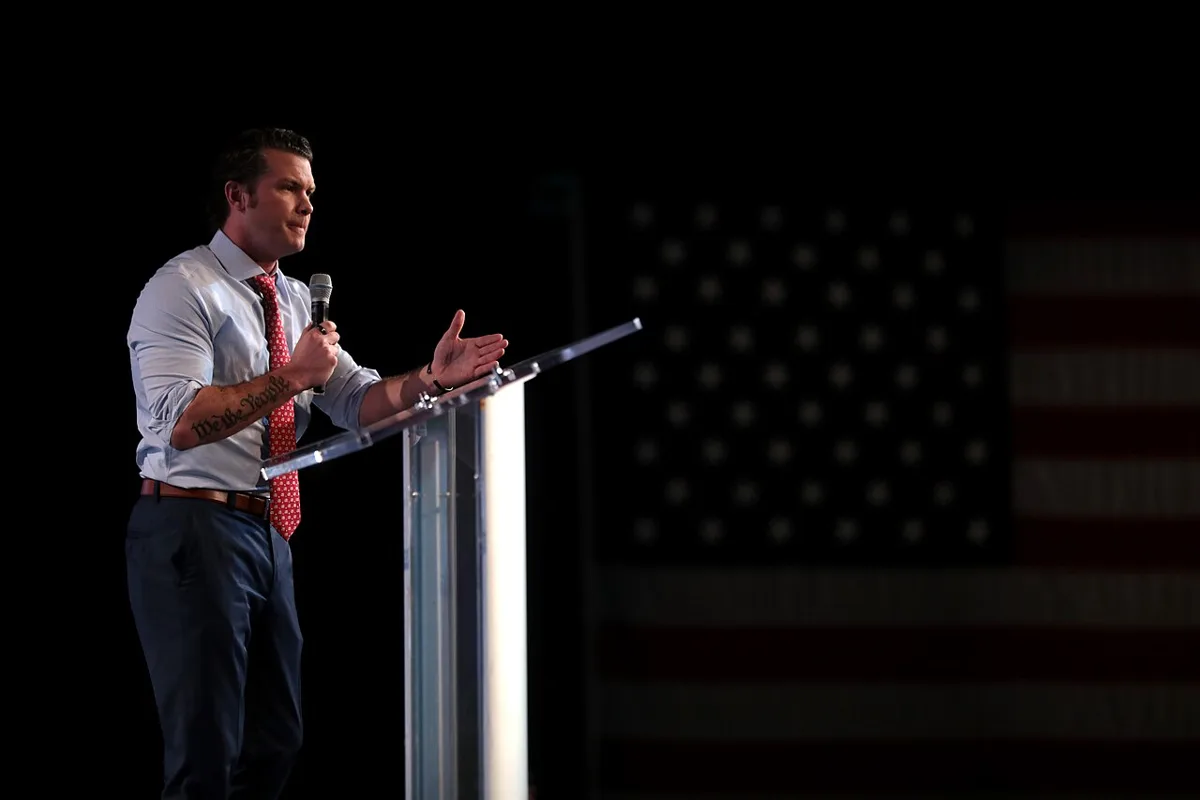
Pete Hegseth made flu shots optional for military recruits in late April, citing 'medical autonomy.' By June, nearly 300 people at Air Force boot camp in San Antonio were sick with the flu. The Pentagon would like you to know these two things have absolutely nothing to do with each other.
How You Get 275 Sick Recruits in Three Weeks
Here's the thing about military boot camps. You take hundreds of sleep-deprived, high-stress young people, pack them into open barracks, run them through communal showers, and press them together shoulder-to-shoulder for weeks of instruction. Epidemiologists call this a 'perfect transmission environment.' The rest of us call it 'obviously.'
The Guardian reports that the outbreak at Lackland Air Force Base in San Antonio has been running for roughly three weeks and has produced 275 confirmed flu cases, according to Democratic Congressman Joaquin Castro, whose district includes part of the base. The base processes around 700 new recruits every single week, according to Air Force figures. So the math here is not complicated.
Once Hegseth made the vaccine optional in April, only 40% of incoming trainees at Lackland chose to get the shot, according to a source familiar with the situation who spoke to the Associated Press. Sixty percent of the people walking into one of the densest, most physically demanding group environments in the country said no thanks to the flu vaccine. What followed was, in retrospect, entirely predictable.
Hegseth's 'Medical Autonomy' Tour Hits a Speedbump
When Hegseth repealed the flu vaccine mandate at the end of April, he framed it as a matter of 'medical autonomy' and religious freedom. This is the kind of language that sounds principled right up until the moment it produces a three-week flu outbreak in your own military's boot camp.
The repeal did include an escape hatch. Services had 15 days to request exceptions, meaning they could ask for permission to keep the vaccine mandatory for their recruits. According to the Pentagon, those exception requests from the Army, Navy, and Air Force were already working their way through the bureaucracy before the Lackland outbreak even started. The timing, the Pentagon insists, is purely coincidental. A spokesperson for the Pentagon confirmed to the Guardian that exceptions were granted to the Army, Navy, and Air Force as well as the National Security Agency and the Defense Health Agency.
So to recap: Hegseth removes the mandate. The services immediately start asking for the mandate back. A massive flu outbreak erupts at a boot camp. The Pentagon restores the mandate. All of this is, officially, a coincidence.
Experts Were Not Exactly Shocked
Arnold Monto, a flu expert and emeritus professor at the University of Michigan, told the Guardian the outbreak itself is 'not unusually concerning' from a clinical standpoint. He did note, with the careful phrasing of someone who has been watching public health officials learn obvious lessons the hard way for decades, that vaccination is 'especially necessary' in group settings if you want to prevent flu outbreaks.
That's the polite scientific version. The impolite version is that mandatory flu vaccination in military boot camps has been standard practice for decades precisely because everyone who has ever studied the question arrived at the same conclusion: put enough unvaccinated people in close quarters under physical stress, and flu spreads. This is not new information. The military itself has known this for generations.
The People Who Were Right the Whole Time
Families Fighting Flu, an advocacy organization, was not subtle about how they felt. 'For decades, the military prioritized the health and safety of troops and the public by requiring flu vaccine for recruits,' executive director Michele Slafkosky said in a statement to the Guardian. 'It's unfortunate that more than 200 individuals at Lackland Air Force Base in Texas became ill when that requirement was rescinded.'
Unfortunate. That's one word for it. The organization called the restored guidance a measure that 'will save lives,' which is about as direct as advocacy organizations get. They are, of course, correct, which is the most frustrating kind of correct there is: the kind where you said so in advance and nobody listened until people started getting sick.
The Dingo Take
The Pentagon's insistence that the outbreak and the policy reversal are unrelated is the kind of statement that requires a very specific kind of commitment to not connecting obvious dots. Hegseth removes flu vaccine requirement. Vaccination rate at boot camp drops to 40%. Three weeks later, 275 people have the flu. The Pentagon issues exceptions restoring the requirement. 'No connection.' Sure. And the dog didn't eat your homework, the homework simply ceased to exist in proximity to the dog.
This is what happens when you graft culture-war grievance onto military readiness policy. 'Medical autonomy' is a fine principle for adults making decisions about their own lives and health. It is a somewhat more complicated principle when you are responsible for maintaining the combat readiness of hundreds of thousands of people living in barracks. The military has mandatory requirements for a reason. Most of those reasons are written in lessons learned the hard way over a very long time.
The good news, such as it is, is that the system eventually corrected itself. The vaccine mandate is back. The outbreak will presumably end. Lackland will go back to processing 700 recruits a week through a tightly packed, high-stress environment where flu spreads with ruthless efficiency if you let it. The bad news is that it took 275 sick recruits to get here, and the guy who made the call to remove the mandate in the first place is still the Secretary of Defense.

Comments