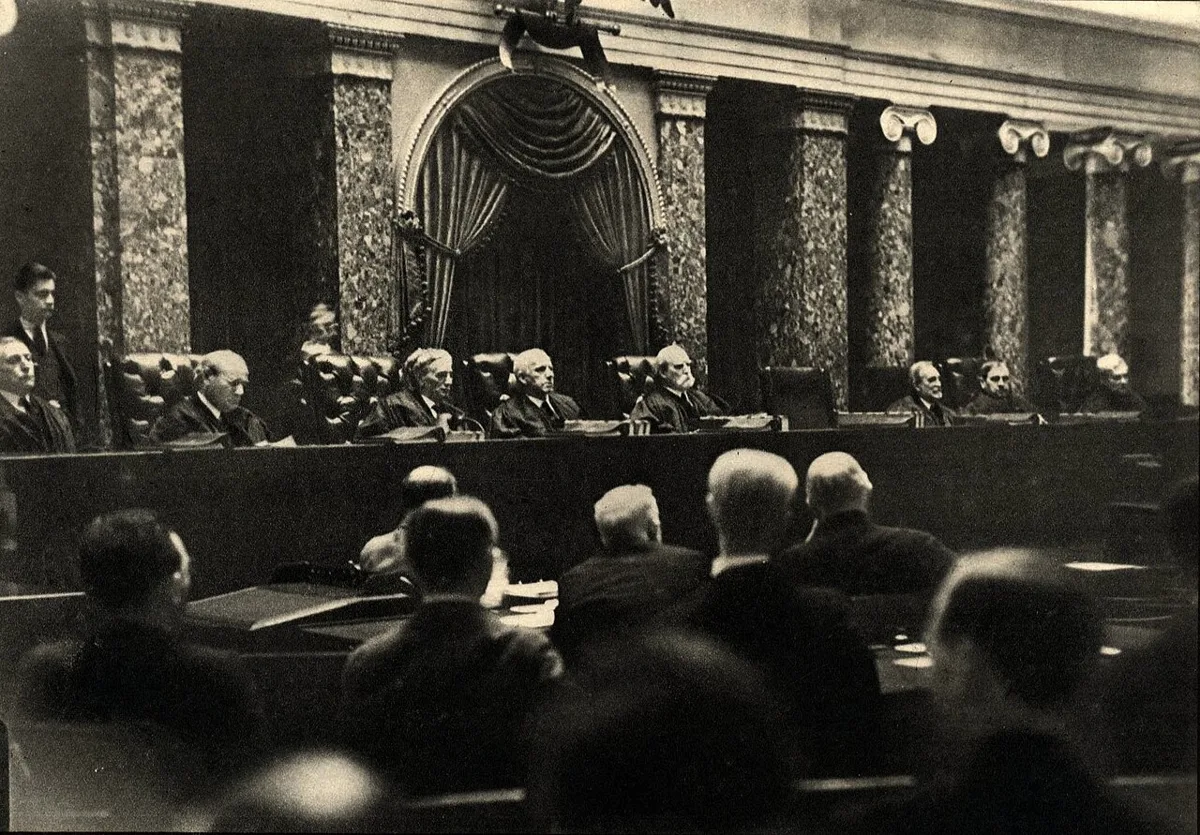
The Supreme Court ruled 6-3 on June 25th that the Trump administration can legally turn asylum seekers away at the US-Mexico border before they set foot on American soil, which means they lose their legal right to claim asylum under federal law. The entire majority opinion, written by Samuel Alito, is built around the word 'in.' Sotomayor wrote 35 pages in response. Alito needed 18.
What the Court Actually Did
The ruling ends a legal battle that stretched across three administrations, dating back to a 2017 lawsuit filed by Al Otro Lado, a California and Mexico-based humanitarian organization, and a group of asylum seekers who were subjected to the turnback policy during Trump's first term. According to The Guardian, the case finally landed at the Supreme Court after lower courts repeatedly ruled the practice illegal.
The vote broke cleanly along ideological lines. Alito, Roberts, Thomas, Gorsuch, Kavanaugh, and Barrett made up the majority. Kagan, Jackson, and Sotomayor dissented. Nobody was surprised. Everyone should still be alarmed.
Under existing US immigration law, any migrant who arrives in the United States has the legal right to apply for asylum. The whole fight, as The Guardian reports, came down to what 'arrives in' actually means. The Trump administration argued that if you haven't fully stepped onto American soil, you haven't 'arrived in' America. The Supreme Court, six of its nine members anyway, agreed.
Alito's Argument, Such As It Is
Here is the legal reasoning that will now determine the fate of people fleeing persecution. From Alito's majority opinion, as quoted by The Guardian: 'In ordinary speech, no one would say that a person arrives in a place... before the person enters that place.'
That's it. That's the crux. A man standing at the threshold of a designated port of entry, with an asylum officer inside ready and trained to process his application, in a facility with room to do exactly that, does not, in Samuel Alito's view, count as someone who has arrived. He just needs to take one more step. Except that step is now federally blocked by officers stationed at the border line specifically to prevent him from taking it.
This is the kind of logic that sounds almost reasonable in the abstract and becomes monstrous when applied to a mother from Honduras who will be killed if she is sent back.
Sotomayor Did Not Hold Back
Sonia Sotomayor's dissent runs 35 pages, nearly twice the length of Alito's majority opinion, and The Guardian reports she was not gentle about it. She laid out the consequences directly: under this ruling, the government can now turn away asylum seekers even when a port of entry has ample capacity, even when a trained officer is available, and even when, in her words, 'the asylum seeker is certain to be persecuted, or killed, if she is turned away.'
She called out the majority for fixating on a single word. 'Words, however, must be read in context and with attention to how they fit into the statute as a whole,' she wrote, according to The Guardian. 'The majority ignores the statutory context and history, not to mention the longstanding position of the Executive Branch, all of which show that any noncitizen arriving at our doorstep and seeking admission must be inspected and allowed to apply for asylum, regardless of whether her foot has crossed the threshold.'
She closed the dissent with a line that should be read aloud by everyone who still believes this country means what it says about refuge. 'Because the Court today blesses the Executive Branch's decision to slam the door shut on all who are fleeing persecution, despite the detailed inspection and asylum system that Congress enacted and commands, I respectfully dissent.' The word 'respectfully' is doing a lot of heavy lifting there.
How We Got Here
The practice of physically blocking migrants from reaching ports of entry did not start with Trump. The Guardian reports that Obama-era officials began 'metering' the flow of migrants at the border as asylum claims surged and legal pathways for other immigration types dried up. By 2016, immigration agents were stationing themselves on international bridges to prevent migrants, many of them Haitian, from reaching ports of entry at all.
Trump's first administration formalized and dramatically expanded the practice. Biden killed it in 2021. Trump came back, revived it, and then asked the Supreme Court to bless it permanently. The court, per The Guardian, obliged.
This is part of a broader strategy that The Guardian describes as a global campaign by Trump officials to roll back the post-World War II asylum framework entirely. At a United Nations meeting last September, Deputy Secretary of State Christopher Landau called the asylum system 'a huge loophole in our migration laws.' The legal framework built in the aftermath of the Holocaust, designed specifically so that the world would never again turn away people fleeing state-sanctioned murder, is, to this administration, a loophole.
What Happens to the People
When the turnback policy was active during Trump's first term, The Guardian reports that many of the migrants who were blocked from ports of entry ended up stranded in dangerous encampments or temporary housing, without adequate food or medical care. They were not safely returned to their homes. They were left to rot in limbo at the border.
The DHS under Trump has also been sending migrants fleeing persecution to third countries where they have no connections and no legal status, according to The Guardian. The asylum system is not being reformed. It is being demolished, one ruling at a time, while the administration characterizes the people caught inside it as a threat rather than a human reality.
The people most affected by this ruling are not abstractions or political talking points. They are people who made a desperate and dangerous journey to a country whose law, until today, promised them a hearing.
The Dingo Take
Let's be honest about what just happened. Six justices looked at a law that says people who arrive in the United States can ask for asylum, then watched the government station officers at the border line specifically to physically prevent people from arriving, and decided the government had found a clever enough workaround to deserve their blessing. Sotomayor wrote 35 pages explaining exactly why this is incoherent and cruel. Alito wrote 18 pages about the word 'in.' The majority won anyway.
This is the part where someone usually notes that the asylum system was already broken before Trump, and that's true. Obama's metering policy was the opening. Trump's first term turned it into a program. Biden closed it. Trump came back and got the Supreme Court to make it permanent. The trajectory here is not ambiguous. The system is being taken apart by people who think the entire concept of refuge is a scam, and they now have a court that will hand them the tools to finish the job.
Sotomayor wrote that the court had 'slammed the door shut on all who are fleeing persecution.' That's not hyperbole. That's the ruling. A person standing at the threshold of a port of entry, within arm's reach of an asylum officer in an empty processing facility, can now be turned away to face whatever they were running from. The majority opinion is 18 pages long. A post-Holocaust human rights framework, 80 years in the making, is gone. Samuel Alito did it with the word 'in.'





Comments