The Senate voted 50-47 on Wednesday to let Donald Trump keep his unchecked war-making authority over Iran, and they did it the day after four of their own Republican colleagues had voted the other way on a nearly identical measure. Oil prices are creeping back toward normal. The war might actually be winding down. Congress, meanwhile, is doing what Congress does best: absolutely nothing consequential.
The Senate Folds, Again, On Schedule
Here is what happened in the United States Senate on Wednesday night. Senators voted 50-47 to kill a procedural motion that would have advanced a resolution, sponsored by Democratic Sen. Tim Kaine, to restrict the president's power to wage war against Iran. Two Republicans, Susan Collins and Lisa Murkowski, voted to advance it. Rand Paul voted present, which is the Senate equivalent of hiding under a desk. And Democrat John Fetterman voted no, because of course he did.
The reason this is particularly rich is that just one day earlier, four Republican senators had voted yes on a separate, House-passed version of the same basic idea, letting it narrowly pass. Those same four senators had previously voted to advance the Kaine resolution in an earlier procedural vote last month, marking the first time an Iran war powers resolution had actually moved forward in the Senate after seven consecutive failed attempts. Then, 24 hours later, two of them apparently reconsidered. CBS News has the full vote breakdown.
So to recap: the Senate came closer than it ever has to checking Trump's war powers on Iran, then immediately backed away from doing so. The president blasted senators publicly for the audacity of the first vote. The second vote went his way. Draw your own conclusions about the relationship between those two facts.
Oil Is Sliding, Shipping Is Moving, and Everyone Is Very Cautious About Saying So
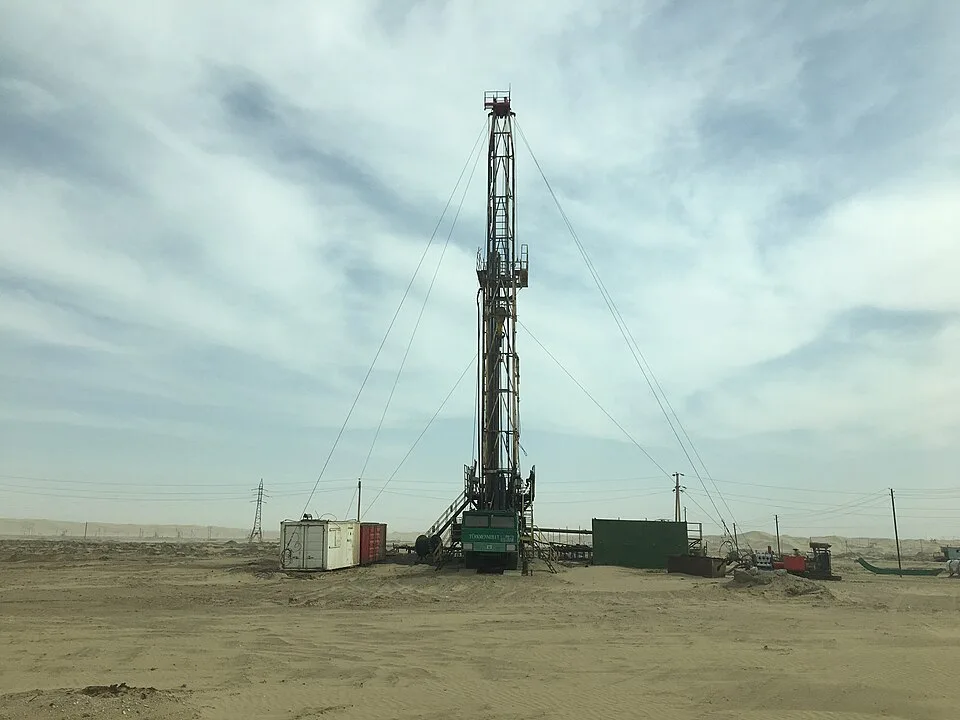
On the economic front, things are actually moving in a less catastrophic direction. Brent crude, the international standard for oil prices, fell 3.8% to $73.87 a barrel Thursday morning, according to the Associated Press. That is the closest it has been to the roughly $70 per barrel pre-war price in nearly four months. U.S. crude dropped 3.9% to $70.34 a barrel.
The price drop tracks directly with the slow reopening of the Strait of Hormuz, which had been choked off during the conflict. Tanker movements in the Persian Gulf and the Gulf of Oman have, according to CBS News, risen sharply since the U.S.-Iran memorandum of understanding was signed last week. Richard Mead, editor-in-chief of Lloyd's List, put it plainly: "There's been a material shift this week."
But Mead also said shipping firms are operating in what he called a "limbo period." Nobody knows what the final deal will look like when the two-month negotiating window closes. Nobody knows what the Strait of Hormuz looks like in a post-war world. "We don't know what normal is going to look like yet," Mead said. Which is an extremely honest thing to say, and also a sentence that describes the entire geopolitical situation right now.
Rubio Is Touring the Gulf and Making Promises
Secretary of State Marco Rubio was in Bahrain on Thursday for a Gulf Cooperation Council meeting, the latest stop on a regional tour designed to reassure allies that the United States has not forgotten about them while cutting deals with the country that spent years funding the militias shooting at them. Per AFP, Rubio met with leaders of Kuwait and the UAE on Wednesday before heading to Bahrain.
Rubio's message at the GCC meeting was blunt on at least one point. Iran and Oman have floated the idea of a joint mechanism to control maritime traffic through the Strait of Hormuz, potentially with fees attached. Rubio called that a nonstarter. "International waterways do not belong to any nation state," he said. "If in fact we accepted that you can charge money to use an international waterway because it happens to be near your territorial space, well then this will spread throughout the world like a contagion."
He also addressed the Gulf states' lingering anxiety about what exactly the United States promised Iran in exchange for reopening the strait, since the initial memorandum of understanding notably did not address Iran's missile program, which is the thing Gulf nations are most immediately worried about. Rubio promised Washington would be "completely aligned" with Gulf partners and would "engage them on conversations about every decision." Whether that lands as reassuring or as the diplomatic equivalent of "don't worry about it" probably depends on which side of the Persian Gulf you're sitting on.
Meanwhile, the War Technically Isn't Over
One detail that gets lost in the oil price updates and the Senate procedural votes: the war is not actually finished. The Israeli military reported Thursday that a 32-year-old soldier, Master Sergeant Basil Sweid, was killed the previous day in southern Lebanon during what the military described as "operational activity," according to AFP. A spokesman said his vehicle overturned. Israel's military says 37 soldiers and one civilian contractor have been killed in Lebanon.
Clashes with Iran-backed Hezbollah have been continuing in southern Lebanon despite an existing ceasefire. So while diplomats are shaking hands in Bahrain and oil traders are breathing a little easier, the actual shooting has not fully stopped. That is worth keeping in the frame when reading the optimistic tanker-movement statistics.
The Dingo Take
The Senate's performance this week is almost mathematically perfect as a symbol of what American oversight looks like in 2026. Four Republicans showed enough spine to advance a war powers check, Trump publicly lit into them for it, and then the next version of the same vote died 50-47. Rand Paul voted "present" on a question of whether the president should have unchecked authority to wage war. John Fetterman crossed the aisle to help kill it. Nobody involved should feel good about any of this.
The peace process, such as it is, appears to be functioning on a 60-day clock with enormous gaps still to fill: Iran's missile program, the toll question, Gulf security guarantees, whatever Israel needs to sign off on in Lebanon. Rubio is out there promising everyone they'll be consulted on every decision, which is a promise that will be extremely interesting to revisit in about eight weeks. The MOU gave both sides a reason to stop shooting and start talking. It did not resolve anything, which is what MOUs do.
The good news is that oil is sliding back toward $70 and ships are moving through the strait again. The bad news is that a soldier died in Lebanon on Wednesday, the Senate just confirmed the president can do more or less whatever he wants militarily without asking permission, and the phrase "limbo period" is now the official technical term for the state of the entire Middle East. Reassuring!




Comments